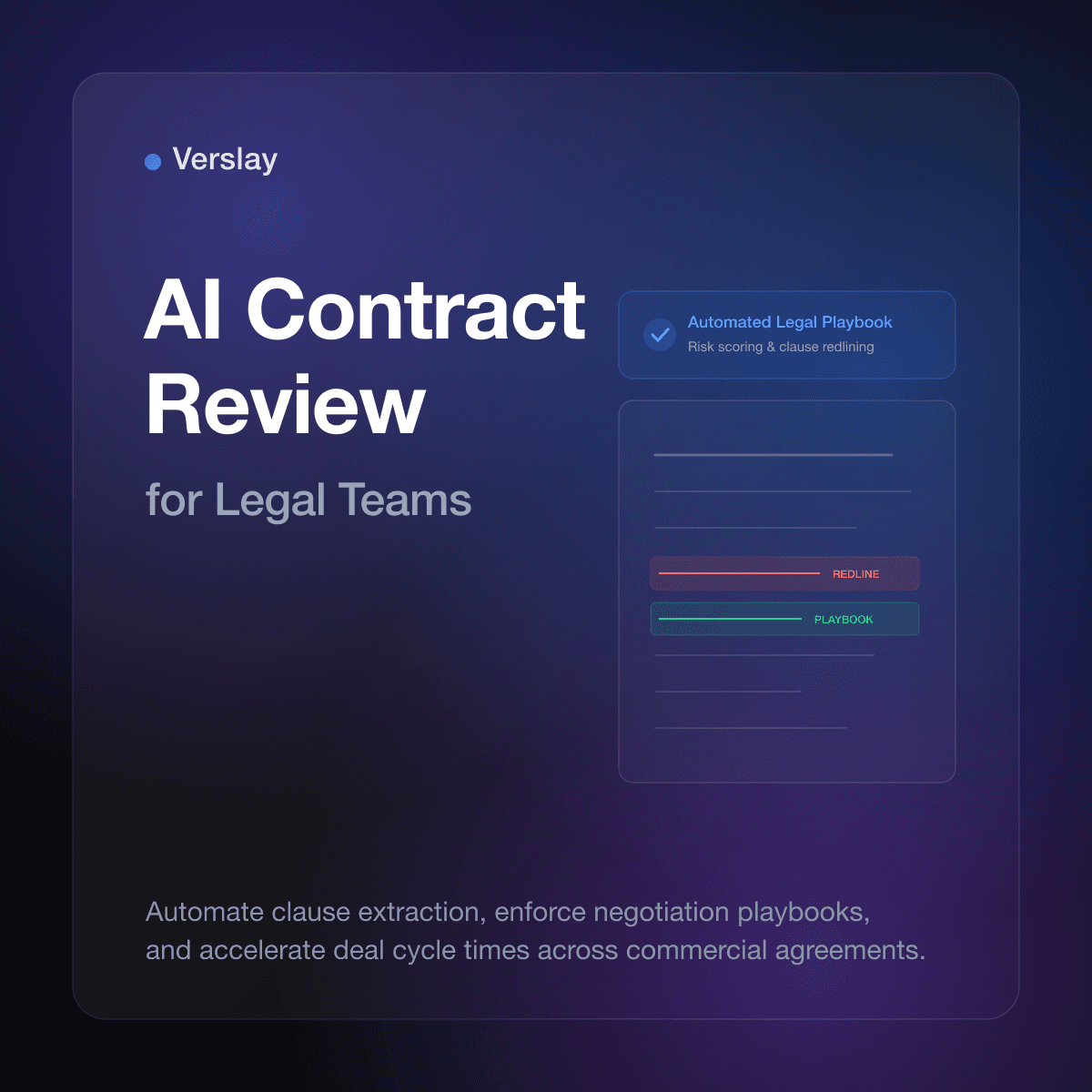
AI contract review for legal teams uses autonomous AI agents to parse commercial agreements, extract critical legal clauses, score deviations against approved negotiation playbooks, and generate real-time redlines. By connecting directly with contract lifecycle management (CLM) platforms, document storage drives, and CRM systems, AI agents eliminate manual drafting backlogs and reduce contract turnaround times by over 70% while maintaining consistent legal compliance.
Closest Verslay page: SOW & Contract Drafter. Drafts SOWs, service agreements, and contracts from templates. It is the nearest live match for this topic, not a one-to-one fit.
For fast-growing organizations and legal counsel, contract review often represents the single largest operational friction point in closing major deals. In-house legal teams find themselves overwhelmed by routine non-disclosure agreements (NDAs), standard service agreements (MSAs), and vendor order forms, pulling senior attorneys away from strategic risk management and governance.
Why Traditional Contract Review Bottlenecks Legal Operations
Manual contract review processes are labor-intensive, vulnerable to negotiation drift, and difficult to scale alongside increasing sales velocity:
- Disproportionate Time Spent on Routine Paperwork: In-house attorneys spend up to 50% of their bandwidth reviewing standard, low-risk third-party paper (such as mutual NDAs or recurring vendor renewals) rather than high-stakes advisory work.
- Inconsistent Playbook Enforcement: Across distributed legal teams and outside counsel, standard clause preferences—such as limitation of liability caps, governing law, or indemnification thresholds—are frequently negotiated inconsistently.
- Prolonged Deal Cycles and Revenue Friction: Sales reps waiting days or weeks for first-pass contract markups face stalled deal momentum and frustrated prospective buyers.
- Hidden Compliance & Exposure Blind Spots: Complex multi-page schedules, data processing addenda (DPAs), and third-party vendor agreements risk slipping through with non-standard termination or data sovereignty obligations.
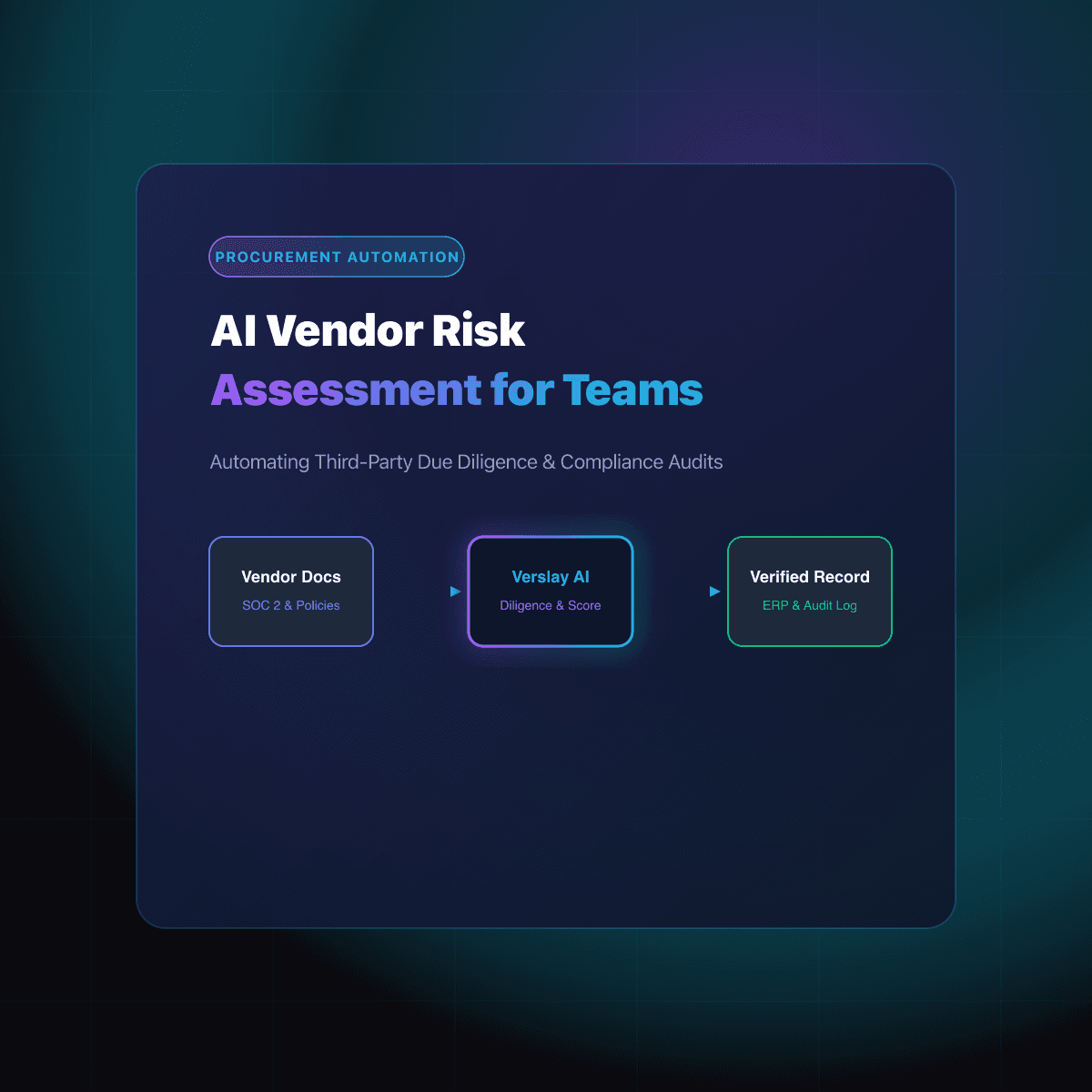
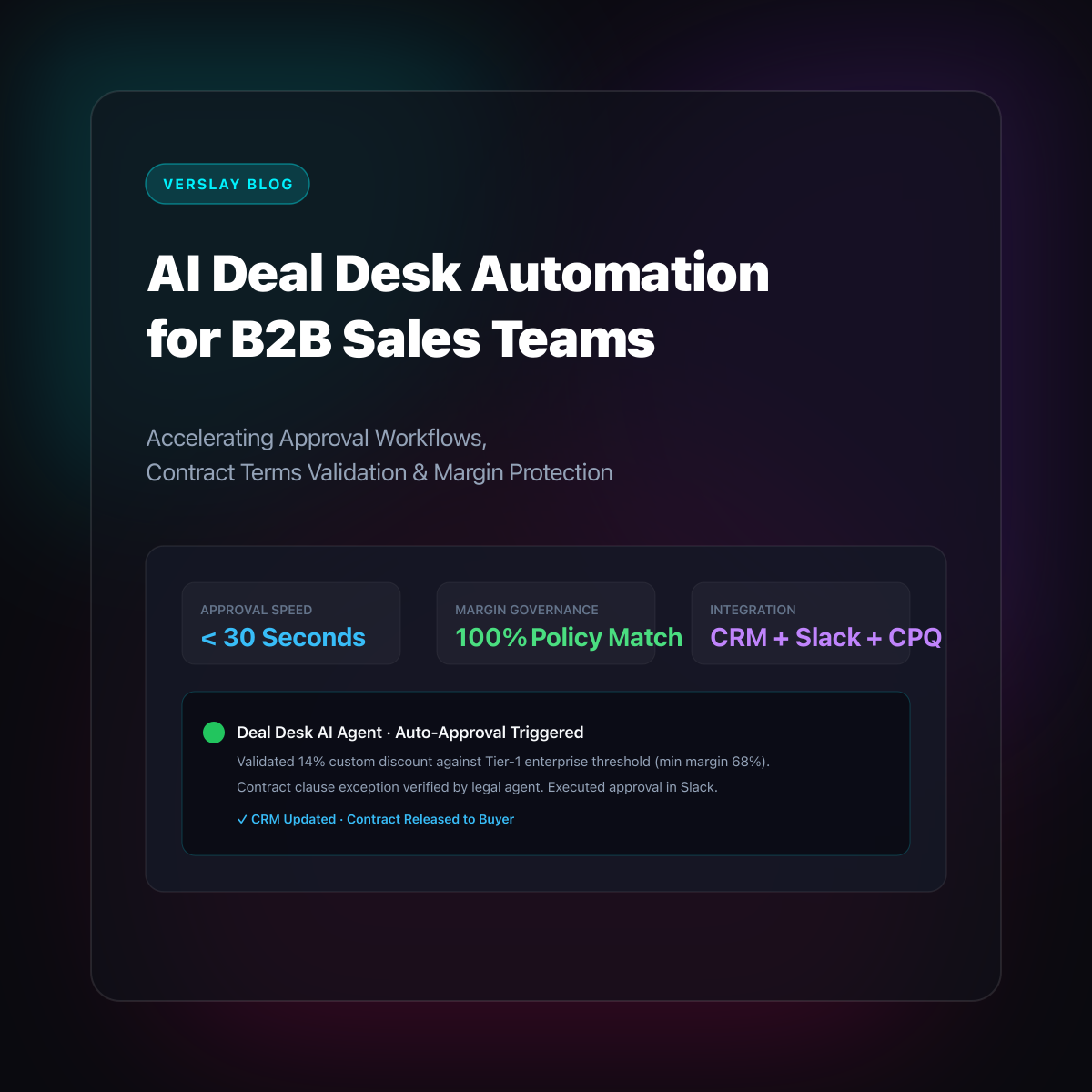
Discover how AI deal desk automation for B2B sales and AI vendor risk assessment for procurement teams solve parallel operational bottlenecks across sales and procurement workflows.
How Autonomous AI Agents Automate the Contract Review Lifecycle
Deploying an autonomous AI agent for legal contract review creates a standardized, intelligent pipeline that processes agreements from initial intake to final execution:
1. Document Ingestion and Semantic Clause Extraction
The moment a customer or vendor contract is uploaded to your CLM, CRM, or shared drive:
- Multi-Format Document Parsing: AI agents ingest DOCX, PDF, and scanned agreement files, preserving original formatting, hierarchical section numbering, and signature blocks.
- Contextual Clause Classification: The agent identifies and categorizes discrete provisions—including indemnification, intellectual property assignment, warranty disclaimers, governing law, and data breach notification windows.
- Entity & Metadata Extraction: Automatically captures party legal names, effective dates, governing jurisdictions, payment terms, and renewal notice deadlines.
2. Playbook Risk Scoring and Deviation Detection
The AI agent compares every extracted clause against your corporate legal playbook:
- Baseline Alignment Audits: Checks whether proposed provisions match your standard terms, acceptable fallback positions, or non-negotiable red lines.
- Risk Severity Categorization: Assigns risk scores (Low, Medium, High, Critical) to each section based on deviation from standard company terms.
- Uncapped Liability & Indemnity Triggers: Instantly flags high-risk clauses such as uncapped indirect damages, aggressive IP assignments, or unfavorable termination penalties.
3. Automated Redlining and Fallback Clause Insertion
Rather than simply highlighting problematic text, the agent acts as an autonomous first-line reviewer:
- In-Document Redlines: Generates native tracked changes (Track Changes in Word or structured comments in PDF) replacing third-party language with company-preferred fallback clauses.
- Explanatory Counsel Notes: Inserts concise rationale comments explaining why a specific redline was made and citing company policy or compliance standards.
- Tiered Fallback Progression: Intelligently recommends Level 1 (preferred), Level 2 (standard compromise), or Level 3 (escalation required) fallback language based on deal tier and counterparty profile.
4. Approval Routing and Audit Trail Synchronization
Once the preliminary markup is complete:
- Conditional Escalation: Contracts with all Low-Risk ratings are fast-tracked for direct business approval, while High-Risk deviations are automatically routed to the designated specialist attorney.
- Bi-Directional CRM & CLM Sync: Writes review summaries, risk matrices, and redlined drafts directly into HubSpot, Salesforce, Ironclad, or DocuSign.
- Audit Logging: Maintains a complete historical log of clause modifications and approvals for SOC 2, ISO 27001, and corporate governance records.
Explore how deploying specialized AI agents for business operations empowers legal teams to scale commercial deal capacity effortlessly.
Architecture of an AI-Powered Contract Review Pipeline
The following diagram illustrates how an autonomous legal agent coordinates contract intake, playbook evaluation, automated markup, and system synchronization:
[Inbound Contract DOCX/PDF] (Email, CLM, or CRM Trigger)
                     │
                     ▼
       [AI Document Ingestion & OCR]
   (Clause Extraction, Metadata Parsing)
                     │
                     ▼
    [Legal Playbook Comparison Engine]
   (Standard Terms vs. Counterparty Draft)
                     │
          ┌──────────┴──────────┐
          ▼                     ▼
[Standard / Low Risk]   [High Risk / Custom Deviation]
  (Auto-Apply Redlines)   (Flag for Counsel Escalation)
          │                     │
          └──────────┬──────────┘
                     ▼
     [Generate Tracked-Change Draft]
    (Explanatory Notes & Fallback Terms)
                     │
                     ▼
  [Sync to CLM, CRM & Drive + Slack Alert]
- Trigger on Contract Submission: Listen for new contract uploads in CRM deal rooms or CLM queues.
- Execute Risk-Weighted Analysis: Evaluate dozens of clauses in seconds against approved corporate guidelines.
- Deliver Finished Redlines: Provide attorney-ready markups with actionable comments and fallback options.
Core Contract Categories Handled by AI Agents
Autonomous contract review agents adapt to multiple commercial and corporate agreement archetypes:
| Agreement Type | Primary Focus Areas | Automated AI Actions | | :--- | :--- | :--- | | Mutual & One-Way NDAs | Definition of confidential info, term length, exclusions, non-solicitation riders | Immediate first-pass redlining, alignment with standard 2-3 year sunset periods | | Master Services Agreements (MSAs) | Limitation of liability, IP rights, warranties, payment terms, audit rights | Inserts liability caps, clarifies IP ownership boundaries, aligns payment net terms | | Data Processing Addenda (DPAs) | GDPR/CCPA compliance, subprocessor notifications, breach notice windows | Verifies standard contractual clauses (SCCs), sets 48-72h breach reporting standards | | Vendor Software Agreements | Auto-renewal terms, SLA commitments, data portability, termination for convenience | Flags restrictive cancellation windows, verifies SLA credits, aligns renewal alerts |
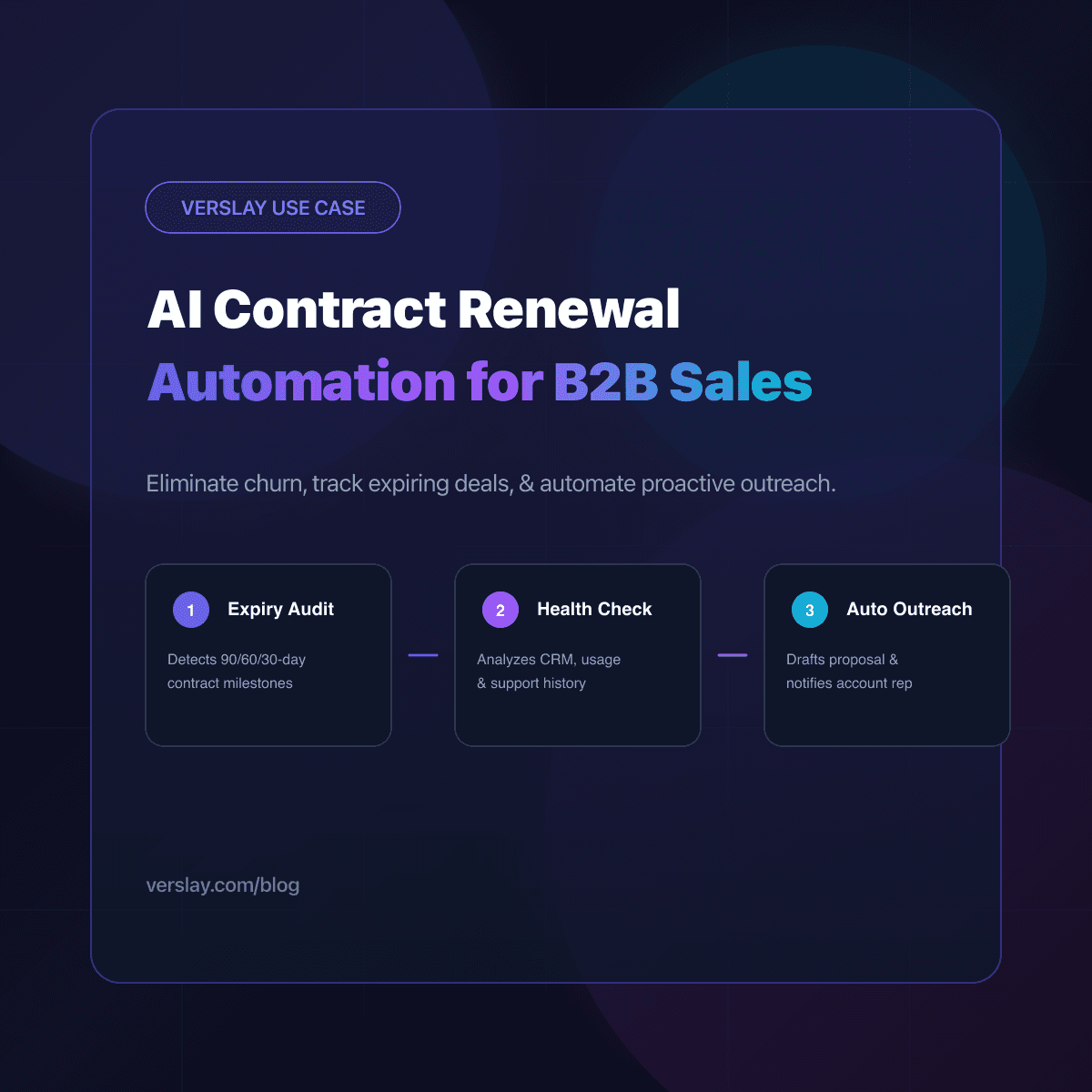
For ongoing contract governance post-execution, see how AI contract renewal automation for B2B sales monitors expiration triggers and renegotiation windows.
Measurable Operational Benefits for Legal and Revenue Teams
Implementing autonomous AI contract review delivers quantifiable operational improvements across the organization:
- 70%+ Reduction in First-Turnaround Time: Initial redlines and risk summaries that previously took 3 to 5 business days are delivered in under 15 minutes.
- 100% Policy Consistency: Eliminates human oversight on critical fallback provisions and ensures every commercial contract adheres to the same standard risk tolerances.
- Liberated In-House Bandwidth: Allows corporate attorneys to transition from routine clause checking to strategic risk mitigation, M&A due diligence, and executive advisory.
- Accelerated Sales Velocity: Keeps sales deals moving without legal bottlenecks, preventing end-of-quarter deal slippage.
See it in Verslay
Verslay agents work through the tools you already connect and prepare drafts and staged actions for a person to approve. The SOW & Contract Drafter page shows the real workflow. You can also browse all use cases or book a 30-minute walkthrough.
Frequently Asked Questions
What is AI contract review for legal teams?
AI contract review is the automated analysis of commercial agreements—such as MSAs, NDAs, DPA riders, and vendor contracts—using autonomous AI agents to extract clauses, score legal risk, and suggest policy-compliant redlines.
How do AI agents automate contract redlining and risk scoring?
AI agents evaluate incoming contract language against company-approved standard terms and negotiation playbooks, automatically inserting redline edits, comments, and risk severity ratings into document formats like Word and PDF.
Can AI contract review integrate with existing CLM and CRM systems?
Yes, autonomous AI agents integrate directly with contract lifecycle management (CLM) platforms like Ironclad and DocuSign, CRMs like HubSpot and Salesforce, and storage tools like Google Drive and Box.