AI RFP Response Automation for B2B Sales Teams
AI RFP response automation connects corporate proposal knowledge bases, product specifications, and past winning submissions directly to sales operations using autonomous AI agents. By parsing incoming Request for Proposal (RFP) documents, performing semantic content matching against verified repositories, and drafting tailormade responses, AI agents shrink proposal turnaround cycles from weeks to hours while elevating answer precision and deal win rates.
In B2B sales, responding to complex RFPs is both a primary revenue driver and one of the highest-friction bottlenecks. Revenue teams face dense questionnaires asking for technical architecture details, security standards, SLA commitments, and case study metrics. When account executives and solution engineers spend dozens of hours hunting down outdated answers across scattered drives and spreadsheets, deal momentum drops and opportunity costs mount.
The Operational Bottleneck in Traditional RFP Responses
Manual proposal completion introduces systematic risk and inefficiency across commercial deal teams:
- Siloed Content Search: Sales representatives spend excessive time manually searching for past proposals, technical whitepapers, and pricing matrices across disparate cloud storage platforms.
- Subject Matter Expert Burnout: Solution engineers, product managers, and legal leads are repeatedly interrupted to answer repetitive technical and compliance questions.
- Inconsistent Messaging & Version Drift: Copying answers from legacy submissions risks introducing obsolete product details or conflicting terms.
- Missed Submission Deadlines: Slow compilation cycles force teams to rush final reviews or submit proposals late, significantly lowering conversion rates.
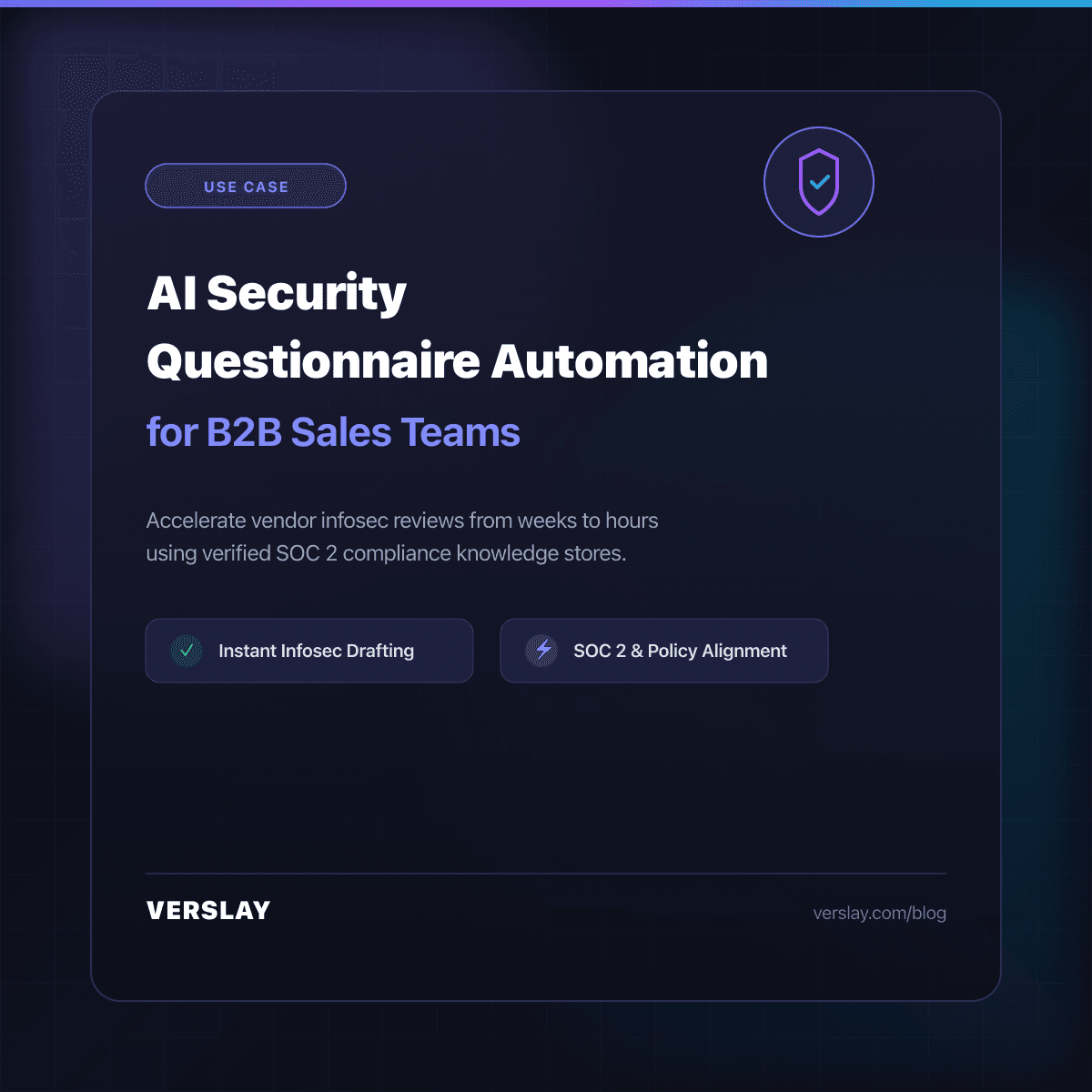
By deploying autonomous workflows, revenue teams turn proposal intake into a strategic advantage. Explore our AI Agents for Sales and see how Security Questionnaire Automation streamlines vendor evaluations.
How AI Agents Automate the RFP Response Process
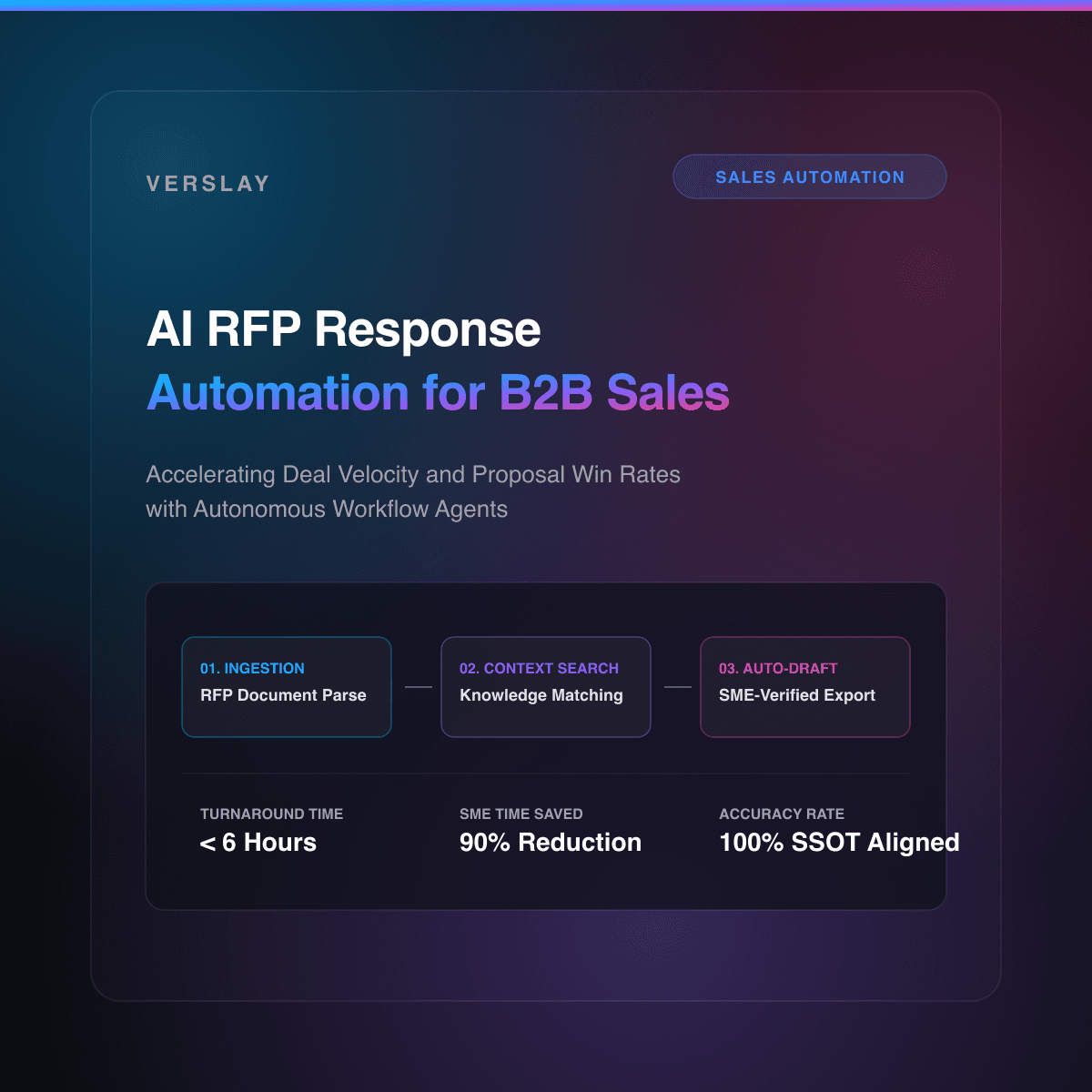
Modern AI RFP response workflows orchestrate five distinct stages to deliver accurate, submission-ready proposals:
[Incoming RFP Received (PDF, Word, Excel)]
                   │
                   ▼
     1. Document Parsing & Structure Analysis
     (Extract Sections, Requirements, & Questions)
                   │
                   ▼
     2. Semantic Knowledge Base Matching
     (Query Approved Case Studies & Tech Specs)
                   │
                   ▼
     3. Contextual Answer & SLA Generation
     (Draft Tailored Text with Source References)
                   │
                   ▼
     4. SME Collaboration & Review Routing
     (Flag Low-Confidence Items for Approval)
                   │
                   ▼
     5. Export, Formatting, & Learning Feed
     (Produce Formatted RFP & Update Repository)
1. Automated Document Parsing & Extraction
Upon receiving an RFP in Word, Excel, or PDF format, the AI agent parses the file structure, segregating functional requirements, security questions, pricing tables, and commercial terms.
2. Semantic Search Across Approved Knowledge Repositories
The agent queries an indexed repository of company case studies, technical documentation, product capabilities, and past accepted proposals. Semantic context matching selects the most accurate, up-to-date answer snippets rather than relying on exact keyword matches.
3. Tailored Draft Response Generation
For each requirement, the agent drafts a cohesive response aligned with the prospect's industry and specific pain points. Citations and source references are attached so reviewers can instantly verify accuracy.
4. Intelligent Exception Routing for SME Review
Questions with unique constraints or low confidence scores are automatically routed to the responsible Subject Matter Expert (SME). Instead of completing an entire document, SMEs review pre-populated answers and handle only exception cases.
5. Final Formatting & Dynamic Repository Updates
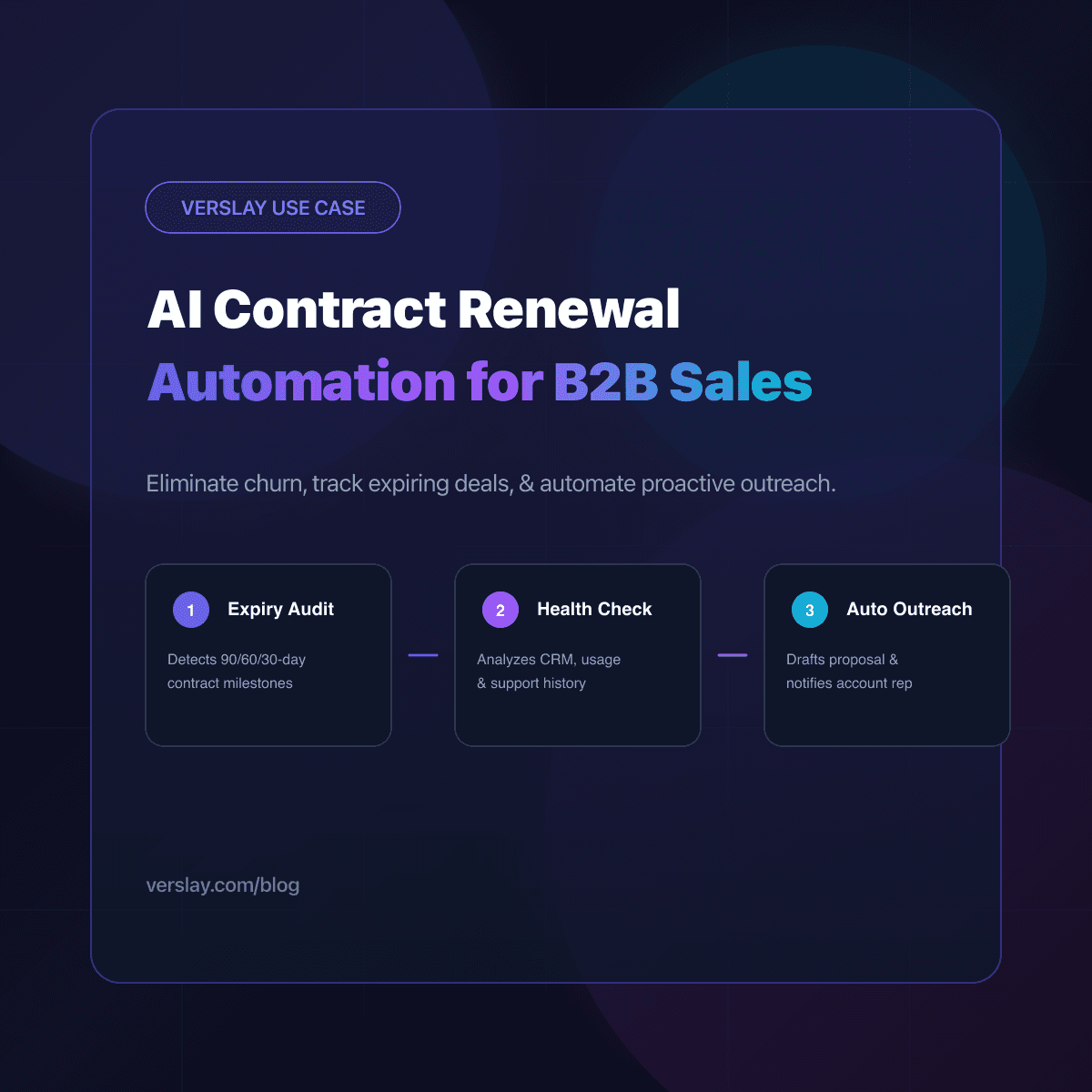
Once approved, the system compiles the completed RFP into the client's requested template. Verified custom answers are fed back into the centralized knowledge base for future proposal automation. Learn how Contract Renewal Automation leverages automated workflow intelligence to retain existing account revenue.
Key Advantages of AI RFP Response Automation
Transitioning to automated proposal workflows delivers measurable improvements across key commercial metrics:
| Metric | Traditional RFP Process | AI Automated RFP Process | | :--- | :--- | :--- | | Average Turnaround | 7–14 business days | Under 6 hours | | SME Review Time | 15–20 hours per RFP | < 45 minutes focused review | | Content Accuracy | Subject to manual copy-paste errors | 100% aligned with verified single source of truth | | Submission Volume | Constrained by team bandwidth | Scalable to multi-RFP parallel handling |
Frequently Asked Questions
What is RFP response automation?
RFP response automation uses AI agents and natural language processing to automatically extract questions from requests for proposals, query verified company knowledge repositories, and draft high-accuracy answers.
How does AI RFP response automation accelerate deal velocity?
By automating content matching, security compliance answers, and team review routing, AI RFP response automation reduces response times from weeks to hours, allowing sales teams to submit more winning proposals.
Transform your proposal engine today. Discover how Verslay's autonomous workflow agents accelerate B2B deal execution from intake to final submission.