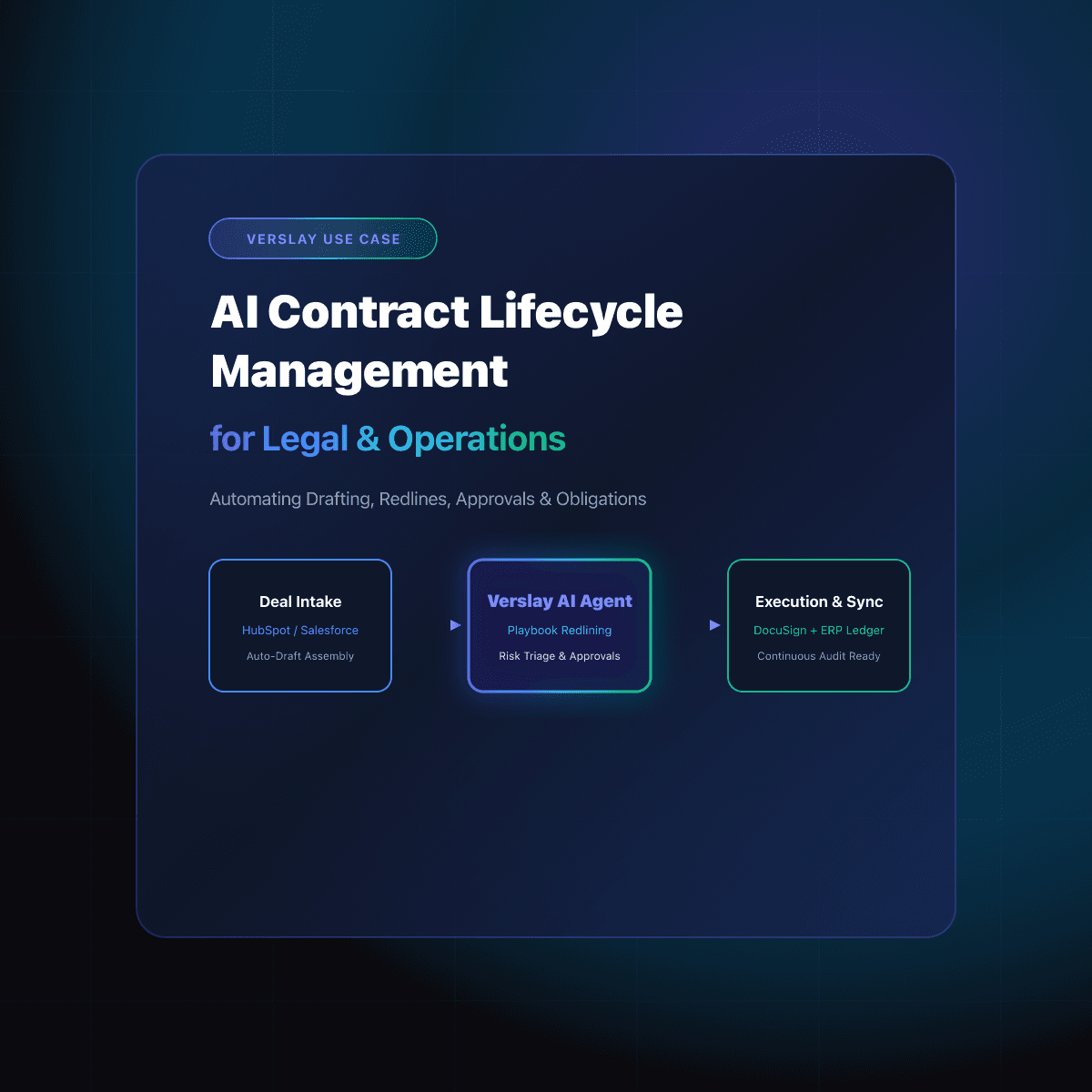
AI contract lifecycle management automates drafting, redline analysis, approval workflows, and obligation tracking across the business using autonomous AI agents. By connecting directly to corporate deal hubs like HubSpot, Salesforce, and DocuSign alongside ERP suites, AI agents parse incoming agreements against approved legal playbooks, negotiate standardized clause fallbacks, and track post-signature deliverables without administrative latency. This end-to-end automation shortens contract cycle times by over 80% while systematically eliminating rogue terms and unmonitored contractual risks.
Closest Verslay page: SOW & Contract Drafter. Drafts SOWs, service agreements, and contracts from templates. It is the nearest live match for this topic, not a one-to-one fit.
For rapidly growing companies, legal and revenue operations teams face an ever-expanding backlog of master services agreements (MSAs), statements of work (SOWs), non-disclosure agreements (NDAs), and vendor contracts. Traditional contract management platforms serve as little more than static digital filing cabinets, requiring counsel and procurement analysts to manually read every paragraph, reconcile redlines across competing document versions, and chase down internal approvals via email.
By deploying autonomous AI Agents capable of contextual semantic understanding and multi-system execution, organizations can replace manual administrative bottlenecks with a continuous, closed-loop legal operations engine.
Why Legacy Contract Lifecycle Management Fails Modern Businesses
While legacy CLM tools promised to bring order to corporate agreements, most legal and operations leaders find themselves trapped in manual review loops:
- Prolonged Negotiation Velocity and Lost Revenue: Deals frequently languish in legal review for 2 to 4 weeks. Every day an MSA sits awaiting initial review delays pipeline recognition, frustrating sales reps and increasing counterparty deal abandonment.
- Rogue Terms and Playbook Drift: Overburdened internal teams often sign off on non-standard provisions—such as aggressive indemnification, uncapped liability, or shortened net-payment windows—simply to clear queue backlogs, exposing the business to unforeseen balance-sheet liability.
- Disconnected Tech Stacks: Sales teams work out of Salesforce or HubSpot, procurement operates in NetSuite or Coupa, and legal communicates through email and Microsoft Word. Manually copying contract milestones, deal values, and renewal dates across these siloed platforms creates inevitable data drift.
- Orphaned Post-Signature Obligations: Once an agreement is countersigned, contracts are rarely referenced again until a dispute occurs or an automatic renewal renews unnoticed. Critical deliverables, audit clauses, SLA commitments, and price-escalation caps remain buried in PDF archives.
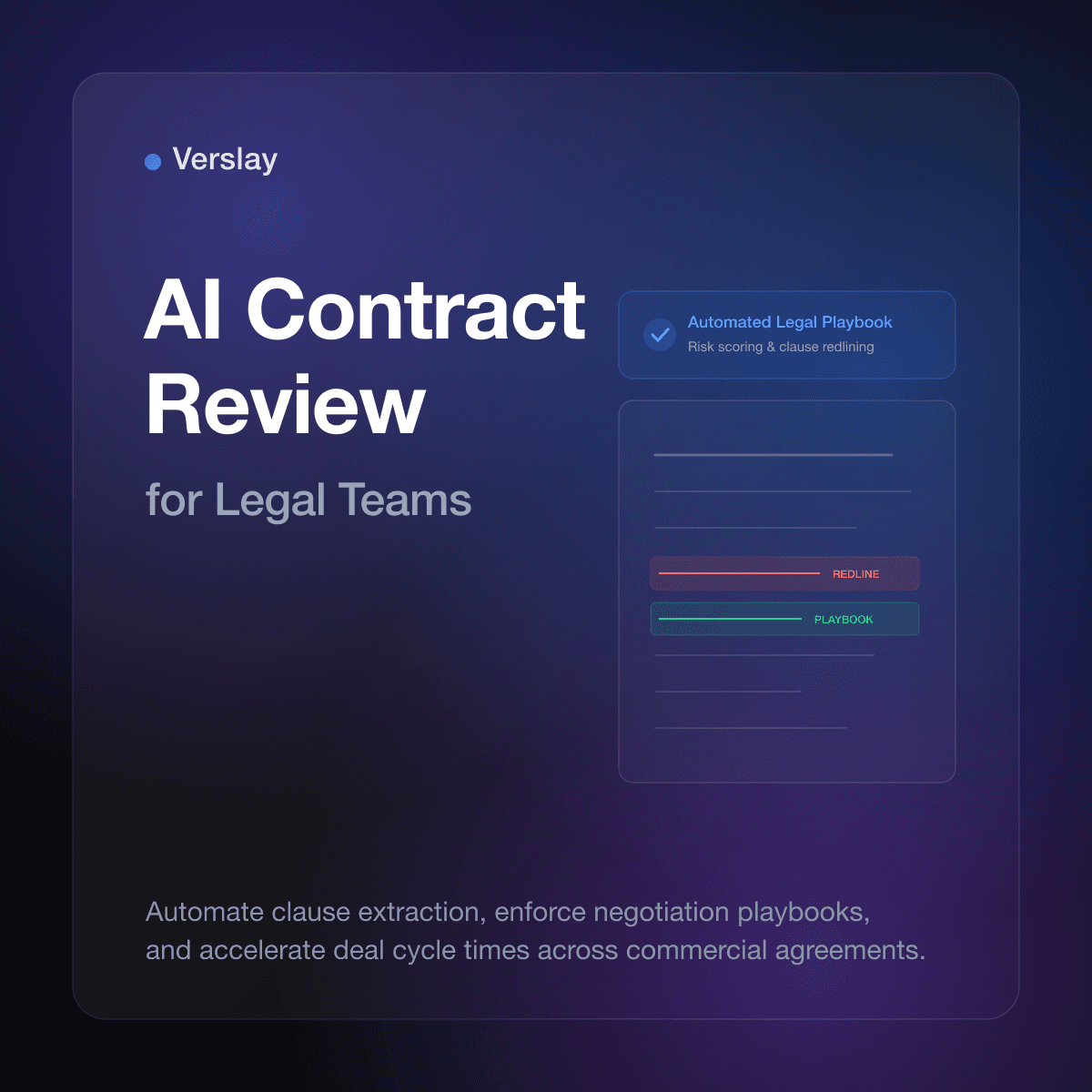
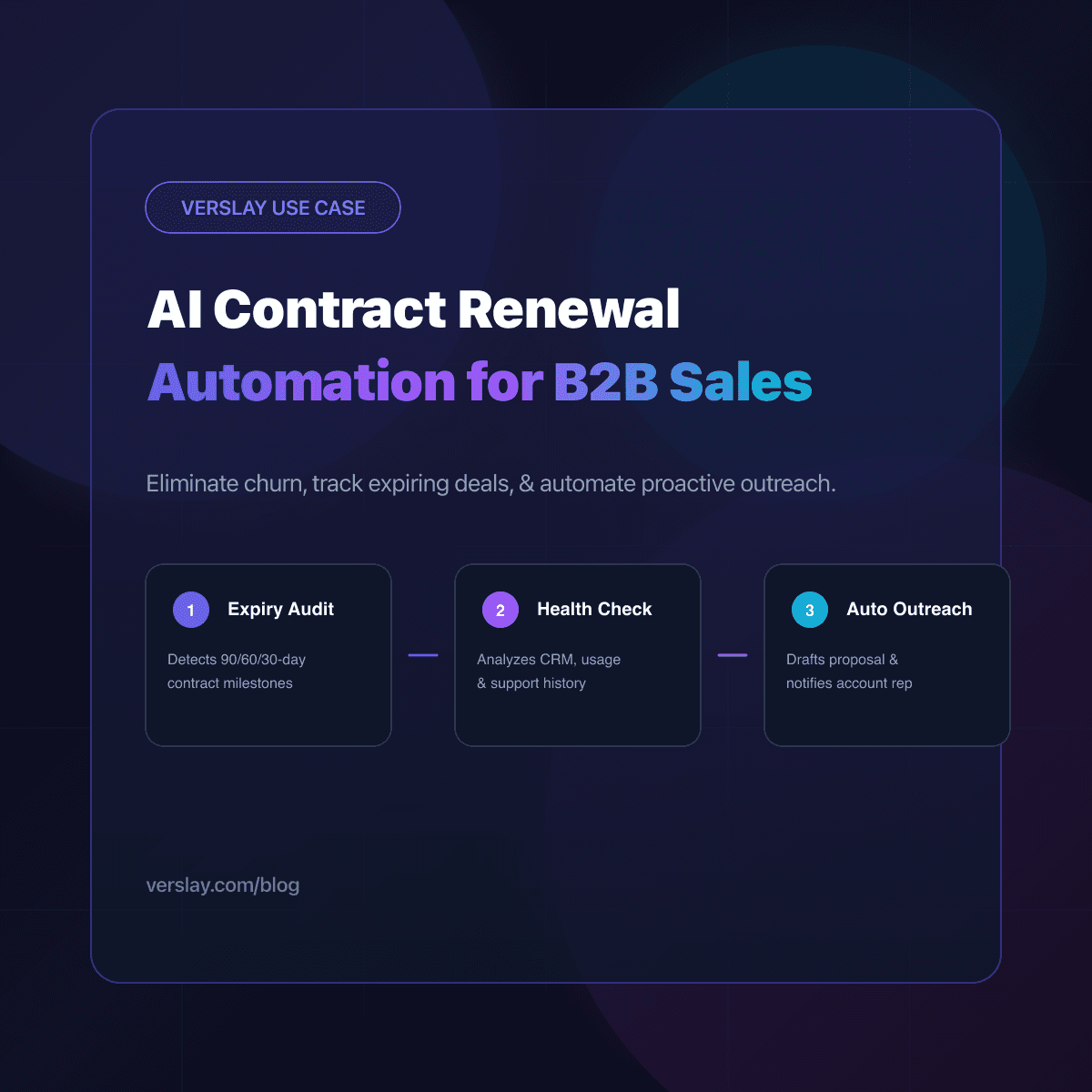
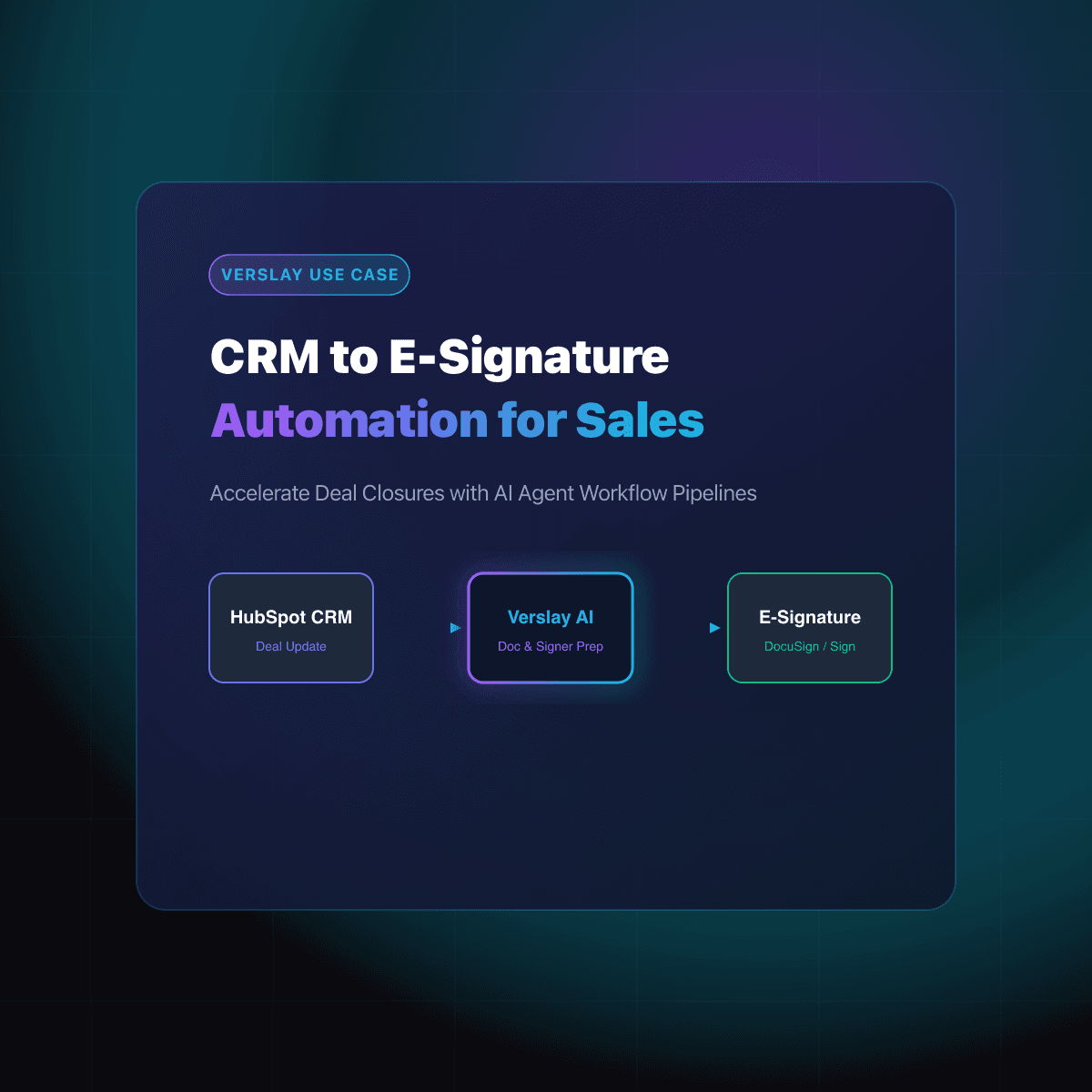
To see how AI streamlines specific phases of the contracting pipeline, explore our guides on AI contract review for legal teams, AI contract renewal automation for B2B sales, and AI CRM to e-signature automation.
Core Capabilities of Autonomous AI Contract Lifecycle Management
Modern AI-powered CLM software moves beyond static template repositories. By utilizing cognitive agents connected via structured tool architectures, AI CLM coordinates the entire lifecycle from initial intake to post-signature audit:
1. Dynamic Clause Generation & Playbook-Aligned Drafting
When sales or procurement initiates a new commercial agreement:
- CRM-Driven Intake: Extracts deal terms, entity names, pricing schedules, and custom payment conditions directly from HubSpot or Salesforce deal objects.
- Modular Assembly: Automatically constructs first-draft MSAs, SOWs, and NDAs from approved legal clause libraries, ensuring jurisdictional compliance and standardized corporate governance.
- Context-Aware Variable Injection: Injects specific payment terms, service levels, and operational scope without manual drafting errors.
2. Cognitive Redline Parsing & Risk Triage
When third-party paper or counterparty redlines arrive via email:
- Semantic Clause Comparison: Ingests Word (.docx) or PDF agreements and compares counterparty language against internal legal playbook standards rather than relying on brittle keyword matching.
- Automated Fallback Negotiation: Evaluates deviation severity (e.g., governing law, intellectual property ownership, termination for convenience) and suggests pre-approved fallback clauses directly in track changes.
- Risk Scoring & Escalation Routing: Assigns an objective risk score to every agreement; low-risk standard agreements pass automatically, while high-risk deviations are routed to specialized counsel with summarized briefing memos.
3. Conditional Multi-Stakeholder Approval Orchestration
Navigating cross-functional sign-offs without manual chasing:
- Dynamic Rule Evaluation: Evaluates commercial thresholds (e.g., annual contract value above $100,000, non-standard SLA penalties, extended payment terms) and triggers parallel approval requests to Finance, InfoSec, and Executive sponsors.
- Slack and Teams Decision Bridges: Delivers interactive approval cards with contextual clause summaries into Slack or Microsoft Teams, allowing executives to approve or reject terms with a single click.
4. Touchless E-Signature Execution & System Synchronization
Finalizing agreements without administrative friction:
- Automated Signature Packaging: Prepares and sends final, clean execution copies through DocuSign or Adobe Sign to designated authorized signatories.
- Real-Time Signature Tracking: Monitors envelope statuses, sends automated reminders to counterparties nearing expiration deadlines, and captures execution timestamps.
- Instant CRM & ERP Record Updates: Once fully executed, uploads the signed agreement to the CRM deal record and creates corresponding customer accounts and billing schedules in NetSuite or QuickBooks.
5. Post-Signature Obligation Extraction & Continuous Compliance
Ensuring contract value is realized long after signing:
- Metadata & Milestone Indexing: Extracts critical operational dates—including auto-renewal notice windows, rate adjustments, SLA compliance reporting dates, and termination rights—into a structured queryable database.
- Proactive Renewal & Expiration Alerts: Alerts account managers and legal teams 60 to 90 days before auto-renewal deadlines, armed with historical spend and usage telemetry.
- Continuous Audit Readiness: Provides legal and compliance officers with instant reporting across thousands of active agreements for SOC 2 audits, regulatory filings, or M&A due diligence.
Architecture: How an AI CLM Agent Orchestrates the Contract Lifecycle
The diagram below illustrates how an autonomous legal agent connects deal initiation, counterparty redlines, approval policies, and execution engines:
[Commercial Intake] (HubSpot, Salesforce, Email Ingestion)
                         │
                         ▼
        [AI Contract Lifecycle Orchestrator]
       (Clause Assembly, Playbook Risk Scoring)
                         │
        ┌────────────────┴────────────────┐
        ▼                                 ▼
[Standard Terms: Low Risk]     [Third-Party Redlines: High Risk]
   • Direct Fallback Match        • Semantic Playbook Comparison
   • Auto-Generated Markup        • Counsel Escalation Summary
        └────────────────┬────────────────┘
                         │
                         ▼
          [Multi-Stakeholder Approvals]
            (Slack / Teams / Email)
                         │
                         ▼
           [Execution & Synchronization]
       (DocuSign API -> CRM & NetSuite ERP)
                         │
                         ▼
       [Continuous Obligation & Renewal Engine]
Legacy CLM vs. Autonomous AI Contract Lifecycle Management
| Capability | Legacy CLM Software | Manual Human Operations | Autonomous AI CLM | | :--- | :--- | :--- | :--- | | First-Draft Generation | Static fill-in templates | 2 to 4 hours of paralegal drafting | Instant (<60 seconds) from CRM data | | Redline Analysis | Basic diff tools highlighting text changes | Line-by-line manual reading | Cognitive playbook parsing & fallback generation | | Turnaround Time | 5 to 12 business days | 7 to 20 business days | Under 2 hours for standard agreements | | Approval Routing | Rigid, linear email chains | Chased via ad-hoc spreadsheets | Event-driven Slack/Teams interactive cards | | CRM/ERP Integration | One-way sync or batch imports | Manual re-keying into accounting tools | Real-time bi-directional webhook synchronization | | Obligation Tracking | Unindexed PDF attachments | Spreadsheets updated sporadically | Automated milestone extraction & proactive alerts | | Cost per Agreement | High licensing fees + administrative overhead | $150 to $500 in legal review time | Minimal incremental compute cost |
Measurable Business Impact for Legal and Operations Teams
Adopting AI-powered contract lifecycle management yields transformative operational efficiencies across the organization:
- Up to 80% Reduction in Contracting Cycle Time: Transforming a multi-week review process into an automated, same-day turnaround accelerates deal velocity and quarterly revenue realization.
- 100% Playbook Adherence: Every agreement is audited against internal risk parameters, ensuring no non-standard indemnity or payment clauses slip into signed agreements.
- Zero Missed Renewal Deadlines: Proactive tracking of auto-renewal notice dates prevents unwanted renewals of legacy vendor software while protecting customer renewal revenues.
- Enhanced Cross-Functional Collaboration: Sales, procurement, finance, and legal collaborate through transparent, real-time status updates integrated into their primary tools of work.
See it in Verslay
Verslay agents work through the tools you already connect and prepare drafts and staged actions for a person to approve. The SOW & Contract Drafter page shows the real workflow. You can also browse all use cases or book a 30-minute walkthrough.
Frequently Asked Questions
What is AI contract lifecycle management?
AI contract lifecycle management (CLM) uses autonomous agents to automate the end-to-end contracting workflow—from initial drafting and counterparty redlining to risk analysis, approval routing, digital signature execution, and post-signature obligation tracking.
How do AI agents improve contract review and redlining turnaround times?
AI agents automatically parse legal clauses against standard corporate playbook guidelines, flag non-compliant terms (such as uncapped liabilities or unfavorable payment windows), and draft context-aware substitute language in minutes rather than days.
Can AI contract lifecycle management connect with existing CRMs and e-signature tools?
Yes, modern AI CLM integrates bi-directionally with CRMs like HubSpot and Salesforce, ERP systems like NetSuite, and e-signature platforms like DocuSign, syncing contract metadata and triggering automated workflows across the business.
Transform Your Legal Operations with Verslay
Empower your legal and revenue operations teams to move faster without sacrificing risk governance. Verslay's autonomous AI agents integrate directly with your existing contract repositories, CRMs, and communication tools to streamline drafting, redlining, and execution on autopilot.
Explore Verslay's AI Agents to automate your contract workflows today.