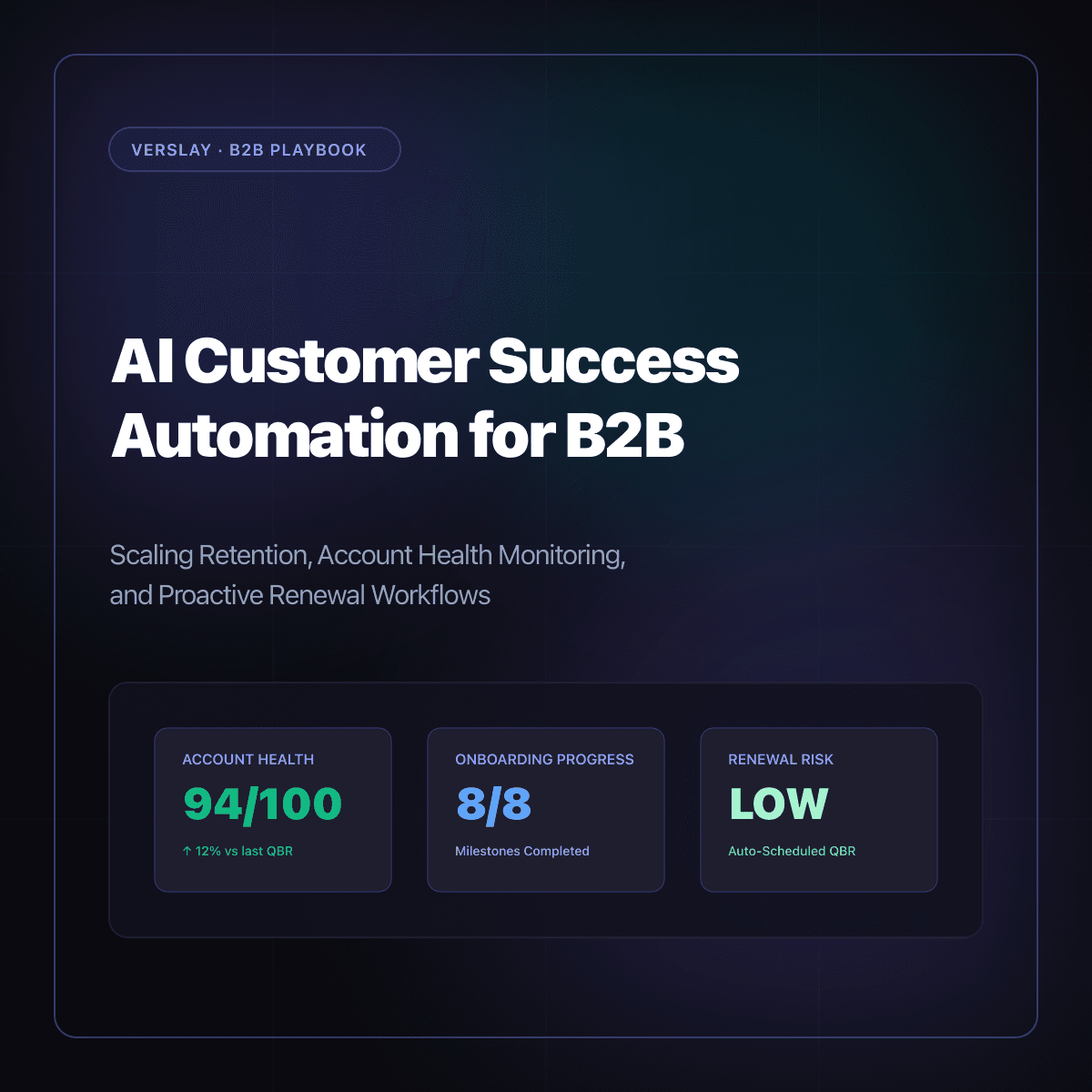
AI customer success automation uses autonomous AI agents connected via Model Context Protocol (MCP) to monitor client health, orchestrate onboarding milestones, and proactively manage renewal risks across B2B SaaS and service organizations. By unifying data from CRM platforms, product telemetry, support ticketing systems, and communication channels, AI agents eliminate manual spreadsheet tracking and enable Customer Success Managers (CSMs) to expand account capacity without sacrificing relationship quality.
As B2B companies grow their client rosters, Customer Success teams frequently hit scaling bottlenecks. CSMs spend up to 40% of their weekly capacity pulling reports across disconnected tools, manually checking usage logs, and assembling quarterly business review (QBR) slide decks. This reactive operational posture means high-risk accounts often slip through the cracks until a cancellation notice arrives.
The Core Operational Bottlenecks in Manual Customer Success
Traditional customer success operations suffer from three structural challenges:
- Fragmented Account Data: Product usage resides in warehouse telemetry, contract details live in Salesforce or HubSpot, and day-to-day client Sentiment is buried inside Slack channels and Zendesk threads.
- Delayed Risk Detection: Manual health scoring relies on periodic reviews or gut feeling. By the time a CSM notices declining login frequency or unresolved support escalations, contract renewal is already compromised.
- Inconsistent Onboarding Execution: Key onboarding milestones—such as admin configuration, team training, and first feature value realization—often stall without automated follow-ups.
3 Core Workflows Powered by AI Customer Success Automation
Modern customer success teams deploy specialized AI agents to handle routine data aggregation, signal monitoring, and workflow execution.
1. Autonomous Health Scoring and Churn Prevention
Instead of static color-coded spreadsheets updated once a month, AI agents compute real-time account health scores by evaluating three core vectors:
- Product Telemetry: Tracking key feature adoption rates, active user seats, and license utilization percentage.
- Support Friction: Analyzing ticket volume, escalation severity, and sentiment trends in recent communications.
- Executive Engagement: Verifying regular communication cadence with key executive sponsors.
When an account's health score drops below a pre-configured threshold, the AI agent automatically compiles an incident summary, posts an alert to the team's internal Slack channel, and drafts a targeted re-engagement plan for the assigned CSM.
2. Milestone-Driven Technical Onboarding
Onboarding sets the baseline for long-term account retention. Autonomous onboarding agents monitor client progress against agreed implementation timelines:
- Automated Progress Tracking: Verifying system configurations, API connections, and user seat invites.
- Proactive Nudges: Sending personalized email check-ins or Slack notifications to client admins when key setup steps remain incomplete after 48 hours.
- Sponsor Summaries: Generating weekly executive onboarding updates that highlight completed milestones and upcoming dependencies.
To explore how AI agents accelerate initial client handoffs and setup, read our detailed guide on AI Client Onboarding for Service Teams.
3. Automated QBR Preparation and Contract Renewals
Preparing for Quarterly Business Reviews (QBRs) and contract renewals usually requires hours of manual data assembly. AI agents streamline this entire lifecycle:
- Data Aggregation: Pulling ROI metrics, completed projects, SLA uptime reports, and support summaries into a structured brief.
- Drafting Executive Presentations: Formatting performance summaries into clean presentation materials or executive summaries.
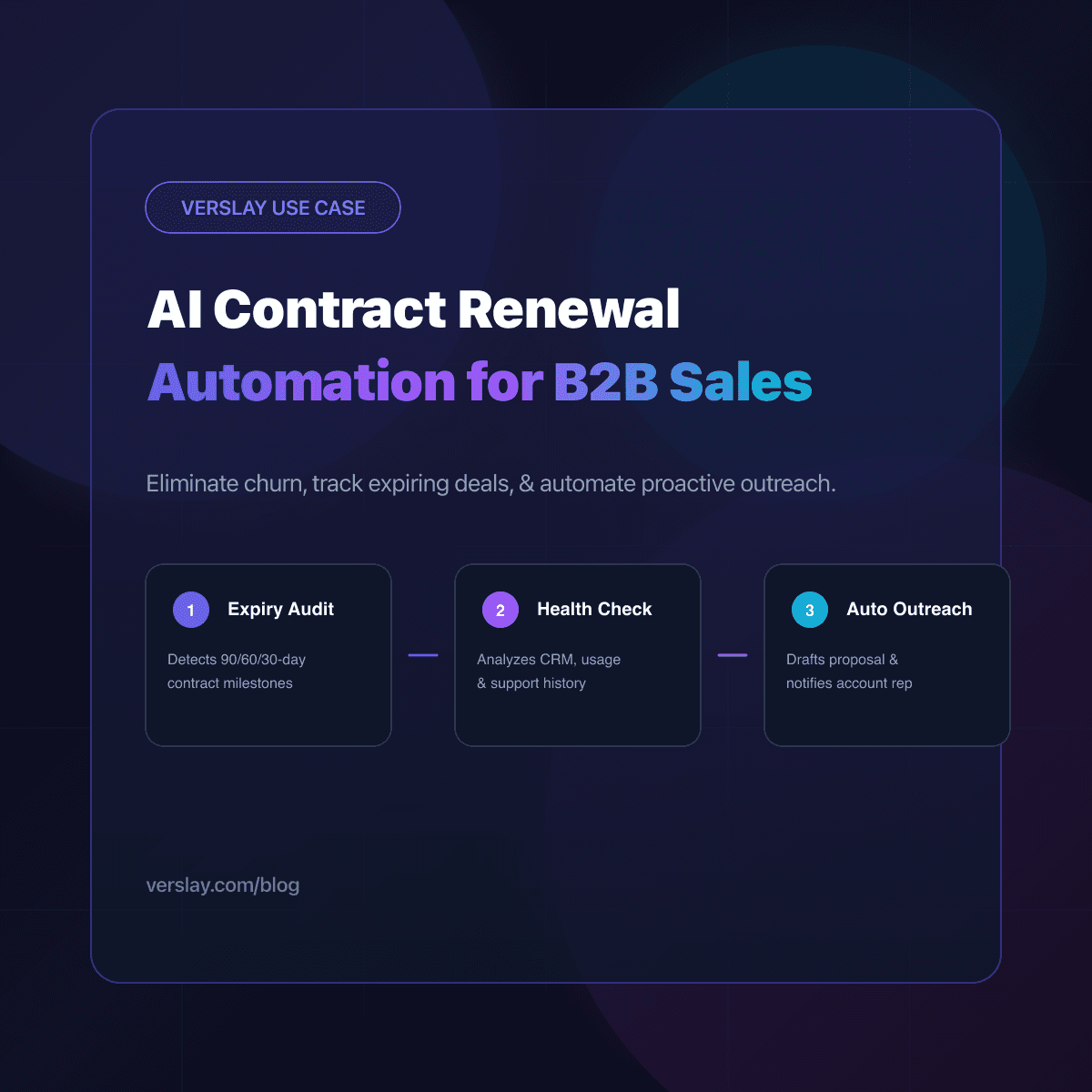
- Renewal Timeline Triggers: 90 days before contract expiration, the agent initiates the renewal preparation sequence, evaluating account health and flagging upsell or expansion opportunities.
For a deeper look into automated retention strategies, see our guide on AI Contract Renewal Automation for B2B Sales.
Architectural Blueprint: How MCP Servers Power CS Agents
For AI customer success automation to operate safely and accurately, agents require secure, real-time read/write access to business systems. Model Context Protocol (MCP) provides the standard substrate connecting AI models with underlying tools:
┌─────────────────────────────────────────────────────────────────┐
│                      AI CS Orchestrator                        │
└───────────────────────────────┬─────────────────────────────────┘
                                │ (MCP Protocol)
       ┌────────────────────────┼────────────────────────┐
       ▼                        ▼                        ▼
┌──────────────┐         ┌──────────────┐         ┌──────────────┐
│  CRM MCP     │         │ Support MCP  │         │ Usage MCP    │
│ (Salesforce/ │         │  (Zendesk/   │         │ (Snowflake/  │
│   HubSpot)   │         │   Intercom)  │         │  Segment)    │
└──────────────┘         └──────────────┘         └──────────────┘
By deploying modular MCP servers, organizations ensure that AI agents adhere to role-based permissions, operate within security parameters, and execute multi-step workflows across disparate SaaS platforms without raw API keys exposed to prompt contexts.
Frequently Asked Questions
How does AI customer success automation improve account retention?
AI customer success automation continuously monitors product telemetry, support ticket trends, and CRM engagement signals to detect early churn risks and alert Customer Success Managers before contract renewals.
What systems are connected in an automated customer success workflow?
Automated CS workflows unify CRM systems (HubSpot, Salesforce), customer support desks (Zendesk, Intercom), communication tools (Slack, Email), and product analytics via Model Context Protocol (MCP) servers.
Can AI agents manage customer onboarding milestones automatically?
Yes. AI agents track user activation, trigger personalized guidance when adoption drops, send automated progress digests to account sponsors, and flag stalled implementations for human intervention.