The day after a good client meeting is when momentum quietly gets lost. The conversation went well. Both sides came away with a shared sense of what is next. But the follow-up message is still unwritten, the action items are still in someone's notebook, and the moment of clarity is already starting to fade.
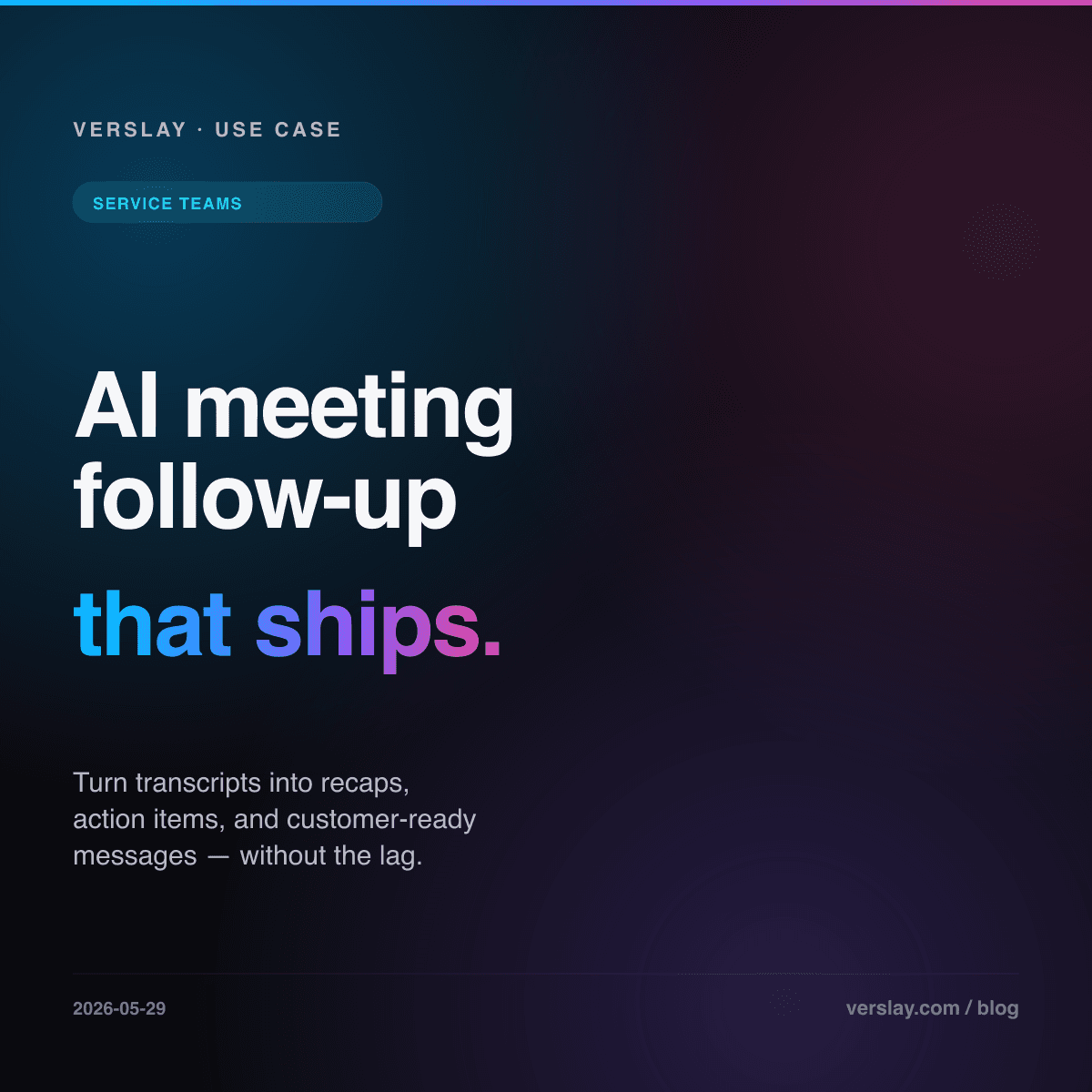
An AI meeting follow-up workflow helps service teams convert that conversation into a reliable next step before the energy drops. It does not replace the relationship work. It removes the lag between meeting and momentum.
What This Use Case Does
An AI meeting follow-up workflow helps service businesses move from "the meeting just ended" to "the recap and next step are out the door" without an extra hour of admin.
At a high level, the workflow:
- ingests the raw transcript or meeting notes from the team's existing tools
- pulls out decisions, action items, owners, and dates
- drafts a clear external recap for the client and a structured internal summary for the team
- routes the action items into the systems that own them (CRM, project tracker, task list)
- keeps the conversation trail consistent across sales, delivery, and ops
For service teams, that usually means a follow-up message goes out the same day, on a consistent template, with action items already filed in the right place.
Why Meeting Follow-Up Breaks Down
The pattern is familiar across most service teams. It is not a discipline problem. It is a workflow problem.
A few specific failure modes show up repeatedly:
- the meeting owner writes the recap from memory, which loses fidelity within a day
- action items live in a shared doc that no one reads after the meeting ends
- the external recap and the internal recap are written twice
- the CRM, project tracker, and task list each get a different version of "what was agreed"
- the next meeting starts by re-asking the same questions
The result is not that work fails to happen. It is that it happens slower, with more rework, and with weaker trust on the client side.
How an AI Meeting Follow-Up Agent Helps
A well-scoped AI agent does the predictable parts of meeting follow-up reliably so the team can spend their time on the parts that need judgment.
Concretely, the agent can:
- summarize a meeting in two voices: external client recap and internal team brief
- pull out action items with owner and due date, then file them in the right system
- compare today's commitments against the previous meeting's open items
- flag risks, scope changes, or expectations the team should respond to before the next call
- keep a clean per-account record of every meeting outcome
Each of those is small in isolation. Together they convert a meeting from a moment to a tracked operating step.
Where It Connects in the Stack
A working AI meeting follow-up workflow rarely runs in one place. It connects the tools the team already uses.
Common connection points include:
- a meeting transcription source such as Zoom, Google Meet, or Otter
- a CRM such as HubSpot or Salesforce, where account context lives
- a project or task tracker such as Linear, Asana, or ClickUp, where action items must end up
- a shared communication channel such as Slack or email, where the recap lives
- a knowledge base such as Notion or Confluence, where the per-account record lives
The agent does not replace any of these. It moves clean structured data between them so the team does not have to.
What Service Teams Actually Get
The visible outcome for a service team is a tighter loop between meeting and next step.
In day-to-day terms:
- the client gets a clear recap within hours instead of days
- the team starts the next meeting knowing exactly what was agreed last time
- delivery and ops get action items filed in their own systems automatically
- leadership has a per-account record of how relationships are progressing
- new joiners can ramp on an account by reading a clean, structured history
None of that requires the meeting itself to be perfect. It requires the work after the meeting to be consistent.
Where to Start
The shortest path to value with an AI meeting follow-up workflow is to start narrow.
A reasonable first scope is:
- pick one customer segment or one team
- connect a single transcription source and a single destination system
- generate recaps and action items as drafts for human review
- review and ship for two weeks before expanding scope
That keeps the change low-risk while the team builds trust in the agent's output. Once the recaps and action items are reliably useful, expanding to more meeting types and more downstream systems is straightforward.
The point is not to replace meeting judgment. It is to make sure the work after the meeting happens on time, on every account, every time.