AI SLA Tracking for Service Teams: Preventing Breach Before It Happens
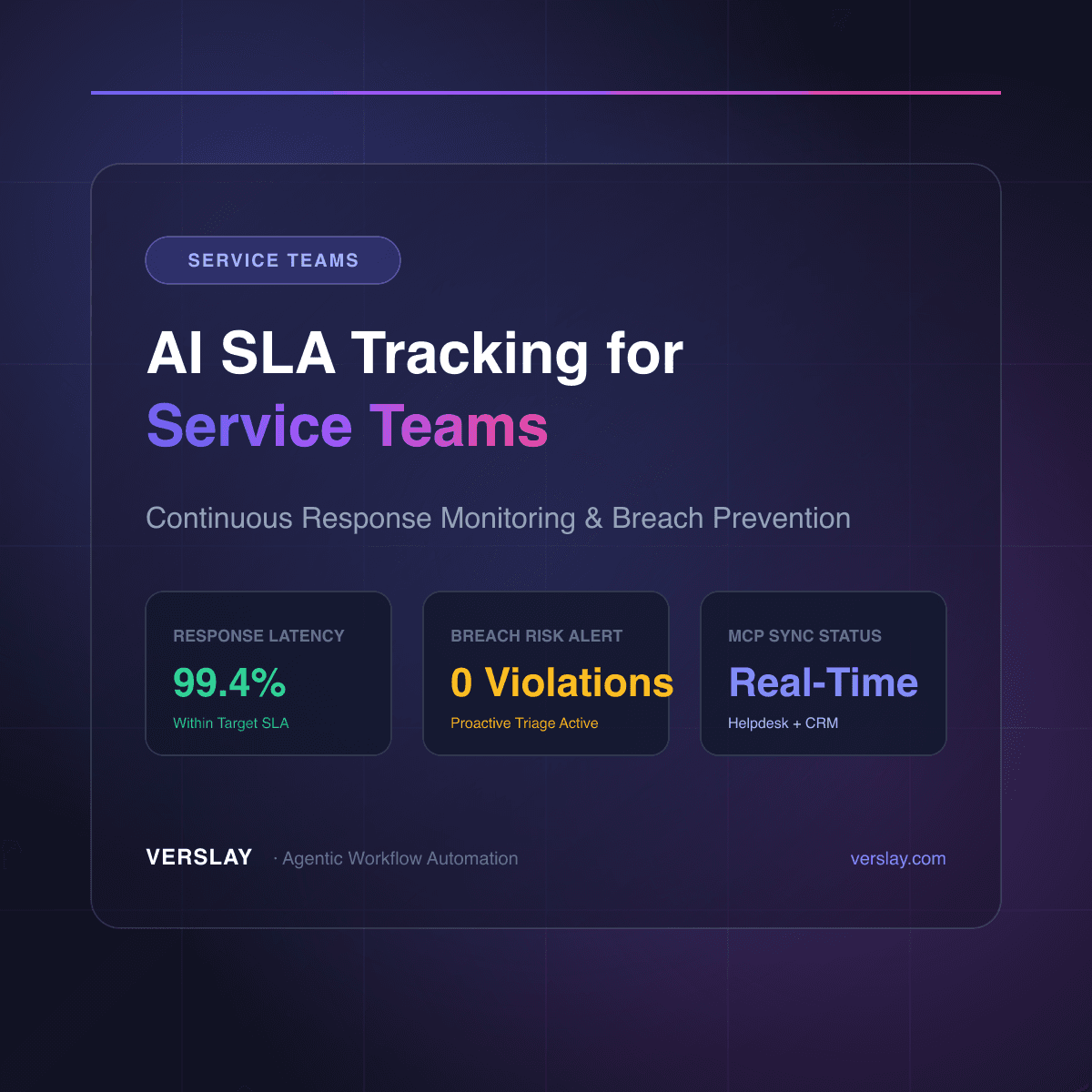
AI SLA tracking for service teams is the automated, continuous monitoring of response windows, resolution milestones, and client communication metrics across helpdesks, CRMs, and project systems. By analyzing incoming ticket metadata and operational workloads in real time, AI agents detect pending service level agreement (SLA) breaches hours before deadlines expire, enabling service managers to reassign tasks and protect client trust.
For growing agencies, IT managed service providers (MSPs), and professional consulting firms, maintaining consistent service level agreements is essential for client retention. However, tracking SLAs across multiple communication channels—including email, shared Slack channels, helpdesk queues, and client portals—often results in missed deadlines and reactive firefighting.
By deploying autonomous AI agents to track SLAs dynamically, service organizations replace passive countdown timers with intelligent breach prevention.
What This Use Case Does
An AI SLA tracking workflow connects team communication channels with project systems to evaluate resolution progress against contractually agreed-upon timelines.
At a high level, the automated workflow:
- Aggregates Multi-Channel SLA Signals: Ingests incoming tickets, client emails, and Slack requests alongside target response and resolution windows.
- Calculates Real-Time Time-to-Breach: Tracks active work items against business hours, holidays, and priority levels defined in client contracts.
- Predicts At-Risk Milestones: Uses work velocity and engineer availability to highlight tasks likely to breach SLA deadlines.
- Triggers Automated Triage & Escalations: Sends targeted alerts to team leads and re-routes unassigned tickets before timer expiration.
- Publishes SLA Health Dashboards: Synthesizes compliance trends into executive summaries for monthly business reviews.
This converts SLA management from an uncoordinated manual check into an automated, proactive safeguard.
Why SLA Tracking Breaks Down in Service Teams
Traditional SLA tracking methods rely on basic helpdesk countdown timers that treat every issue in isolation and fail to account for real-world operational context.
The most common failure points include:
- Channel Fragmentation: Clients request urgent help via Slack, direct email, or client portals that sit outside the primary ticketing tool, bypassing native SLA timers completely.
- Passive Alerting: Conventional helpdesk alerts notify team members only after a breach has occurred or when a timer reaches 90%, giving engineers insufficient time to resolve complex technical issues.
- Capacity Blindspots: Standard timers do not evaluate team workload or PTO schedules, routing urgent SLA tickets to unavailable engineers.
- Disconnected Deliverable SLAs: Contractual SLAs often govern project deliverables (e.g., weekly audit reports or sprint code reviews) that live in project tools like Asana or Jira rather than helpdesk software.
Implementing an integrated AI workflow solves these blindspots by bridging communication platforms, ticketing tools, and project management applications into a single compliance layer.
A Practical Framework for AI SLA Tracking
Setting up an automated SLA tracking system requires connecting key operational tools and defining clear escalation policies.
Step 1: Connect Operations and Support Channels
Begin by integrating the primary tools where client requests originate and deliverables are completed:
- Helpdesks & CRMs: Zendesk, HubSpot Service Hub, Salesforce Service Cloud, Freshdesk.
- Communication Channels: Shared Slack channels, Microsoft Teams, dedicated inbox aliases.
- Project & Task Management: Jira, Asana, ClickUp, Trello.
By leveraging standardized integrations, AI agents monitor events across these systems without requiring manual data entry from team members.
Step 2: Track Real-Time Response and Resolution Windows
Once connected, the AI agent categorizes incoming requests based on severity, client tier, and contract terms:
- Urgent (P1): Initial response within 15 minutes; work started within 1 hour.
- High (P2): Initial response within 1 hour; resolution plan within 4 hours.
- Standard (P3): Response within 4 business hours; resolution within 24 hours.
The system accounts for custom business hours, time zone variations, and holiday schedules specific to each client contract.
Step 3: Trigger Proactive Re-routing and Escalations
When an active ticket or deliverable approaches 50% of its remaining SLA window without assignment or progress updates:
- The AI agent checks current team availability and active queue sizes.
- It posts a notification in the internal team triage channel flagging the pending breach risk.
- If unassigned within 15 minutes of alert, the agent automatically reassigns the item to the next available senior specialist.
Step 4: Generate Executive SLA Compliance Reports
To support client transparency and internal operational reviews, the workflow compiles periodic compliance metrics. Service leaders receive consolidated reports outlining overall SLA attainment percentages, average time-to-first-response, and root-cause breakdowns for near-miss incidents.
Exploring pre-built AI use cases helps service teams quickly configure these escalation patterns for their existing tech stack.
Key Benefits for B2B Agencies & Consulting Firms
Adopting automated SLA tracking delivers tangible operational improvements for modern service businesses:
- Zero Unnoticed Breaches: Proactive velocity tracking ensures every client request receives timely attention.
- Improved Client Retention: Meeting response standards consistently builds long-term client confidence and improves renewal rates.
- Balanced Workload Distribution: Intelligent re-routing prevents individual engineers from becoming bottlenecks during peak request volumes.
- Audit-Ready Compliance Data: Detailed event logs provide objective proof of SLA compliance during client contract renewals.
For organizations operating across multiple account teams, configuring tailored workflows for B2B service teams ensures client commitments are upheld automatically across every account.
Frequently Asked Questions
What is AI SLA tracking for service teams?
AI SLA tracking continuously monitors client tickets, deliverables, and communication across helpdesks and CRMs to detect delayed responses and risk of SLA breach before deadlines pass.
How does AI prevent SLA breaches in client operations?
By analyzing real-time message volume, resolution timestamps, and team capacity, AI agents trigger proactive alerts and reassign tickets before SLAs are violated.
Which tools integrate with AI SLA tracking systems?
AI agents connect via Model Context Protocol (MCP) to platforms like Zendesk, HubSpot, Slack, Asana, and Jira to monitor and enforce service level commitments across systems.