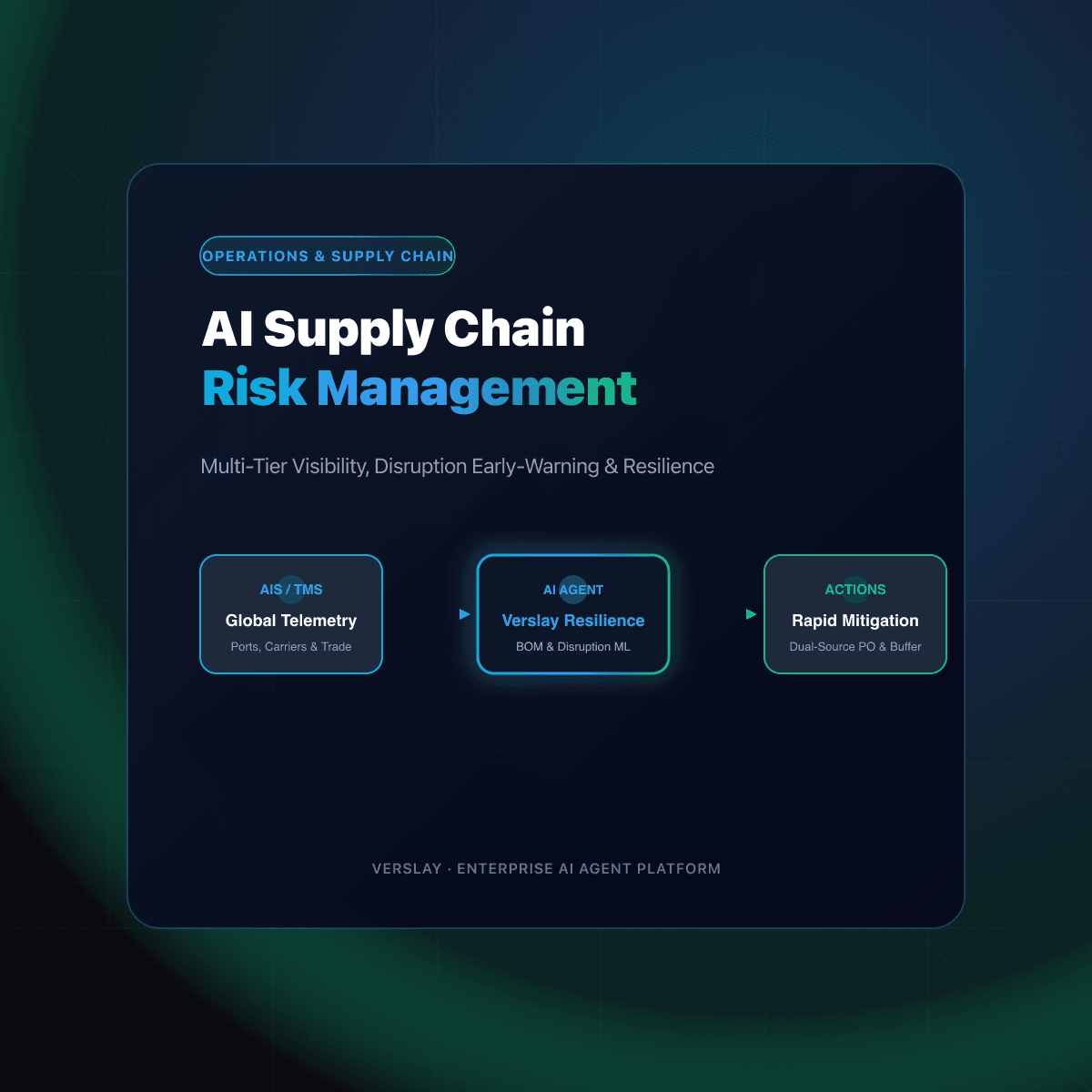
AI Supply Chain Risk Management for Operations Teams: Automating Multi-Tier Visibility, Disruption Early-Warning, and Supplier Resilience
AI supply chain risk management automates multi-tier supplier visibility, logistics disruption early-warning, and operational resilience scoring by deploying autonomous AI agents across supply chain, procurement, and operations teams. By eliminating blind spots across Tier-2 and Tier-3 suppliers, manual carrier check-ins, and fragmented spreadsheet tracking, enterprise operations teams cut disruption reaction time from weeks to minutes while safeguarding on-time delivery SLAs. Connected directly to enterprise resource planning (ERP) platforms, transport management systems (TMS), and global threat feeds via Model Context Protocol (MCP), AI agents transform fragile linear supply chains into dynamic, resilient operational networks.
Modern global supply networks are more distributed and vulnerable than ever. A single bottleneck—whether an unexpected geopolitical trade restriction, port terminal congestion, raw material shortage, or localized factory shutdown—can cascade down the production line, halting assembly plants and delaying millions of dollars in customer shipments. Despite these catastrophic stakes, the vast majority of operations teams still manage supplier exposure through reactive, point-in-time spreadsheets and static enterprise resource planning (ERP) databases.
When unexpected freight disruptions or supplier bankruptcies occur, operations managers often spend critical days scrambling across disparate systems: logging into carrier portals, emailing freight forwarders, pinging tier-one suppliers, and manually modeling stock-out dates in offline spreadsheets. By the time leadership receives a consolidated impact assessment, inventory buffers have evaporated and expediting freight costs have surged tenfold.
By orchestrating autonomous AI Agents integrated across enterprise data repositories and external intelligence feeds, forward-thinking operations teams establish predictive, always-on supply chain resilience. Rather than waiting for delayed shipment notices, AI agents continuously scan global shipping corridors, evaluate sub-tier financial dependencies, forecast lead-time variances, and generate automated mitigation strategies before revenue is impacted.
The Operational Reality: Why Traditional Supply Chain Risk Management Fractures
Traditional supply chain management operates on a brittle, linear model architected for steady-state operating conditions. In volatile global operating environments, this manual methodology collapses across five structural failure points:
[Upstream Disruption Event] ──► [Delayed Carrier EDI Notice] ──► [Manual Spreadsheet Assessment]
                                                                          │
                                                                          ▼
[Customer Stock-Out & Penalties] ◄── [Expedited Freight Surcharges] ◄── [Reactive Supplier Outreach]
1. Blind Spots in Multi-Tier Supplier Networks
Most enterprises maintain direct contractual relationships only with their Tier-1 suppliers. However, over 70% of catastrophic supply chain disruptions originate within Tier-2, Tier-3, or raw material suppliers further upstream. If a critical microchip fabricator, chemical refinery, or packaging plant encounters an outage, the Tier-1 supplier may not notify downstream buyers until delivery deadlines are already missed. Manual tracking tools lack the relational intelligence required to map deep sub-tier dependencies.
2. Information Asymmetry Across Fragmented Systems
Supply chain telemetry is scattered across fragmented, disconnected silos:
- Bill of materials (BOM), planned demand, and open purchase orders live in ERPs (SAP, Oracle, NetSuite).
- Ocean container status and air freight tracking reside in third-party Transportation Management Systems (TMS) or carrier portals.
- Supplier financial health, compliance certifications, and risk audits are trapped in procurement databases and static PDFs.
- External environmental risks (port strikes, severe weather, canal delays) exist only on news wires and maritime AIS data feeds. Because these streams rarely converge in real time, supply chain planners make inventory decisions without critical contextual signals.
3. Static Safety Stock and Outdated Lead-Time Assumptions
Enterprise inventory planning engines rely on static lead-time fields configured in master data tables months or years ago. In reality, actual transit times fluctuate constantly based on terminal congestion, customs inspection backlogs, and seasonal carrier blank sailings. When operations teams plan reorder points using static lead times, they either run out of critical inventory during sudden transit spikes or overcompensate by tying up millions in excessive safety stock.
4. Overwhelming Alert Fatigue Without Prioritized Impact
Legacy supply chain monitoring software floods operations managers with thousands of raw geopolitical, weather, and news alerts daily. Planners cannot manually cross-reference every regional weather event against their specific active purchase orders and bill-of-materials dependencies. Consequently, mission-critical warnings get lost in inbox clutter until an assembly line physically runs dry.
5. Slow, High-Cost Reactive Mitigation
When an unavoidable supply interruption strikes, executing an alternative sourcing plan manually requires days of administrative coordination: evaluating dual-source contracts, checking open capacity, drafting emergency purchase orders, and validating compliance. This operational latency limits an organization's options to exorbitant air-freight expedites or missed customer delivery commitments.
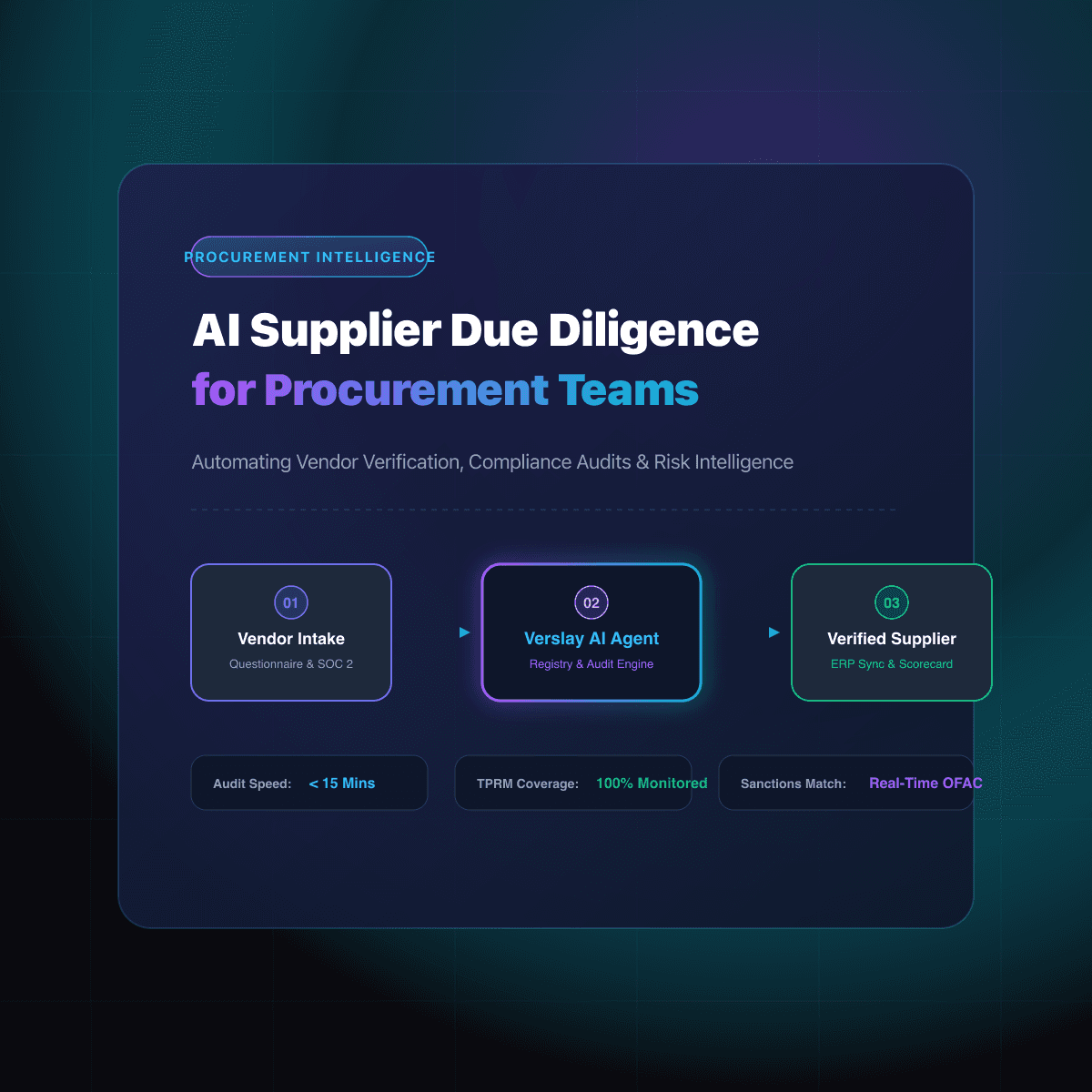
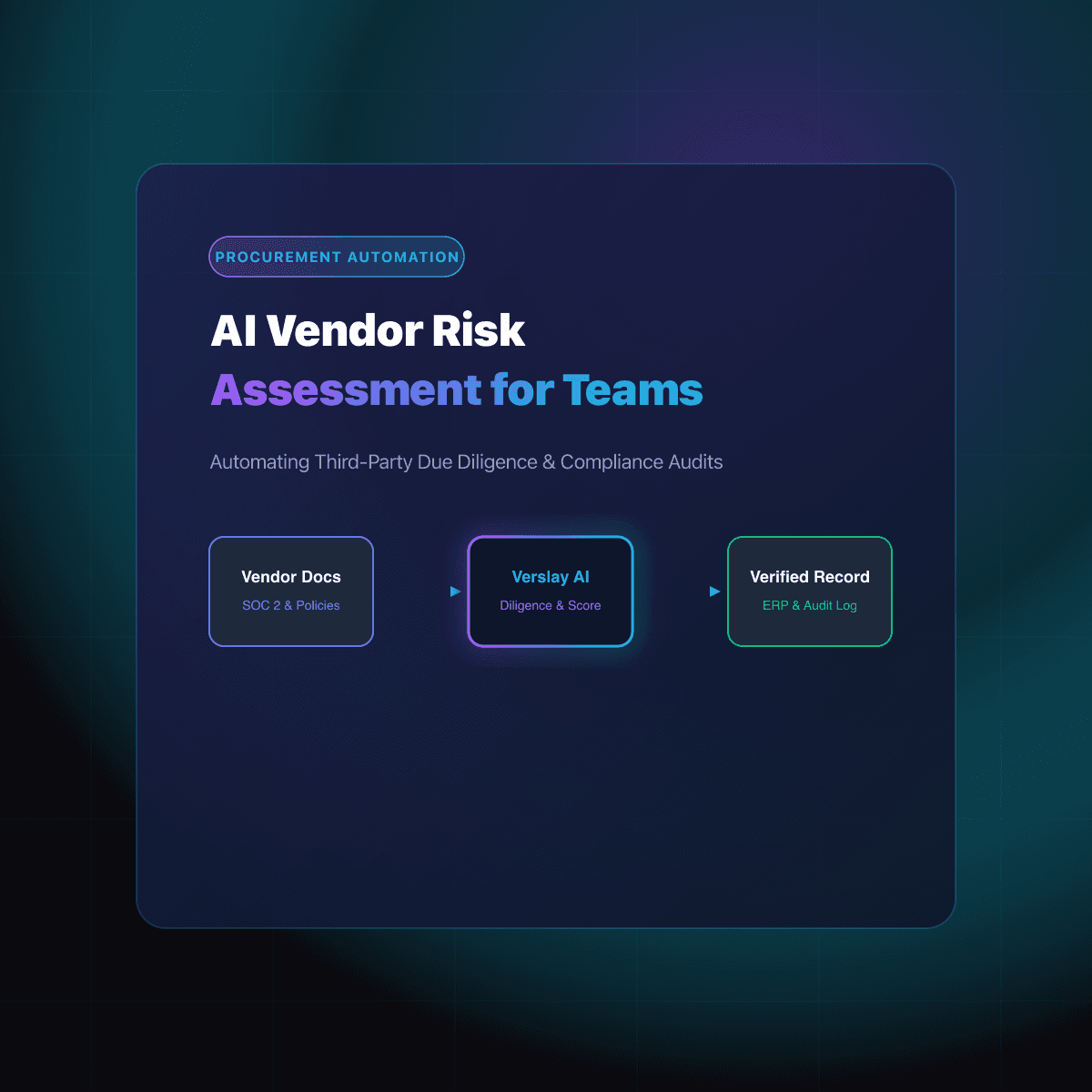
To understand how foundational supplier vetting connects with operational risk, read our in-depth guides on AI supplier due diligence for procurement teams and AI vendor risk assessment for procurement teams.
Architectural Blueprint: The Autonomous AI Supply Chain Risk Engine
Autonomous AI supply chain risk management functions as an active intelligence and orchestration layer bridging external maritime and geopolitical feeds with internal enterprise execution systems:
┌────────────────────────────────────────────────────────────────────────────────────────┐
│               VERSLAY AI SUPPLY CHAIN RISK MANAGEMENT ENGINE                           │
└────────────────────────────────────────────────────────────────────────────────────────┘
          ▲                                    ▲                                    ▲
          │ (1) Ingest & Map                   │ (2) Correlate & Simulate           │ (3) Mitigate & Execute
          ▼                                    ▼                                    ▼
┌───────────────────┐               ┌───────────────────────┐            ┌───────────────────────┐
│ Real-Time Signals │               │ Autonomous AI Agents  │            │ Enterprise Operations │
├───────────────────┤               ├───────────────────────┤            ├───────────────────────┤
│ • Vessel AIS Feeds│               │ • Multi-Tier Mapper   │            │ • SAP / NetSuite ERP  │
│ • Port Congestion │ ────────────► │ • Disruption Scorer   │ ─────────► │ • Blue Yonder / TMS   │
│ • Carrier EDIs    │               │ • Inventory Simulator │            │ • Jira / ServiceNow   │
│ • Weather & News  │               │ • Mitigation Drafter  │            │ • Slack / Teams Ops   │
└───────────────────┘               └───────────────────────┘            └───────────────────────┘
                                               │
                                               ▼
                                    ┌───────────────────────┐
                                    │ Human-in-the-Loop     │
                                    │ Exception Approval    │
                                    └───────────────────────┘
By unifying real-time event telemetry with transactional enterprise context via Model Context Protocol (MCP), AI agents do not merely report incidents—they evaluate operational consequences. When an adverse event occurs, the system traces affected sub-components across the bill of materials, calculates exact days-of-supply until stockout, and drafts actionable mitigation orders for planner review.
The 5 Core Pillars of AI Supply Chain Risk Management
An enterprise-ready AI supply chain resilience architecture is built upon five foundational operational pillars:
Pillar 1: Multi-Tier Sub-Supplier Relationship Mapping ──► Automated graph mapping of Tier-1 to Tier-N supply dependencies
Pillar 2: Real-Time Global Telemetry & Early Warning   ──► Continuous monitoring of AIS shipping, ports, weather, and labor
Pillar 3: Predictive Disruption Impact & Lead-Time ML  ──► Dynamic inventory run-out modeling based on real-time delays
Pillar 4: Autonomous Mitigation Workflow Orchestration ──► Pre-negotiated dual-source PO drafting and stock rebalancing
Pillar 5: Comprehensive Supplier Solvency & ESG Audit  ──► Proactive counterparty financial monitoring and ESG compliance
Pillar 1: Multi-Tier Sub-Supplier Relationship Mapping
Rather than limiting visibility to direct vendors, AI agents parse supplier contracts, customs manifests, bills of lading, and global trade disclosures to construct a living graph of multi-tier supplier dependencies.
- Single-Point-of-Failure Detection: Identifies hidden dependencies where multiple Tier-1 suppliers source essential sub-assemblies or specialized raw materials from the same single sub-tier facility.
- Geographic Concentration Analysis: Automatically flags when more than 30% of critical component manufacturing is concentrated in regions vulnerable to seismic activity, labor disputes, or trade embargoes.
- Continuous Graph Refinement: Updates relationship links whenever new customs data, purchase orders, or supplier documentation is ingested.
Pillar 2: Real-Time Global Telemetry & Early-Warning Monitoring
AI agents monitor thousands of global data streams around the clock, filtering out noise and correlating signals directly against active corporate purchase orders:
- Maritime & Port Congestion Telemetry: Integrates Automatic Identification System (AIS) vessel tracking and berth queue times at major global ports (such as Rotterdam, Shanghai, or Los Angeles) to detect container bottlenecks days before carriers send delay notices.
- Geopolitical & Trade Intelligence: Continuously evaluates regulatory watchlists, tariff modifications, export control updates, and trade restrictions affecting critical component categories.
- Weather and Climate Event Forecasting: Correlates severe typhoons, blizzards, and drought conditions (e.g., Panama Canal transit restrictions) with active freight corridors to estimate localized transit delays.
Pillar 3: Predictive Disruption Impact Modeling & Inventory Simulation
Detecting a delay is only useful if operations teams understand its exact downstream consequences. AI agents automatically cross-reference external delay signals with internal enterprise manufacturing schedules:
- BOM Run-Out Calculation: Translates a 14-day shipment delay into precise production impact by calculating remaining on-hand inventory, buffer stock, and planned production consumption rates.
- Financial Exposure Quantification: Estimates potential revenue at risk, customer SLA penalty fees, and assembly line downtime costs associated with projected component shortages.
- Dynamic Lead-Time Calibration: Automatically updates ERP lead-time parameters to reflect real-world logistics realities rather than theoretical catalog estimates.
Pillar 4: Autonomous Mitigation Workflow Orchestration
When a severe disruption threatens critical production milestones, AI agents generate turnkey mitigation playbooks rather than dumping raw alerts on human teams:
- Pre-Approved Dual-Sourcing Activation: Checks secondary vendor master agreements, verifies open production capacity, and pre-populates purchase orders for secondary suppliers with existing volume pricing tiers.
- Inventory Rebalancing Recommendations: Identifies surplus safety stock in non-impacted regional distribution centers and generates inter-warehouse transfer orders to keep critical facilities operational.
- Logistics Rerouting & Mode Optimization: Evaluates cost-benefit trade-offs between air expediting, sea-air multimodal transit, and alternate port routings before generating carrier booking requests.
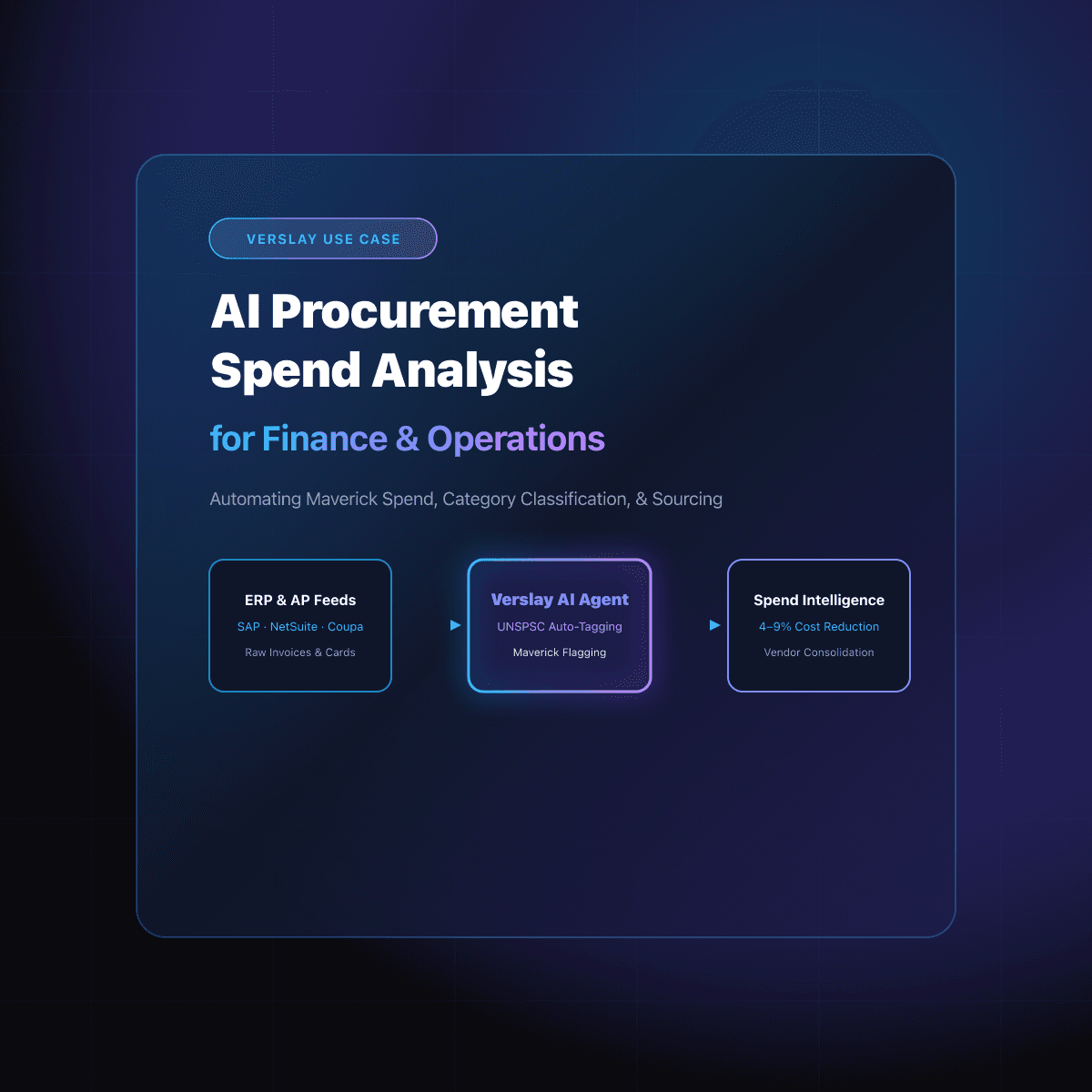
To learn how automated financial visibility empowers procurement decisions, see our guide on AI procurement spend analysis for finance and operations teams.
Pillar 5: Continuous Supplier Solvency & ESG Compliance Governance
Operational disruptions frequently stem from counterparty financial distress or sudden regulatory enforcement actions:
- Financial Health Monitoring: Tracks working capital metrics, payment default indicators, credit rating shifts, and legal filings across key manufacturing partners before insolvency halts deliveries.
- ESG & Regulatory Compliance Auditing: Continuously scans suppliers for compliance with forced labor prevention standards (e.g., UFLPA), carbon reporting mandates, and occupational safety regulations.
- Automated Scorecarding: Delivers quarterly resilience and reliability scores to procurement leaders to inform future contract renegotiations.
Operational Comparison: Legacy vs. AI Supply Chain Risk Operations
| Dimension | Traditional Manual Operations | Autonomous AI Risk Management | | :--- | :--- | :--- | | Visibility Scope | Tier-1 direct suppliers only | Comprehensive multi-tier (Tier-1 through Tier-N) graph | | Disruption Detection | Days/weeks after missed delivery milestone | Real-time predictive detection via AIS, weather, and trade telemetry | | Impact Assessment | Manual spreadsheet calculation taking 2–4 days | Instant BOM run-out calculation and revenue-at-risk scoring in minutes | | Inventory Optimization | Static safety stock based on outdated lead times | Dynamic buffer calibration adjusting to live transit velocity | | Mitigation Speed | 3–5 days of manual phone calls and emergency emails | Turnkey PO drafts, alternate routing, and transfer requests in seconds | | Data Silos | Disconnected ERP, TMS, and spreadsheet portals | Unified MCP orchestration across operational systems |
Implementing Resilient Operations with Verslay
Deploying AI supply chain risk management with Verslay gives enterprise operations and procurement teams an autonomous resilience backbone without requiring complex rip-and-replace software overhauls.
- Zero-Friction System Connectivity: Connect your existing ERP (SAP, NetSuite, Oracle), Transportation Management Systems, and communication channels through standardized Model Context Protocol (MCP) integrations.
- Context-Aware Agent Orchestration: Verslay specialized agents execute continuous monitoring, multi-tier relationship discovery, and predictive inventory modeling autonomously in the background.
- Deterministic Governance and Control: Human-in-the-loop review gates ensure planners maintain complete operational authority over purchase order reallocations, supplier switches, and capital commitments.
- Comprehensive Audit Logs: Every disruption warning, impact simulation, and mitigation action is immutably logged with source telemetry for regulatory transparency and post-incident reviews.
Transform your supply chain from a reactive vulnerability into a resilient competitive moat. Deploy autonomous AI Agents with Verslay to safeguard your enterprise operations against global disruptions.