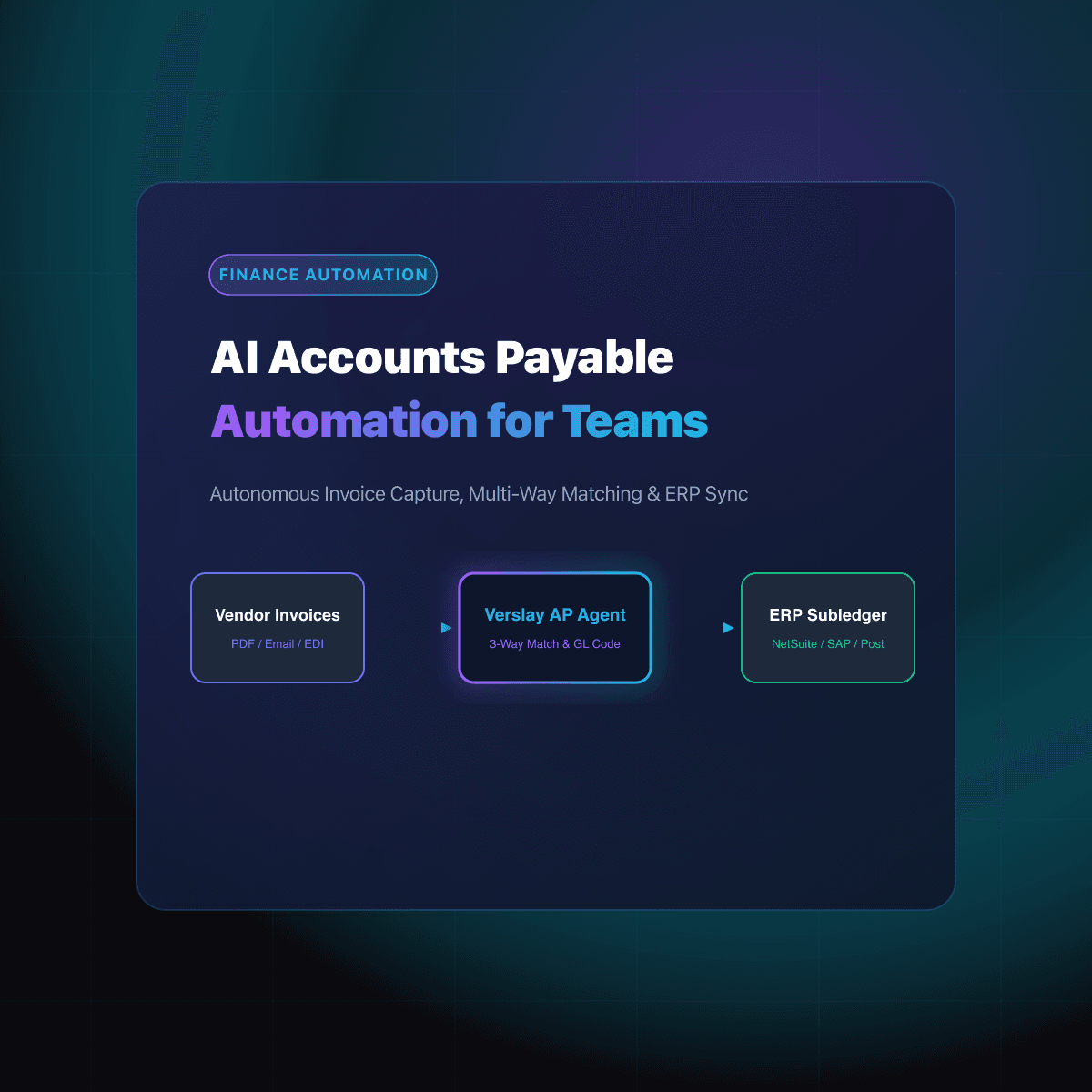
AI accounts payable automation transforms corporate finance operations by deploying autonomous AI agents to ingest multi-format vendor invoices, validate line items against purchase orders and goods receipts, resolve billing discrepancies, and post approved transactions directly to ERP general ledgers without manual data entry. By replacing error-prone manual keying and sluggish email-based approval chains with deterministic, agentic workflows, finance departments cut invoice processing cycle times from weeks to minutes, eliminate duplicate payments, and capture early-payment supplier discounts. Rather than wrestling with brittle template-based OCR systems, modern finance teams leverage context-aware AI models to achieve touchless accounts payable processing at enterprise scale.
In mid-market enterprises and global organizations alike, accounts payable (AP) serves as the primary cash disbursement engine. Yet despite decades of accounting software modernization, AP remains one of the most operationally fragmented and labor-intensive functions in corporate finance. Accounts payable clerks spend up to 70% of their working hours opening email attachments, transcribing vendor details into accounting software, hunting down department managers for sign-offs, and cross-checking spreadsheets to ensure line items match original purchase requisitions.
When invoice volumes scale during periods of company growth, this manual processing model quickly buckles under the load. Invoices sit unapproved in employee inboxes, vendor inquiries regarding overdue payments inundate finance desks, and organizations forfeit valuable 2/10 net 30 early-payment discounts. Worse still, manual oversight vulnerabilities lead to duplicate disbursements, fraudulent invoice processing, and inaccurate general ledger accruals that distort monthly cash flow reporting.
By connecting autonomous AI Agents directly to core ERPs, document streams, and communication channels via standardized Model Context Protocol (MCP) integrations, finance leaders establish an autonomous, closed-loop AP lifecycle. AI agents handle everything from document classification and semantic line-item extraction to multi-way matching, dynamic approval routing, and automated payment batch staging—preserving full auditability and strict segregation of duties.
The Operational Bottleneck: Why Legacy Accounts Payable Systems Fail
Traditional accounts payable workflows rely heavily on legacy optical character recognition (OCR) and rigid rule-based workflow engines. While these tools represented an initial step away from physical paper, they suffer from structural shortcomings that create persistent operational bottlenecks:
- Brittle Geometric OCR Templates: Legacy OCR engines rely on zonal coordinates to locate vendor names, invoice numbers, and line items. The moment a supplier updates their invoice layout, adjusts font sizes, or introduces a multi-page table, the OCR parser fails, dumping the document into a manual exception queue.
- Fragmented Operational Silos: Invoice data arrives via email inboxes; purchase orders (POs) live in procurement portals or ERP systems; goods receipt logs reside in warehouse management software; and vendor contracts sit in legal repositories. AP staff must manually navigate across four or five disjointed applications to verify a single transaction.
- Approval Latency and Orphaned Invoices: Invoices requiring departmental authorization often stall in manager email queues. Without automated escalation paths or contextual data presentation, budget owners delay approvals, resulting in late payment penalties and strained supplier partnerships.
- Non-Standard GL Coding Discrepancies: Different clerks often code identical vendor charges to disparate general ledger accounts or cost centers, creating inconsistencies in departmental spending reports that FP&A teams must laboriously correct during month-end close.
- Vulnerability to Duplicate and Fraudulent Invoices: Human reviewers processing hundreds of invoices weekly struggle to catch subtle duplicate billings, inflated unit prices, or altered supplier bank routing information—costing enterprises millions in leakage annually.
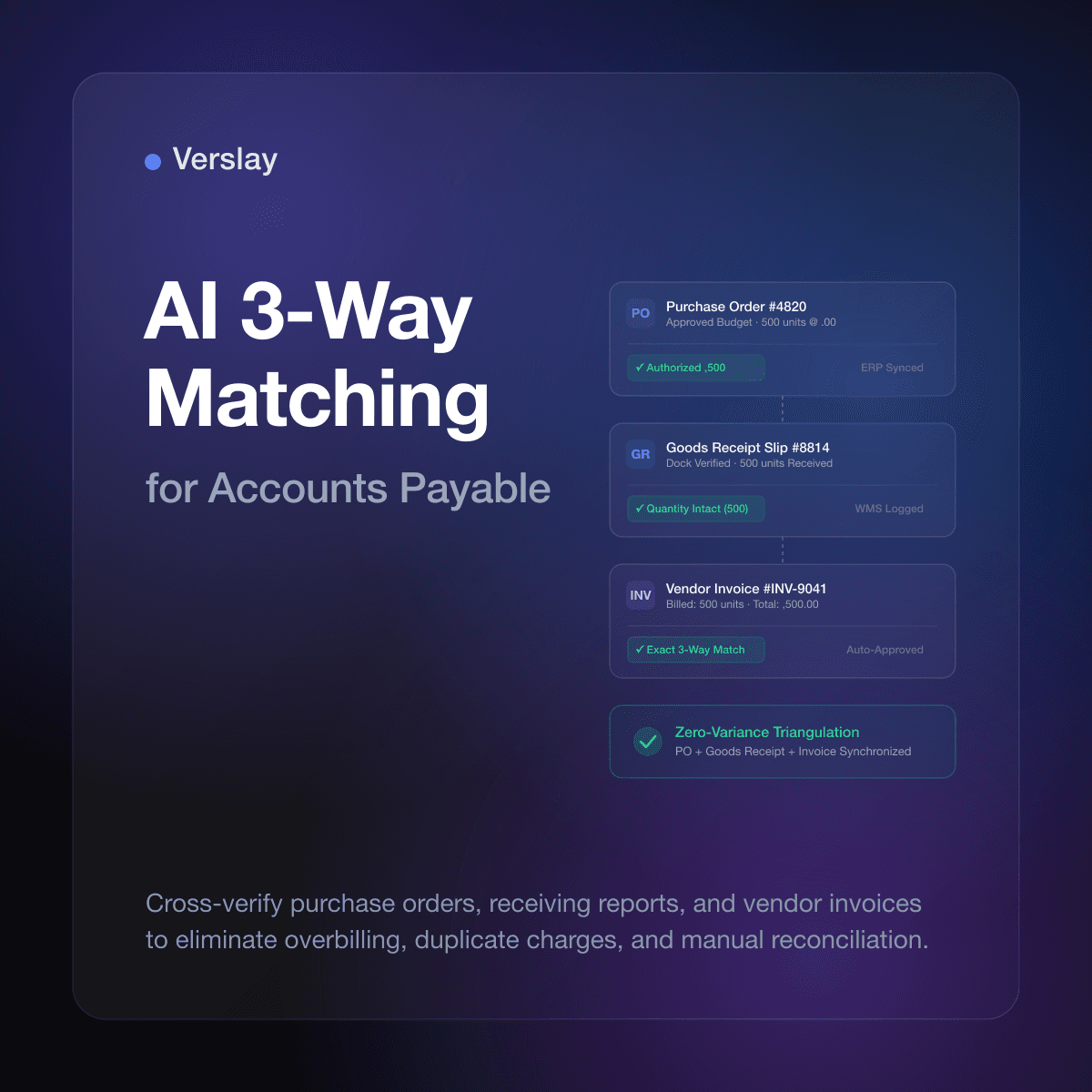
To learn how related financial workflows achieve end-to-end automation, see our in-depth guides on AI 3-way matching for accounts payable teams and AI invoice reconciliation for finance teams.
Core Capabilities of Autonomous AI Accounts Payable Agents
Modern AI-powered accounts payable automation replaces fragile point solutions with an intelligent multi-agent framework designed to handle the entire lifecycle of a vendor invoice:
1. Omnichannel Ingestion & Semantic Document Extraction
Transforming unstructured invoice documents into clean, structured accounting data:
- Multi-Source Ingestion: Monitors dedicated AP email inboxes, vendor portals, EDI feeds, and scanned document repositories in real time.
- Zero-Template Semantic Parsing: Employs multimodal vision-language models to extract vendor names, tax IDs, line-item descriptions, quantities, unit prices, discounts, and payment terms—regardless of document formatting or language.
- Handwritten & Mobile Capture Handling: Accurately parses field receipts, stamped delivery receipts, and handwritten annotations without manual re-keying.
2. Autonomous Multi-Way Matching & Discrepancy Resolution
Validating vendor charges against enterprise records with mathematical precision:
- Two-Way, Three-Way & Four-Way Verification: Automatically reconciles vendor invoices against purchase orders, receiving inspection slips, and master contract pricing schedules.
- Unit of Measure & SKU Normalization: Converts disparate vendor packaging conventions (e.g., cases vs. individual units) and maps supplier catalog numbers to internal inventory items.
- Intelligent Tolerance Handling: Distinguishes between acceptable rounding variances (such as freight or sales tax differences within pre-set financial thresholds) and substantive price-per-unit inflation that requires human dispute.
3. Contextual GL Coding & Tax Line Allocation
Ensuring complete accounting precision before transactions ever touch the general ledger:
- Historical GL Account Prediction: Analyzes line-item semantics, vendor history, and departmental cost centers to suggest accurate chart-of-accounts (COA) coding with high statistical confidence.
- Multi-Line & Project Expense Splitting: Automatically divides single invoices across multiple cost centers, internal projects, or geographical entities according to contract parameters.
- Tax & Compliance Validation: Checks vendor W-9/W-8BEN status, verifies VAT/GST registration numbers against regulatory databases, and splits non-taxable and taxable items correctly.
4. Dynamic Multi-Level Approval Routing
Eliminating invoice stagnation through intelligent, interactive notification channels:
- Threshold & Hierarchy-Based Routing: Automatically determines the exact approval hierarchy based on dollar value, cost center budget owner, and delegation-of-authority matrices.
- Interactive Chat-Based Approvals: Dispatches rich, contextual approval cards via Slack, Microsoft Teams, or mobile notifications—allowing managers to view the invoice PDF, PO match status, and budget impact, and approve with a single click.
- Automated Escalation Triggers: Re-routes pending approvals to secondary signatories when designated approvers are out of office or unresponsive beyond defined SLA windows.
5. Automated ERP Synchronization & Payment Staging
Closing the loop directly within enterprise financial systems:
- Direct Subledger Posting: Generates balanced journal entries and vendor bills in systems like NetSuite, SAP, Workday, QuickBooks, or Microsoft Dynamics 365 via authenticated APIs.
- Duplicate Detection & Fraud Screening: Cross-references invoice numbers, vendor tax IDs, billed amounts, and bank account details against historic ledger data to flag potential duplicate payments or unauthorized bank account changes.
- Optimized Payment Staging: Groups approved bills into payment batches aligned with supplier cash-discount terms (such as 2% 10 Net 30), maximizing working capital returns while preventing late charges.
Technical Architecture: How AI AP Automation Operates via MCP
Enterprise finance workflows require bank-grade security, deterministic data execution, and continuous audit trails. AI accounts payable agents operate within an enterprise-controlled environment using the Model Context Protocol (MCP):
+---------------------------------------------------------------------------------+
|                       Enterprise Ingestion & Financial Core                     |
|         (AP Inboxes, Vendor Portals, NetSuite, SAP, Workday, QuickBooks)         |
+---------------------------------------+-----------------------------------------+
                                        |
                                        v
+---------------------------------------------------------------------------------+
|                         Model Context Protocol (MCP) Gateway                    |
|       - OAuth2 / JWT Security Vault        - Deterministic Schema Validation    |
|       - Role-Based Access Controls         - Immutable Audit Ledger             |
+---------------------------------------+-----------------------------------------+
                                        |
                                        v
+---------------------------------------------------------------------------------+
|                    Autonomous AI Accounts Payable Agent Suite                   |
|                                                                                 |
|   +-----------------------+ +-----------------------+ +-----------------------+ |
|   |  Semantic Ingestion   | |   Multi-Way Matching  | |  GL Auto-Coding & Tax | |
|   |    & Parsing Engine   | |   & Tolerance Engine  | |   Allocation Engine   | |
|   +-----------------------+ +-----------------------+ +-----------------------+ |
|   |  Dynamic Approval &   | |  Fraud & Duplicate    | |   ERP Ledger Sync &   | |
|   |   Escalation Router   | |   Detection Guard     | |   Payment Batch Stager| |
|   +-----------------------+ +-----------------------+ +-----------------------+ |
+---------------------------------------+-----------------------------------------+
                                        |
                    +-------------------+-------------------+
                    |                                       |
                    v                                       v
+---------------------------------------+   +-------------------------------------+
|        Core ERP & Banking Rails       |   |     Human-in-the-Loop Governance    |
|   (NetSuite, SAP, Stripe, Banking API)|   |       (AP Specialist / Controller)  |
|  - Validated Vendor Bill Creation     |   |  - One-Click Exception Resolution   |
|  - Real-Time AP Aging Subledger       |   |  - Tolerance Override Authorization |
|  - Scheduled Payment Execution        |   |  - Vendor Bank Account Verification |
+---------------------------------------+   +-------------------------------------+
Through this architecture, sensitive financial credentials and vendor records remain encrypted within the enterprise boundary. AI agents operate with least-privilege API access, staging validated records for controller oversight while preserving immutable audit logs for external financial compliance audits.
For organizations managing high transaction volumes in fast-paced industries like SaaS and professional services, this autonomous architecture scales transaction throughput without proportional administrative hiring.
Step-by-Step Implementation Framework for AI AP Automation
Transitioning an enterprise accounts payable department to autonomous AI workflows follows a structured four-phase roadmap:
+-------------------+      +-------------------+      +-------------------+      +-------------------+
|      Phase 1      |      |      Phase 2      |      |      Phase 3      |      |      Phase 4      |
|  Channel & ERP    | ---> | Matching Rules &  | ---> | Dynamic Approval  | ---> | Touchless Staging |
|    Integration    |      | Tolerance Tuning  |      | Channels & Alerts |      | & Continuous Sync |
+-------------------+      +-------------------+      +-------------------+      +-------------------+
Phase 1: Channel & ERP Integration
- Connect AP ingestion streams (dedicated Gmail/Outlook inboxes, vendor upload portals, SFTP folders) to the AI parsing engine.
- Integrate the central ERP chart of accounts, vendor master records, and open purchase order tables via secure MCP connectors.
- Ingest 90 days of historic vendor invoices to benchmark extraction accuracy and calibrate vendor-specific nuances.
Phase 2: Matching Rules & Tolerance Configuration
- Configure standard tolerance thresholds for minor shipping, packaging, and tax variations by vendor tier.
- Establish automated 2-way matching rules for non-PO recurring expenses (e.g., utility bills, software subscriptions) and 3-way matching rules for physical inventory and hardware procurement.
- Run the AI engine in shadow mode alongside existing manual processing to verify matching precision.
Phase 3: Dynamic Approval Channels & Alerts
- Map departmental approval hierarchies and authorization spending limits directly from corporate policy matrices.
- Activate interactive Slack or Microsoft Teams notification bots, enabling one-touch approval workflows for budget owners.
- Implement proactive anomaly alerts for sudden billing spikes, unrecognized vendor banking changes, or mismatched line-item pricing.
Phase 4: Touchless Staging & Continuous Sync
- Enable touchless posting for invoices that meet 100% verification criteria and fall within automated tolerance boundaries.
- Route exceptions and unmatched discrepancies to a centralized AP resolution workbench with pre-highlighted line-item conflicts.
- Implement continuous feedback loops where AP analyst exception corrections dynamically improve future GL coding and extraction accuracy.
Enterprise Impact: Measurable Operational Transformation
Deploying autonomous accounts payable agents delivers immediate, quantifiable improvements to working capital management, operational speed, and accounting accuracy:
| Operational Dimension | Legacy Manual AP Processing | Autonomous AI Accounts Payable Automation | | :--- | :--- | :--- | | Invoice Cycle Time | 10–15 business days | < 2 hours from receipt to posting | | Cost per Invoice Processed | $12.00 – $15.00 | < $1.50 (over 85% cost reduction) | | Touchless Processing Rate | < 15% (frequent template failures) | > 85% automated straight-through processing | | PO Matching Accuracy | 80% – 85% (human transcription fatigue) | > 99.5% deterministic multi-way verification | | Early Payment Discount Capture | < 20% captured due to approval delays | > 95% captured via automated payment scheduling | | Duplicate Payment Risk | 0.5% – 1.5% of total disbursements | < 0.001% prevented by pre-posting ledger validation | | Approval Bottlenecks | 5–7 days waiting on email responses | Same-day resolution via interactive messaging cards | | Audit Preparation | Weeks assembling paper trails and PDFs | Instant 1-click audit trail extraction with complete logs |
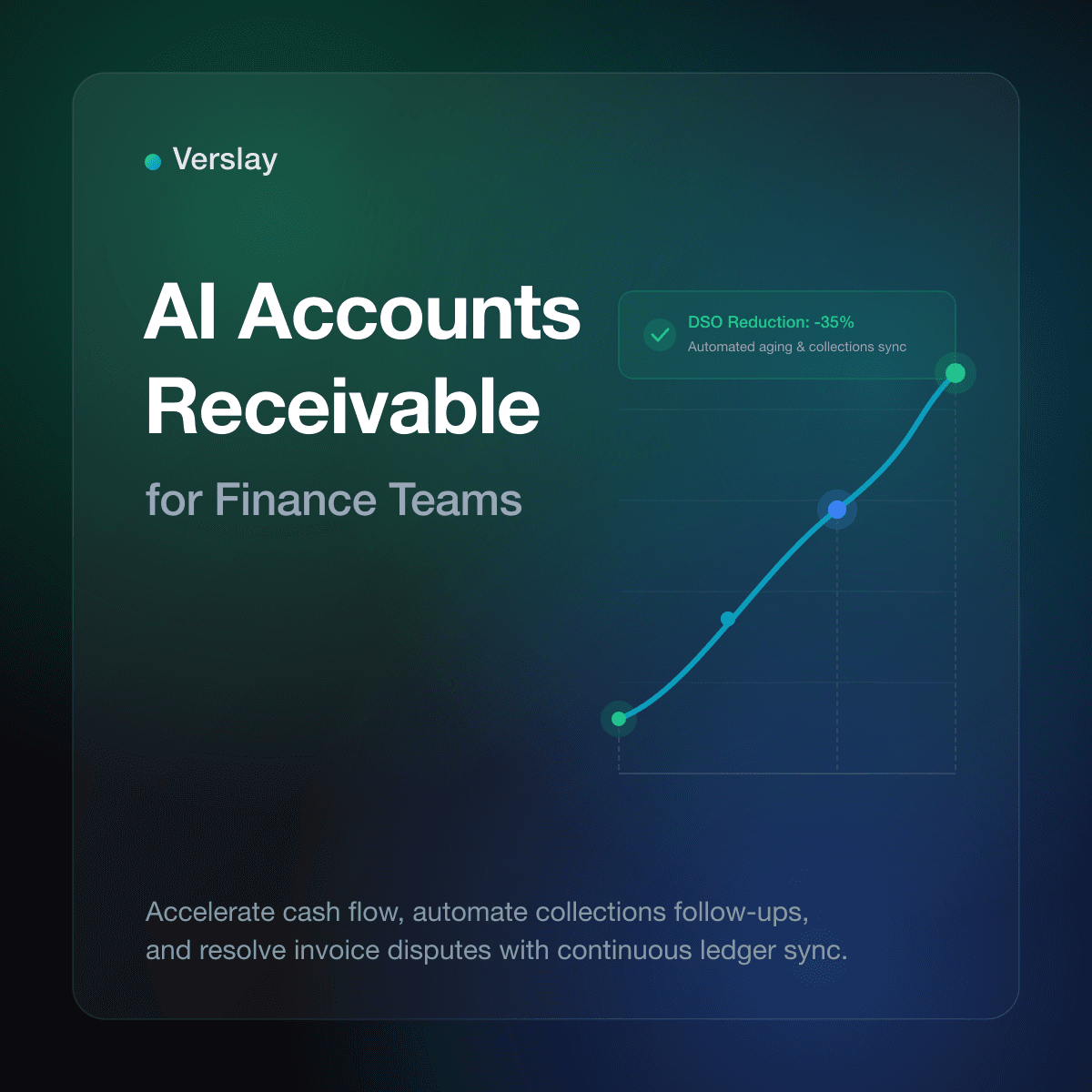
To see how automated payment tracking balances with incoming revenue streams, explore our companion analysis on AI accounts receivable automation for finance teams.
Frequently Asked Questions
What is AI accounts payable automation?
AI accounts payable automation deploys autonomous software agents to extract invoice data, match line items against purchase orders and receiving slips, route approvals, and sync journal entries directly to ERP general ledgers without manual keying. By leveraging multimodal language models rather than rigid templates, AI accounts payable systems adapt to any invoice format, resolve minor discrepancies, and drastically shorten invoice processing lifecycles.
How does AI accounts payable automation differ from traditional OCR?
Traditional OCR relies on rigid geometric templates that break whenever invoice layouts change, whereas generative AI understands document context and semantics, handling non-standard formats, handwritten notes, and edge-case exceptions autonomously. Furthermore, while legacy OCR only extracts characters, AI agents validate business logic, reconcile purchase orders, allocate general ledger codes, and execute workflows across multiple software applications.
Will AI take over accounts payable jobs?
AI automates repetitive data entry, line-item matching, and routine approval routing, shifting AP specialists from manual invoice processing to strategic vendor negotiations, exception handling, and cash flow optimization. Rather than eliminating finance teams, autonomous agents eliminate tedious administrative friction, allowing accounting professionals to focus on working capital strategy, fraud prevention, and vendor relationship management.
How does AI accounts payable automation prevent duplicate payments and fraud?
AI agents continuously cross-reference incoming invoice metadata—including vendor tax identification numbers, invoice numbers, amounts, PO identifiers, and bank account details—against historic ERP subledgers and pending payment batches. If an invoice matches a previous transaction or exhibits suspicious discrepancies such as altered remittance instructions, the system instantly halts the workflow and routes the item for manual controller inspection.
Can AI accounts payable automation integrate with our existing ERP?
Yes. Modern AI accounts payable agents integrate seamlessly with leading ERP and accounting systems—including NetSuite, SAP, Workday, QuickBooks, Microsoft Dynamics 365, and Sage Intacct—via authenticated APIs and Model Context Protocol (MCP) bridges. Because agents operate through existing enterprise interfaces, implementation requires no rip-and-replace of core accounting systems or complex IT infrastructure overhauls.