AI Accounts Payable Fraud Detection for Finance Teams: Stopping Vendor Impersonation, BEC Schemes, and Payment Anomalies with Autonomous Agents
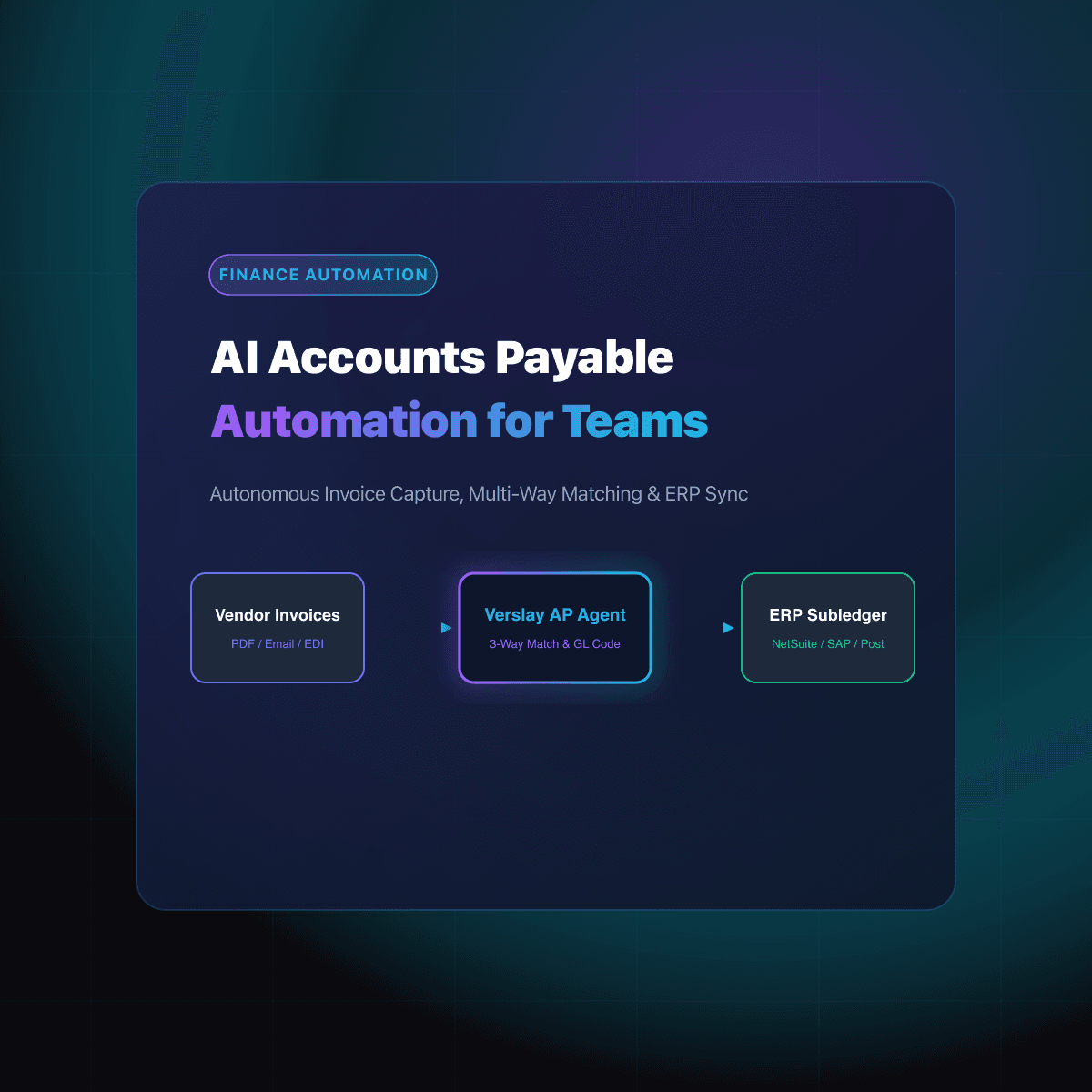
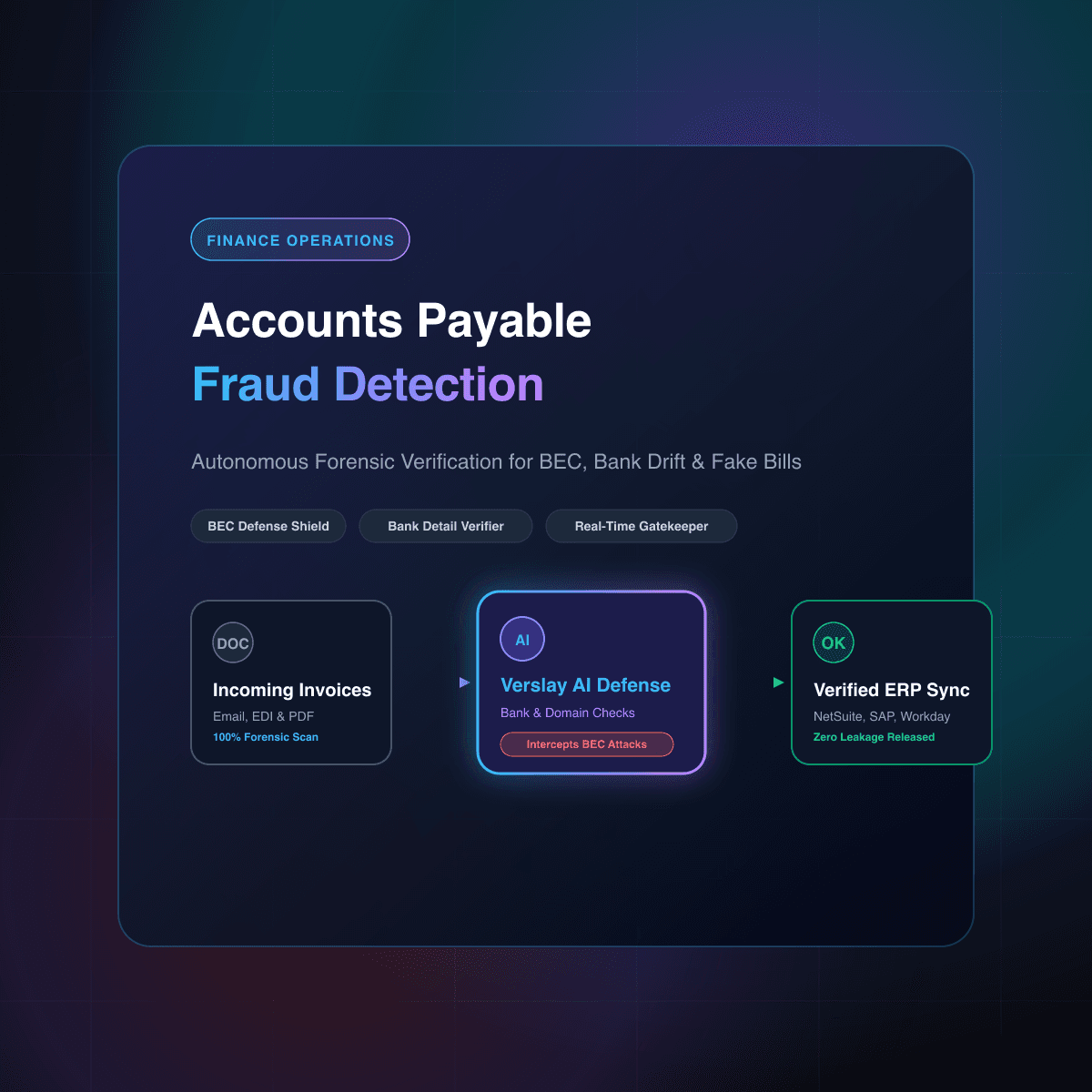
AI accounts payable fraud detection deploys autonomous AI agents to continuously inspect incoming invoices, verify supplier bank account authenticity, detect vendor impersonation, and intercept unauthorized disbursement requests before payments leave corporate accounts. By analyzing forensic document metadata, cross-referencing enterprise resource planning (ERP) vendor master records, and correlating transaction histories in real time, autonomous fraud detection agents eliminate the manual review blind spots that expose enterprises to business email compromise (BEC), synthetic invoicing, and internal fraud. Finance teams achieve automated, continuous protection across every accounts payable touchpoint without introducing payment processing delays or manual approval bottlenecks.
In corporate finance, accounts payable (AP) represents the primary cash disbursement engine—and consequently the single most targeted vulnerability vector for external threat actors and internal bad actors alike. According to reports by the Association of Certified Fraud Examiners (ACFE), billing schemes and fraudulent cash disbursements represent the most costly category of financial fraud, taking an average of 14 to 18 months to detect and costing organizations up to 5% of annual revenue. With the democratization of generative AI, cybercriminals can now craft pixel-perfect lookalike invoices, synthesize plausible vendor email communication, and execute targeted executive impersonation attacks with alarming frequency.
Traditional internal controls—such as periodic vendor audits, sample-based invoice reviews, and static approval matrices—are ill-equipped to combat algorithmic financial fraud. Finance professionals processing hundreds of invoices each week face severe review fatigue. When vendor bank details change in an email thread or an invoice layout appears subtly altered, human operators under deadline pressure frequently authorize payments without recognizing the deception.
By connecting autonomous AI Agents directly into financial operations via standardized Model Context Protocol (MCP) integrations, modern finance organizations create an unyielding, 24/7 defense perimeter. AI agents inspect 100% of incoming transactions against historical baseline models, verify external identity registries, and enforce forensic validation rules before a single dollar is disbursed.
The Anatomy of Modern Accounts Payable Fraud Schemes
To build resilient defensive controls, finance and risk leaders must understand how contemporary AP fraud schemes bypass legacy controls. Fraudulent disbursement operations typically exploit five distinct attack vectors:
1. Business Email Compromise (BEC) and Vendor Impersonation
BEC attacks represent the most financially devastating vector in B2B transactions. Attackers either breach a legitimate vendor email account or register typo-squatted lookalike domains (e.g., replacing supplier-corp.com with suppiier-corp.com). Posing as the vendor credit manager or CFO, they notify accounts payable of an "urgent update to remittance banking instructions" due to a corporate restructuring or bank audit. Because the invoice matches an ongoing enterprise project, AP staff frequently update vendor master records and route payments directly to offshore mule accounts.
2. Tampered Bank Details and Remittance Interception
Even without full email compromise, bad actors intercept digital invoices in transit or manipulate PDFs directly. Attackers alter the beneficiary account number, routing code, or IBAN while retaining the vendor original branding, tax ID, and itemized billing lines. Because the document appears visually identical to historical submissions, standard human review fails to spot the fraudulent routing details.
3. Synthetic Invoices and Phantom Vendors
In synthetic invoice schemes, fraudsters submit completely fabricated invoices for intangible services—such as "Q3 Strategic IT Architecture Advisory," "Digital Marketing Optimization," or "Corporate Compliance Retainer." Because these line items lack tangible physical goods receipts (bill of lading or warehouse slips), they often circumvent automated inventory matching and rely solely on hasty managerial sign-offs.
4. Duplicate Invoicing and Altered Invoice Padding
Duplicate fraud exploits human oversight during high-volume periods. Attackers or unscrupulous vendors submit an invoice twice: once through the primary finance portal and once via email to an individual department head, slightly modifying the invoice number (e.g., adding an extra hyphen, leading zero, or trailing letter like INV-9821-A). Similarly, padding schemes inflate line-item unit pricing or sales tax percentages above contractually agreed rates.
5. Split Purchase Orders and Approval Threshold Evasion
Internal collusion or rogue employee fraud frequently takes the form of structured purchase splitting. If an enterprise requires dual executive signatures for disbursements exceeding $10,000, bad actors systematically structure four separate invoices for $2,490, directing payments to shell companies they secretly control.
Why Traditional ERP Controls and Legacy OCR Fail
Most enterprises assume their existing accounting platforms (such as NetSuite, SAP, Workday, or QuickBooks) and optical character recognition (OCR) capture tools provide adequate protection. However, these systems were built for workflow convenience, not adversarial forensic defense:
┌────────────────────────────────────────────────────────────────────────┐
│               LIMITATIONS OF TRADITIONAL AP DEFENSES                   │
├───────────────────────────────┬────────────────────────────────────────┤
│ Traditional Tool              │ Fatal Vulnerability                    │
├───────────────────────────────┼────────────────────────────────────────┤
│ Legacy OCR Parsers            │ Only extracts geometric text boxes;    │
│                               │ blind to file metadata tampering,      │
│                               │ font inconsistencies, or ghost layers. │
├───────────────────────────────┼────────────────────────────────────────┤
│ Rule-Based ERP Matching       │ Enforces rigid exact-match logic;      │
│                               │ passes fraudulent invoices if a valid  │
│                               │ open PO number is quoted on the bill.  │
├───────────────────────────────┼────────────────────────────────────────┤
│ Manual Dual Authorization     │ Prone to rubber-stamping; approvers    │
│                               │ rarely cross-verify recipient routing  │
│                               │ numbers against historical contracts.  │
├───────────────────────────────┼────────────────────────────────────────┤
│ Annual Vendor Audits          │ Purely reactive; identifies losses     │
│                               │ months after funds have cleared and    │
│                               │ cannot be recovered from mule accounts.│
└───────────────────────────────┴────────────────────────────────────────┘
When paired with AI Accounts Payable Automation, organizations replace brittle OCR scrapers with deep contextual comprehension that treats every transaction as an auditable security event.
Autonomous AI Verification Architecture: How Agents Stop AP Fraud
Autonomous accounts payable fraud detection operates as an intelligent middleware layer between communication channels (inbox, vendor portals, EDI feeds) and core ERP ledgers. The AI agent executes a deterministic four-stage verification protocol for every transaction:
[ Incoming Invoice (PDF / EDI / Email) ]
                  │
                  ▼
┌────────────────────────────────────────────────────────┐
│ Phase 1: Ingestion & Forensic Document Scan            │
│ • PDF metadata, creation software, font layers         │
│ • Domain authentication (SPF, DKIM, DMARC)             │
└────────────────────────────────────────────────────────┘
                  │
                  ▼
┌────────────────────────────────────────────────────────┐
│ Phase 2: Vendor Master Record Cross-Verification       │
│ • Exact matching of registered Tax ID / EIN / VAT      │
│ • Bank routing & IBAN reconciliation                   │
│ • Historical billing cadence & price variance analysis │
└────────────────────────────────────────────────────────┘
                  │
                  ▼
┌────────────────────────────────────────────────────────┐
│ Phase 3: External Registry & Identity Validation       │
│ • Federal/state corporate registry verification        │
│ • Bank account name-to-entity cryptographic validation │
│ • Sanctions and watch-list screening                   │
└────────────────────────────────────────────────────────┘
                  │
                  ▼
┌────────────────────────────────────────────────────────┐
│ Phase 4: Autonomous Scoring & Gated Escalation         │
│ • Anomaly score < 5  ──► Auto-Clear to 3-Way Match     │
│ • Anomaly score ≥ 5  ──► Fraud Quarantine & Alert      │
│ • Trigger Out-of-Band Callback Verification Protocol   │
└────────────────────────────────────────────────────────┘
Phase 1: Ingestion and Forensic Document Analysis
When a document enters the AP stream, the AI agent performs an immediate forensic breakdown:
- Digital Artifact Inspection: Evaluates PDF metadata, creation dates, modification timestamps, and software signatures. Invoices generated via consumer image editors (e.g., Photoshop or Canva) or exhibiting modified text layers trigger immediate red flags.
- Header & Domain Authentication: Validates sender email headers against cryptographic standards (SPF, DKIM, DMARC). The agent detects visual lookalike domains, spoofed headers, and newly registered domains (under 30 days old).
Phase 2: Vendor Master File Cross-Verification
The agent interfaces with the ERP vendor master file via secure MCP tools:
- Banking Detail Comparison: Evaluates payment routing instructions against historical disbursements. Any deviation in bank name, account number, or SWIFT/BIC code halts the pipeline instantly.
- Invoice Number Sequencing: Evaluates whether the invoice number aligns with the supplier historical sequencing pattern. A sudden leap from
INV-1045toINV-8900or an out-of-order sequence flags anomalous billing behavior. - Statistical Cadence Profiling: Analyzes billing frequency and amount distributions. An invoice arriving twice as early as usual or billing 40% above historical standard deviations requires explicit justification.
Phase 3: External Registry and Identity Validation
Rather than relying solely on internal documents, autonomous agents query trusted third-party repositories:
- Corporate & Tax Registry Cross-Check: Validates corporate registration status, active business standing, and tax ID validity with state or national registries (e.g., IRS TIN matching, European VIES VAT system).
- Global Sanctions & Watch-List Screening: Automatically cross-references vendor entities and beneficial owners against OFAC, PEP, and international financial crime databases.
Phase 4: Autonomous Scoring and Gated Escalation
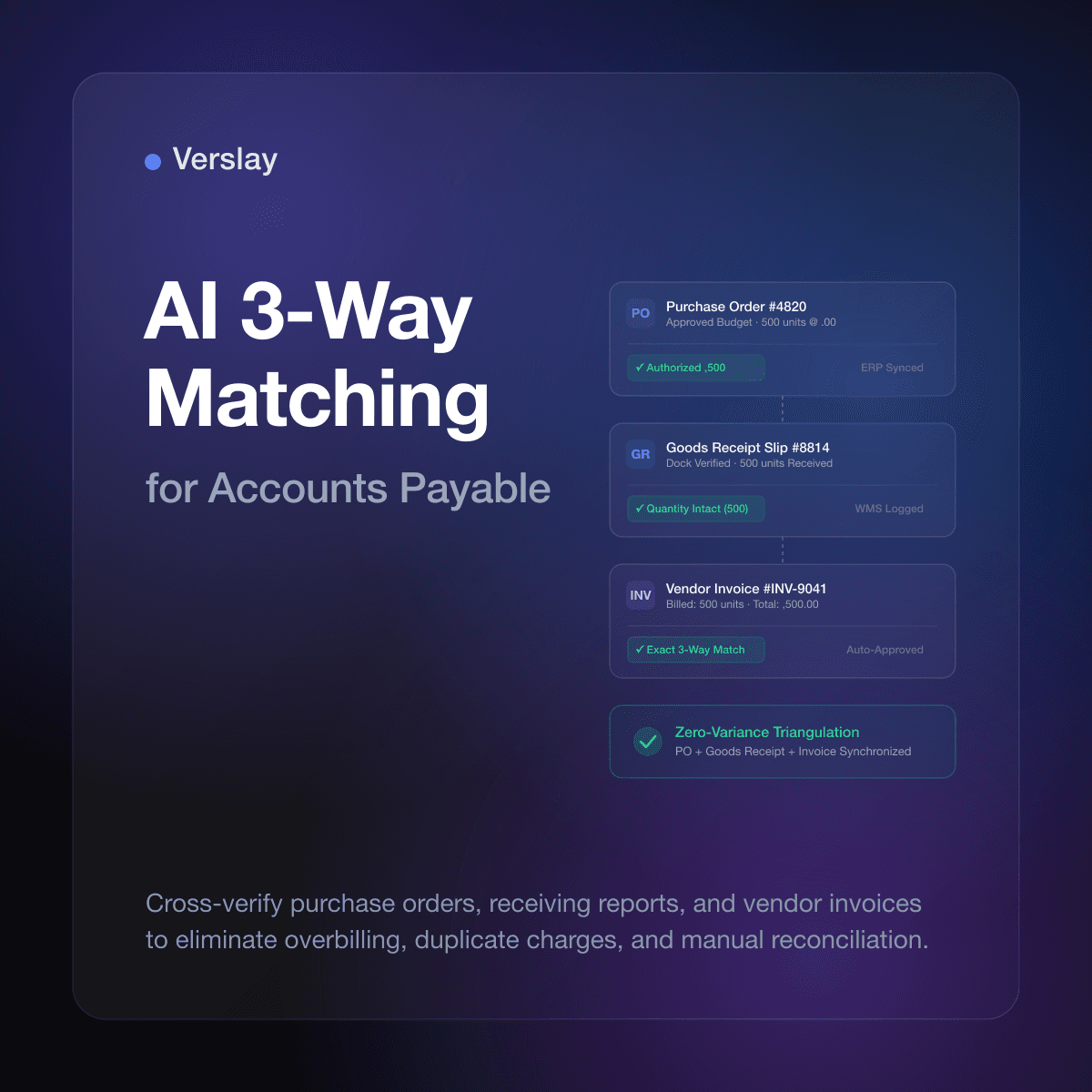
The agent compiles a composite Risk Confidence Score from 0 to 100. Transactions meeting strict safety thresholds transition seamlessly into 3-Way Matching and automated payment queues. Transactions triggering fraud signals are quarantined with an evidence dossier highlighting exact discrepancies, while automatically generating an out-of-band verification task for compliance officers.
Core Verification Checks Matrix
Modern fraud detection requires evaluating dozens of micro-signals simultaneously. The matrix below illustrates how autonomous AI agents outperform legacy manual and ERP methods across vital control points:
| Verification Control | Manual AP Review | Standard ERP Rules | Autonomous AI Agent |
| :--- | :--- | :--- | :--- |
| Bank Account Change Validation | Occasional phone check; easily socially engineered | Static field alert after change is saved | Multi-party out-of-band cryptographic challenge before record update |
| Lookalike Domain Detection | Easily missed by human eye (examp1e.com) | Incapable of evaluating email domains | Analyzes Levenshtein distance, DNS records, domain age, and MX servers |
| PDF Metadata Forensic Scan | Not performed | Not supported | Evaluates creation software, font encodings, and layered image artifacts |
| Fuzzy Duplicate Invoice Identification | Relies on exact invoice number matches | Flags identical invoice number only | Detects identical amounts, matching line items, or permutated IDs across periods |
| Split PO / Threshold Circumvention | Rarely correlated across clerks | Basic single-PO checks | Graph-based clustering across all departmental cost centers in real time |
| Contractual Price Drift Detection | Spot checks against master service agreements | Warns only on rigid variance caps | Dynamic line-item comparison against active legal contracts and rate cards |
| Sanctions & Watchlist Screening | Periodic annual batch uploads | Expensive optional third-party add-on | Real-time API query against OFAC, PEP, and global watchlists on every run |
Integrating these capabilities alongside automated Invoice Reconciliation ensures that accounting departments maintain impeccable financial integrity without increasing administrative headcount.
Real-World Interception Scenarios
To demonstrate how autonomous agents protect company assets, consider three common enterprise scenarios:
Scenario 1: Intercepting a Sophisticated BEC Vendor Bank Update
A major IT infrastructure vendor sends an invoice for $84,200 referencing an active enterprise purchase order. The email originates from the vendor actual domain via a compromised account. However, the remittance section lists a new bank account located in a different jurisdiction, accompanied by an urgent request for immediate wire processing.
- Legacy Outcome: The AP clerk notices the valid PO, observes the legitimate email sender, updates the vendor bank details, and disburses the wire. The theft is only uncovered 45 days later when the legitimate vendor issues an overdue notice.
- Autonomous AI Outcome: The agent identifies that the banking details differ from the approved vendor master record. It flags that the wire routing code belongs to a regional credit union incompatible with the multinational vendor profile. The agent immediately quarantines the payment, locks the vendor banking fields against automated edits, and initiates an out-of-band verification protocol via a verified secondary telephone channel.
Scenario 2: Detecting Collusive Split PO Threshold Evasion
A regional facility manager collaborates with a third-party janitorial service to bill for unauthorized renovations. Knowing that invoices over $5,000 require executive CFO sign-off, the vendor submits four distinct invoices over a 48-hour period: $4,850, $4,920, $4,780, and $4,990.
- Legacy Outcome: Because each individual invoice sits beneath the $5,000 threshold, the facility manager approves them independently. The ERP system issues four separate checks without triggering managerial review.
- Autonomous AI Outcome: The AI agent evaluates rolling rolling transaction clusters across vendor IDs. It flags the temporal proximity and artificial clustering just below the approval threshold, calculates an evasion risk score of 96/100, consolidates the four vouchers into a single audit dossier, and routes the full $19,540 batch directly to the VP of Finance.
Scenario 3: Spotting Scanned Invoice Template Duplication
An offshore rogue supplier submits an invoice for $12,400 with a new invoice number (INV-2026-881). However, the document is an exact pixel-matched duplicate of an invoice settled six months prior (INV-2025-412), with only the date and invoice number digitally overwritten.
- Legacy Outcome: The ERP system checks for existing records matching
INV-2026-881, finds none, and queues the bill for payment. - Autonomous AI Outcome: The agent executes visual perceptual hashing and line-item fingerprinting. It discovers that the itemized descriptions, subtotal fractions, and underlying PDF metadata match the previously settled invoice with 99.8% structural similarity. The transaction is instantly halted as an unauthorized duplicate re-billing attempt.
Best Practices for Hardening AP Fraud Prevention Controls
Finance leaders seeking to insulate their cash disbursement processes should implement the following strategic controls:
- Mandate Multi-Party Out-of-Band Callbacks: Establish a binding organizational rule: no bank account change may be executed based solely on email or written documentation. Dual authorization must be confirmed via a pre-established, verified phone number stored outside the email system.
- Deploy Continuous Vendor Master Cleansing: Inactive vendors, dormant accounts, and duplicate supplier profiles provide cover for bad actors. AI agents should continuously scrub vendor master files, archiving dormant records and flagging conflicting tax IDs or shared banking details.
- Unify Data Streams via Model Context Protocol (MCP): Eliminate operational silos by ensuring your AI agents have bi-directional, read-only access to email headers, CRM customer records, ERP ledgers, and document archives.
- Segregate Vendor Creation from Payment Authorization: Ensure strict role-based access control (RBAC). The team members responsible for registering new vendors must never possess permissions to release payment batches.
- Enforce 100% Audit Coverage: Move away from statistical sample auditing. Modern AI infrastructure makes it computationally practical to audit 100% of invoices, expense reports, and bank transfers before payment release.
Frequently Asked Questions
What is accounts payable fraud?
Accounts payable fraud involves deceptive schemes targeting an organization cash disbursement workflows, including synthetic vendor invoices, altered supplier banking details (BEC), duplicate billing, and internal approval circumvention. It represents one of the most common and financially damaging forms of corporate fraud.
How to prevent accounts payable fraud?
Finance teams prevent accounts payable fraud by enforcing segregation of duties, mandating multi-party out-of-band verification for banking changes, automating 3-way matching, and deploying autonomous AI agents to inspect invoice metadata in real time before funds are disbursed.
How do AI agents detect fraudulent accounts and invoices?
AI agents continuously cross-reference invoice metadata against historical vendor master data, verify domain and tax IDs against public registries, detect lookalike vendor names, and flag out-of-sequence invoice numbers or sudden bank detail modifications. By evaluating hundreds of forensic signals simultaneously, agents isolate threats that evade human review.