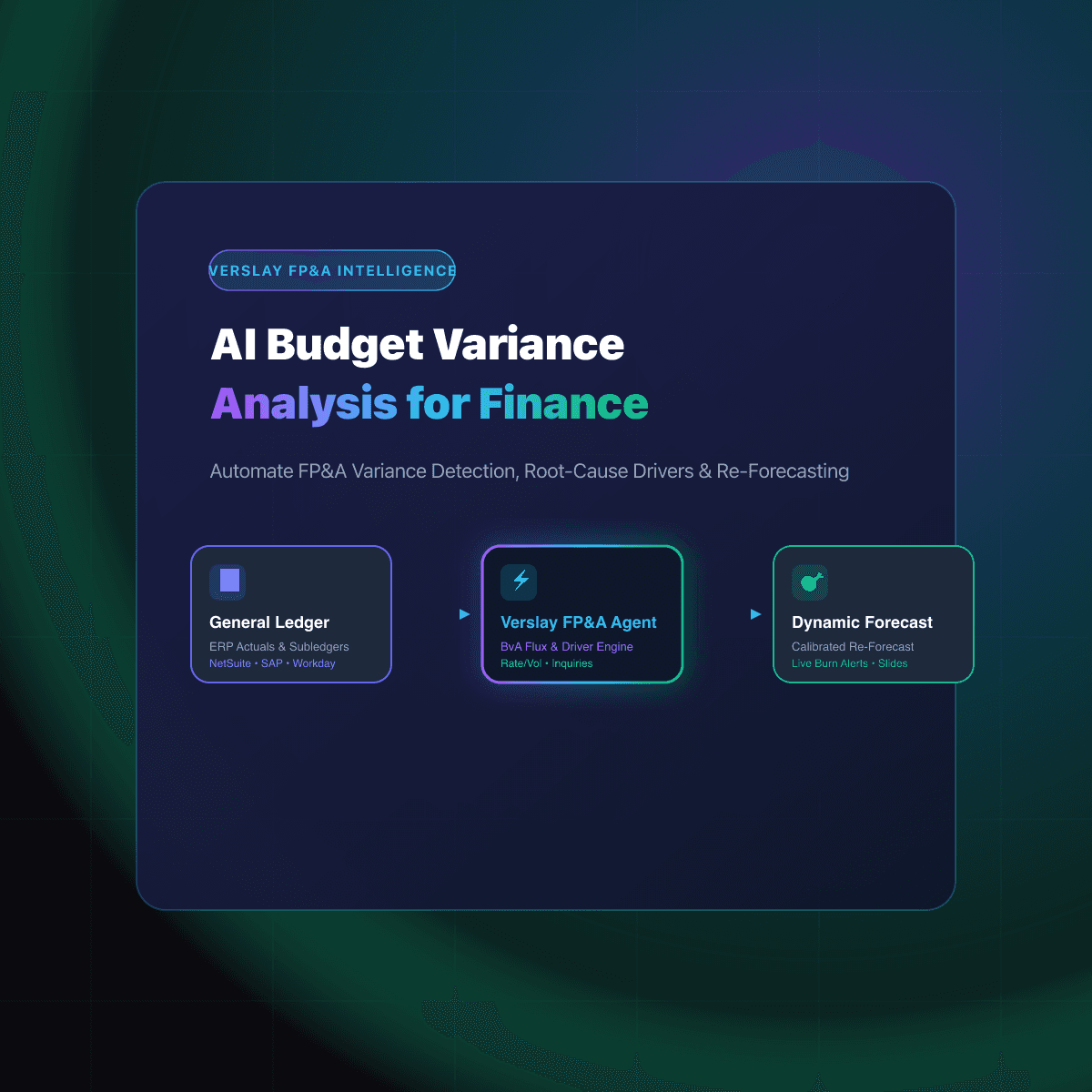
AI budget variance analysis transforms corporate financial planning and analysis (FP&A) by deploying autonomous AI agents to continuously compare general ledger actuals against corporate budgets, identify favorable and unfavorable variance anomalies, and attribute root-cause drivers down to individual transactions. By eliminating retrospective spreadsheet consolidation and manual variance commentary collection across departments, intelligent variance automation allows finance leaders to diagnose budget overruns before month-end close, accelerate rolling re-forecasts, and maintain rigorous capital governance. Rather than waiting weeks for static budget-versus-actuals (BvA) reports, FP&A managers and CFOs gain instant, transaction-level visibility into enterprise spend velocity.
In high-growth companies and multi-entity enterprises, budget variance analysis is the primary mechanism for financial accountability and strategic capital allocation. Yet in most organizations, the variance review process remains chronically manual, retrospective, and fraught with operational friction. Finance analysts spend days downloading trial balances from ERP systems, mapping general ledger accounts into complex spreadsheet models, calculating dollar and percentage deviations, and emailing departmental budget owners to ask why specific cost centers deviated from their quarterly plan.
By the time department heads reply with qualitative explanations, the fiscal period has closed, capital has already been disbursed, and operational managers are already repeating the same overspending patterns. Furthermore, traditional static variance models fail to distinguish between harmless timing differences (e.g., an annual software renewal invoiced in March instead of April) and dangerous structural cost overruns (e.g., unbudgeted cloud infrastructure consumption compounding month-over-month).
By connecting autonomous AI Agents directly to core ERPs, subledgers, and planning tools via standardized Model Context Protocol (MCP) integrations, finance teams transition from manual reporting cycles to automated, real-time variance intelligence. AI agents monitor general ledger transactions continuously, isolate statistically significant variances, cross-reference underlying invoices and vendor agreements, and stage executive-ready variance briefings with zero manual data crunching.
The FP&A Bottleneck: Why Manual Budget Variance Analysis Breaks Down
Traditional corporate budgeting relies on static annual financial models and rigid month-end reporting schedules. In today's dynamic business environment, enterprise finance teams face five structural challenges when relying on manual variance reviews:
- Retrospective Latency and Month-End Lag: Standard budget-versus-actuals reports are assembled 10 to 15 business days after month-end close. By the time an FP&A team discovers that customer acquisition costs or server hosting expenses exceeded budget by 35%, the business has operated with that cost leak for up to 45 days.
- Fragmented Data Silos: Transactional actuals reside in ERPs like NetSuite or SAP; headcount commitments live in HRIS platforms like Workday or BambooHR; sales pipeline forecasts sit in CRM tools like HubSpot or Salesforce; and corporate budgets reside in static Excel workbooks or specialized planning software like Adaptive Planning or Anaplan. Reconciling these disparate systems manually creates recurring data errors and version-control headaches.
- The "Variance Inquisition" Operational Drag: Chasing qualitative explanations for budget variances is one of the most tedious tasks in corporate finance. Analysts spend hours composing ad-hoc emails to department heads, following up repeatedly for responses, and manually reformatting disjointed feedback into executive slide decks.
- Noise Overload vs. Material Driver Masking: Blanket materiality thresholds (such as flagging any variance exceeding 10% or $10,000) inundate analysts with dozens of trivial operational variations—such as minor travel booking fluctuations—while missing subtle, recurring drift across high-volume expense accounts that collectively erode gross margins.
- Stale Annual Budgets in Shifting Markets: Static annual operating plans become obsolete within months of board approval. Without automated, continuous variance attribution, finance teams lack the timely empirical feedback needed to calibrate dynamic rolling forecasts and reallocate working capital.
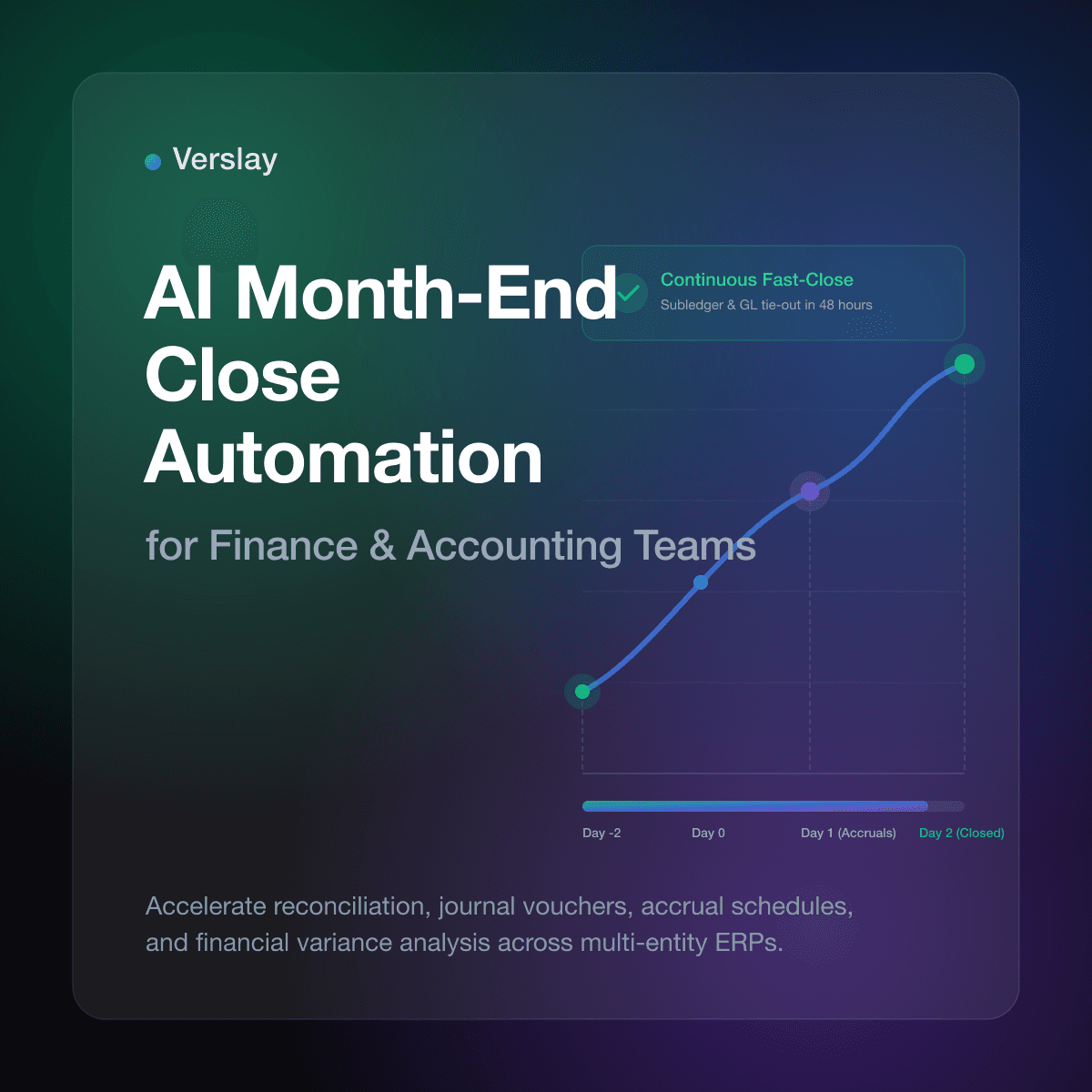
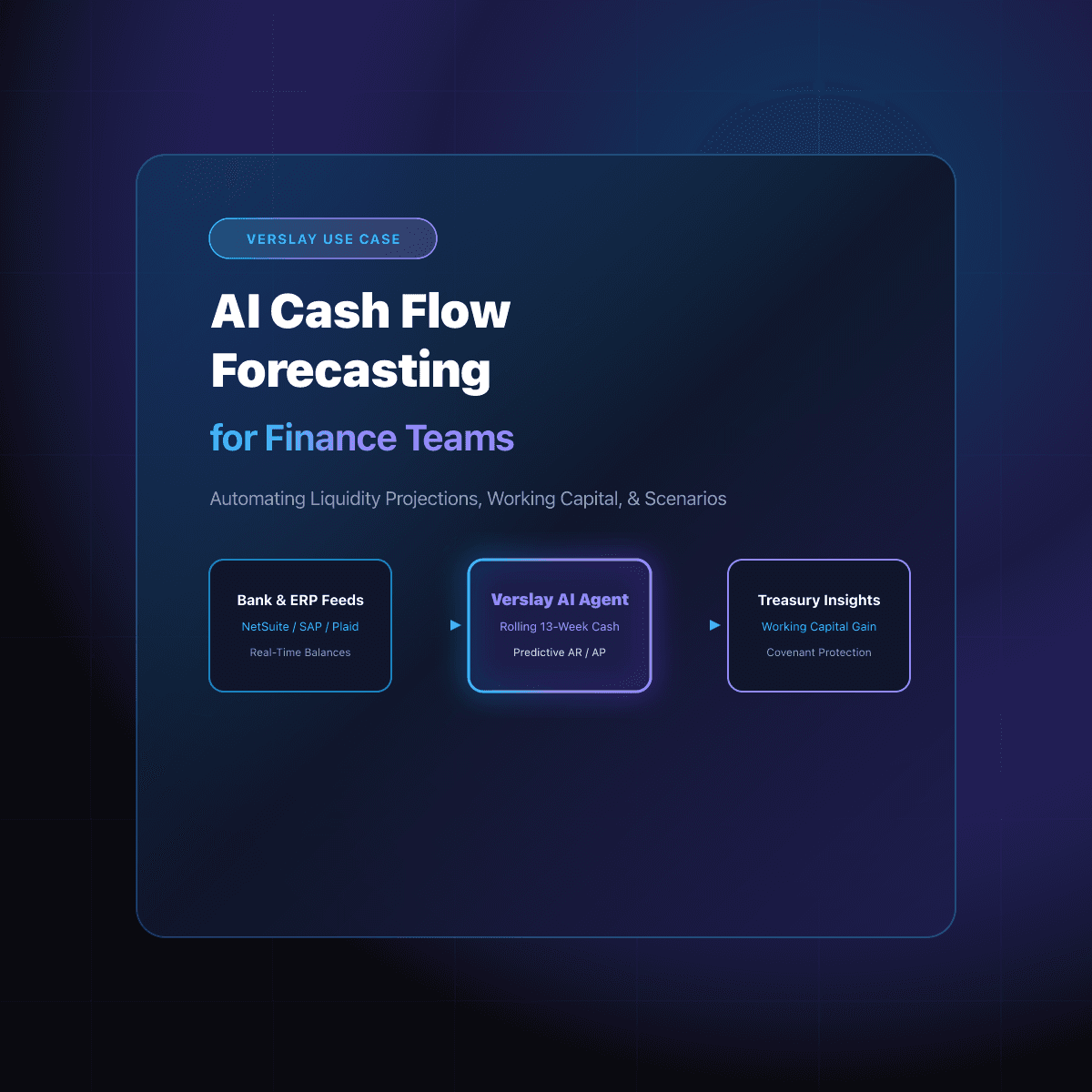
To see how autonomous agents streamline related financial workflows, explore our guides on AI month-end close automation for finance teams and AI cash flow forecasting for finance teams.
Core Capabilities of Autonomous AI Budget Variance Analysis Agents
Modern AI-driven financial planning software introduces an intelligent automation layer that unifies transaction ledgers, operational budgets, and human oversight into a continuous intelligence loop:
1. Continuous Ingestion & Automated BvA Calculation
Eliminating the month-end spreadsheet rush by calculating variances in real time:
- Continuous General Ledger Polling: Ingests journal entries, approved invoices, vendor bills, and payroll runs as they post, comparing them immediately against line-item budget allocations.
- Multi-Dimensional Account Mapping: Reconciles diverse chart-of-accounts (COA) hierarchies across subsidiary entities, cost centers, departments, projects, and geographic regions.
- Dynamic Materiality Filtering: Applies machine learning anomaly detection to separate expected operational volatility from statistically significant, high-risk variance spikes.
2. Transaction-Level Root-Cause Driver Attribution
Drilling into underlying subledgers to explain the exact mechanics behind the numbers:
- Automated Line-Item Drill-Down: When an expense account shows an unfavorable variance, the agent automatically surfaces the exact purchase orders, vendor invoices, credit card charges, or employee expense reports responsible.
- Rate vs. Volume vs. Timing Decomposition: Disaggregates variances into distinct economic drivers—such as whether a software expense surge was driven by increased unit pricing (rate variance), additional team licenses (volume variance), or an early annual subscription invoice (timing variance).
- Vendor Agreement Cross-Referencing: Matches billed amounts against active contract rates and master services agreements (MSAs) to detect unapproved rate hikes or billing discrepancies.
3. Context-Aware Natural Language Commentary Generation
Translating raw numerical deviations into clear, executive-ready narrative explanations:
- Autonomous Departmental Inquiry Drafting: Stages targeted, context-rich inquiries to budget owners (e.g., "Engineering software spend in Cost Center 402 is $24,500 over Q3 plan due to unexpected Datadog overages. Did this stem from the recent production migration?").
- Executive Summary Synthesis: Synthesizes departmental responses, transaction data, and historical context into clear executive briefs for CFOs and board presentations.
- Audit-Ready Documentation: Maintains an immutable, timestamped record of all variance explanations, supporting documents, and management sign-offs for statutory auditors.
4. Headcount & Personnel Variance Modeling
Bridging the gap between HR hiring velocity and financial compensation budgets:
- Requisition vs. Budget Alignment: Compares open job requisitions, offer letters, and actual hire dates against planned departmental headcount rosters.
- Total Compensation Variance Tracking: Analyzes salary, bonus accruals, payroll taxes, benefits, and contractor spending to isolate wage inflation or delayed ramp costs.
- Severance and Transition Accounting: Flags unbudgeted termination liabilities and recruiting agency fees in real time.
5. Dynamic Rolling Forecast Calibration & Early-Warning Triggers
Turning historical variance intelligence into forward-looking operational agility:
- Automated Run-Rate Calibration: Incorporates verified recurring variances into rolling 12-month forecasts, eliminating the need to wait for quarterly re-forecasting cycles.
- Predictive Budget Breach Alerts: Projects departmental burn rates toward fiscal year-end, alerting finance leaders weeks before a cost center exhausts its allocated budget.
- Scenario & What-If Modeling: Simulates the downstream impact of proposed headcount adjustments, discretionary spending freezes, or revenue revisions on year-end operating margins.
Technical Architecture: How AI Budget Variance Agents Operate via MCP
Enterprise financial planning demands stringent security, data privacy, and deterministic accuracy. AI budget variance agents operate within secure perimeter boundaries using Model Context Protocol (MCP) integrations:
+---------------------------------------------------------------------------------+
|                       Enterprise Financial & Operational Data                   |
|   (NetSuite, SAP, Workday, QuickBooks, Adaptive Planning, Anaplan, Pigment)     |
+---------------------------------------+-----------------------------------------+
                                        |
                                        v
+---------------------------------------------------------------------------------+
|                         Model Context Protocol (MCP) Gateway                    |
|       - Encrypted Token Vault              - Deterministic Schema Validation    |
|       - Role-Based Access Controls         - Immutable Audit Ledger             |
+---------------------------------------+-----------------------------------------+
                                        |
                                        v
+---------------------------------------------------------------------------------+
|                    Autonomous AI Budget Variance Agent Suite                    |
|                                                                                 |
|   +-----------------------+ +-----------------------+ +-----------------------+ |
|   |  Continuous BvA Engine| |   Root-Cause Driver   | | Departmental Inquiry  | |
|   |  & Ledger Ingestion   | |   Attribution Engine  | |   & Commentary Agent  | |
|   +-----------------------+ +-----------------------+ +-----------------------+ |
|   +-----------------------+ +-----------------------+ +-----------------------+ |
|   |  Rate vs Volume Flux  | | Headcount & Comp Plan | | Dynamic Re-Forecast   | |
|   |   Decomposition       | |   Reconciliation      | |   Calibration Engine  | |
|   +-----------------------+ +-----------------------+ +-----------------------+ |
+---------------------------------------+-----------------------------------------+
                                        |
                    +-------------------+-------------------+
                    |                                       |
                    v                                       v
+---------------------------------------+   +-------------------------------------+
|      Planning Platforms & Dashboards  |   |     Human-in-the-Loop Governance    |
|   (Anaplan, Pigment, Excel, NetSuite) |   |    (FP&A Director / CFO Approval)   |
|  - Real-Time BvA Dashboards           |   |  - One-Click Commentary Approval    |
|  - Adjusted Rolling Forecast Models   |   |  - Budget Override Authorization    |
|  - Executive Board Slide Generation   |   |  - Exception Threshold Tuning       |
+---------------------------------------+   +-------------------------------------+
Through this architecture, sensitive general ledger data and employee compensation figures remain protected within enterprise governance boundaries. AI agents operate with read-only ledger access, generating structured variance commentary, identifying anomalies, and staging forecast adjustments for human review without altering the underlying financial records of record.
For scaling organizations operating in specialized sectors like SaaS and professional services, this framework provides institutional FP&A capabilities without expanding administrative finance headcount.
Step-by-Step Implementation Framework for AI Budget Variance Analysis
Deploying AI-driven budget variance automation follows a four-phase implementation methodology designed to deliver rapid value while ensuring data precision:
+-------------------+      +-------------------+      +-------------------+      +-------------------+
|      Phase 1      |      |      Phase 2      |      |      Phase 3      |      |      Phase 4      |
| ERP & Plan Model  | ---> | Materiality Rules | ---> | Root-Cause Driver | ---> | Dynamic Rolling   |
|   Integration     |      | & Anomaly Tuning  |      |  & Inquiries      |      |  Re-Forecasting   |
+-------------------+      +-------------------+      +-------------------+      +-------------------+
Phase 1: ERP & Plan Model Integration
- Connect ERP subledgers and chart of accounts to the central FP&A agent framework via authenticated MCP connectors.
- Ingest approved departmental budget baselines, project allocations, and headcount rosters from planning systems or spreadsheets.
- Validate historical ledger mapping to ensure 100% data reconciliation against prior audited financial statements.
Phase 2: Materiality Rules & Anomaly Detection Tuning
- Configure dynamic materiality thresholds based on account criticality (e.g., tighter tolerances for gross margin drivers like cloud hosting, broader bands for non-critical office expenses).
- Establish timing versus structural variance rules to automatically identify prepaid amortizations and predictable billing lags.
- Run parallel benchmark variance calculations alongside traditional manual workpapers to calibrate anomaly detection models.
Phase 3: Root-Cause Driver Attribution & Collaborative Inquiries
- Activate subledger drill-downs to connect flagged variances directly to vendor bills, employee expenses, and customer contracts.
- Launch automated conversational inquiry flows via Slack, Microsoft Teams, or email, allowing department heads to review and confirm variance explanations in seconds.
- Establish centralized variance commentary repositories, automatically tagging root causes into standardized categories (e.g., Vendor Price Increase, Scope Expansion, Hiring Delay, Timing Shift).
Phase 4: Dynamic Rolling Re-Forecasting & Continuous Governance
- Synchronize verified recurring variances into rolling re-forecast models, updating forward-looking cash and margin projections automatically.
- Implement predictive spend alerts that notify executive sponsors when project burn rates indicate impending budget exhaustion.
- Integrate automated BvA summary packs into executive dashboards and board presentation templates.
Enterprise Impact: Measurable Operational Transformation
Transitioning from manual spreadsheet variance reviews to autonomous AI budget variance automation delivers immediate, verifiable efficiency gains across corporate finance:
| Operational Dimension | Legacy Manual Variance Review | Autonomous AI Budget Variance Analysis | | :--- | :--- | :--- | | BvA Cycle Turnaround | 10–15 business days after close | Continuous real-time tracking (instant at close) | | Variance Identification | End-of-month retrospective discovery | Intra-month anomaly detection and proactive alerts | | Departmental Commentary Collection | 5–7 days of back-and-forth emails | < 24 hours via automated, structured Slack/Teams prompts | | Root-Cause Analysis Depth | High-level account summaries only | Transaction-level drill-down to POs, bills, and contracts | | Rolling Forecast Updates | Quarterly or bi-annual manual revisions | Monthly dynamic recalibration with live spend run-rates | | Budget Leakage & Overrun Prevention | Reactive discovery after funds are spent | Early-warning burn rate alerts before budget exhaustion | | Audit Preparation Effort | Days spent locating emails and workpapers | Centralized, timestamped commentary and audit trails |
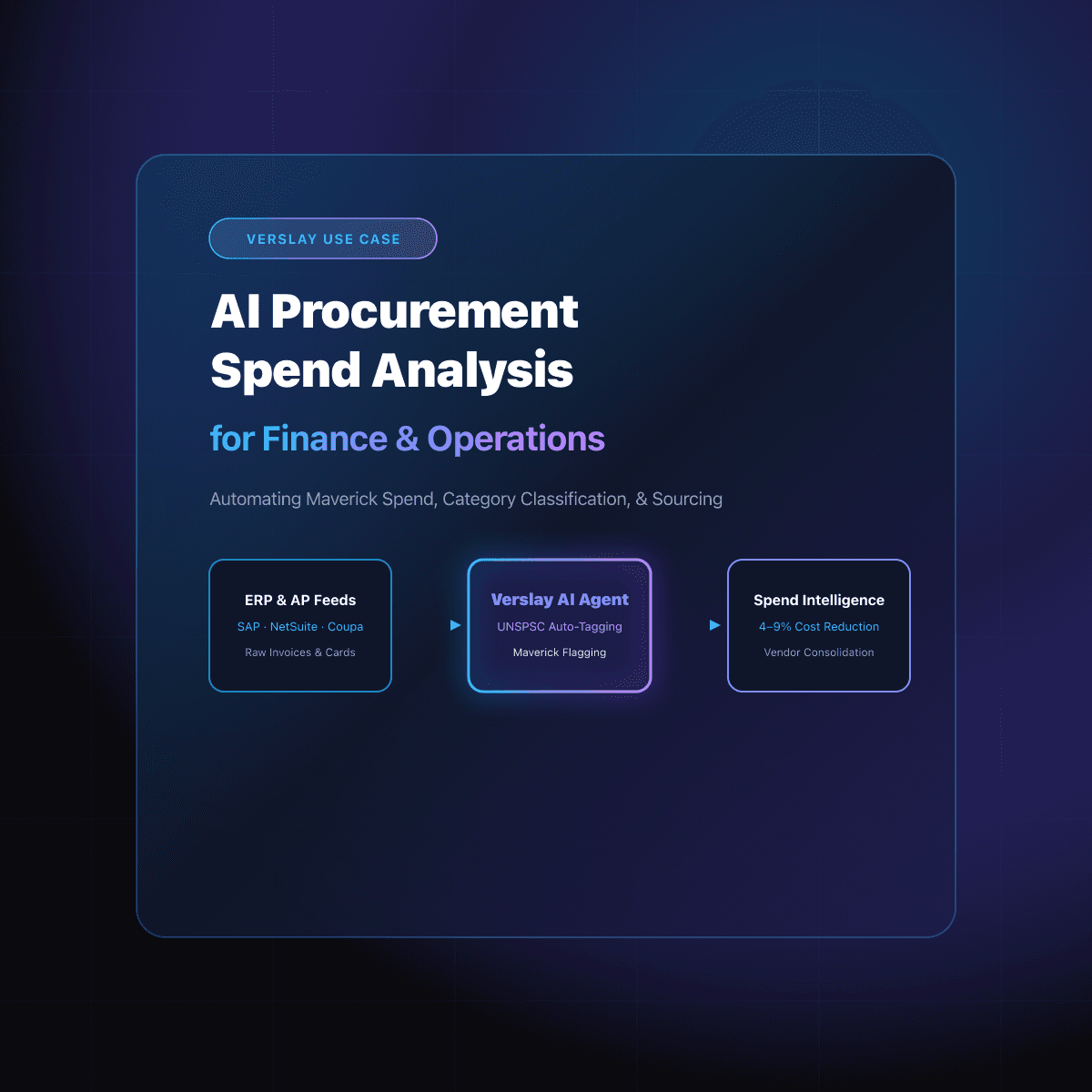
To explore how these automated controls integrate with procurement and spend intelligence, read our detailed guide on AI procurement spend analysis for finance and operations teams.
Frequently Asked Questions
What is AI budget variance analysis?
AI budget variance analysis uses autonomous software agents to continuously compare general ledger actuals against corporate budgets, identifying revenue shortfalls, expense overruns, and operational drivers in real time. By automating the extraction of subledger transactions, decomposing rate versus volume drivers, and drafting targeted inquiries to department heads, AI eliminates the manual spreadsheet consolidation typically required during monthly FP&A cycles.
How does AI improve budget vs actuals variance detection?
Rather than waiting for manual month-end close spreadsheets, AI agents ingest live ERP transactions, automatically calculate favorable and unfavorable variances, and trace line-item anomalies directly to specific invoices and purchase orders. Machine learning algorithms filter out immaterial noise and normal operational fluctuations, allowing finance leaders to focus exclusively on systemic cost leaks and strategic budget deviations.
Can AI update rolling budget forecasts automatically?
Yes, modern FP&A agents adjust rolling re-forecast models dynamically by combining historical variance patterns with live operational telemetry, eliminating stale annual static budgets. When an expense variance represents a permanent structural change—such as an enterprise software price increase—the agent updates the forward-looking forecast baseline automatically while preserving audit governance trails.
How does AI handle qualitative variance explanations from department heads?
AI agents draft context-rich, structured inquiries containing the exact transaction details, vendor names, and dollar deviations, sending them to budget owners via Slack, Microsoft Teams, or email. When the department head responds, natural language understanding extracts the core driver, categorizes the explanation, and embeds it directly into executive reporting decks and audit-ready workpapers.
Does AI budget variance analysis require replacing our existing ERP or planning software?
No. AI variance agents operate as an intelligent orchestration layer on top of your existing tech stack. By connecting through standardized Model Context Protocol (MCP) bridges and secure APIs, agents read data from platforms like NetSuite, SAP, Workday, Adaptive Planning, and Anaplan without requiring disruptive system migrations or complex custom middleware maintenance.