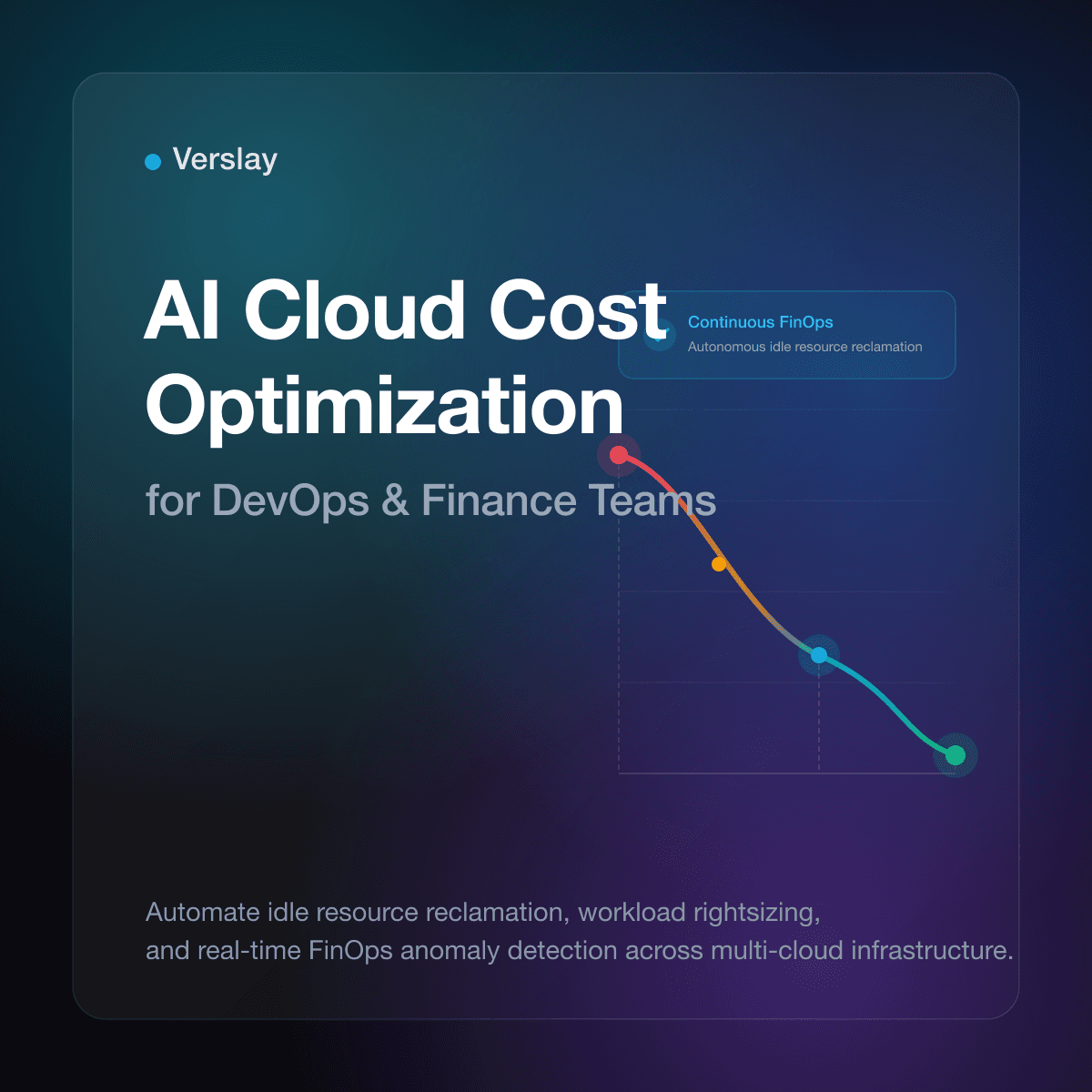
AI cloud cost optimization is the practice of deploying autonomous software agents and machine learning models to continuously identify cloud waste, execute compute and storage rightsizing, and enforce FinOps governance across AWS, Google Cloud, and Microsoft Azure. By correlating real-time workload utilization telemetry with billing APIs and Infrastructure-as-Code (IaC) repositories, AI cloud cost optimization eliminates 25% to 45% of unallocated cloud spend while maintaining strict performance SLAs. This programmatic approach replaces static quarterly spreadsheets and ignored dashboard alerts with automated remediation workflows.
For modern engineering and finance organizations, managing cloud expenditure has become one of the most contentious operational challenges. As development teams accelerate shipping velocity through microservices, ephemeral test environments, and distributed machine learning workloads, cloud bills compound unpredictably. Finance leaders see escalating monthly line items without clear unit economics, while DevOps and Site Reliability Engineering (SRE) teams lack the bandwidth to manually comb through thousands of individual cloud resources.
By deploying AI agents for DevOps and infrastructure, organizations transition from reactive cost panics to continuous, policy-governed FinOps automation that safeguards both margins and service reliability.
The Hidden Drivers of Cloud Waste in Modern Engineering Orgs
Cloud waste rarely stems from deliberate neglect; rather, it is an emergent byproduct of decentralized engineering autonomy and high-velocity delivery cycles. Without automated oversight, standard development practices create persistent financial drag:
- Orphaned Block Storage & Snapshots: When virtual machines (such as AWS EC2 or GCP Compute Engine instances) are terminated, attached EBS volumes, unattached elastic IPs, and legacy machine snapshots frequently remain active. Over months, abandoned volumes accumulate thousands of dollars in unallocated storage costs.
- Overprovisioned Compute & Database Clusters: Software engineers routinely overprovision CPU, memory, and IOPS to prevent latency spikes or out-of-memory errors during production deployments. In practice, production clusters often operate at sub-15% sustained utilization, meaning organizations pay a steep premium for idle headroom.
- Forgotten Staging & Ephemeral Environments: Feature-branch review environments, automated QA clusters, and staging databases spun up for sprint testing are regularly left running 24/7 over weekends and holidays, burning compute cycles with zero traffic.
- Idle AI/ML GPU Workloads: High-performance GPU instances provisioned for model fine-tuning, batch inference, or data pipeline experimentation are among the most expensive cloud assets available. When training scripts finish without auto-termination triggers, idle GPU instances consume thousands of dollars per day.
- Multi-Cloud Data Egress & Cross-AZ Inefficiencies: Distributed architectures that route high volumes of data across availability zones (AZs) or egress pipelines between multiple cloud providers generate silent, compounding network fees that rarely appear in basic service summaries.
To see how automated workflows eliminate manual operational overhead across technical teams, explore our guides on AI incident response automation and AI IT asset management.
Why Traditional FinOps Dashboards Fail to Control Cloud Spend
Over the past decade, enterprises adopted first-generation FinOps observability tools that ingest Cost and Usage Reports (CUR) and display interactive pie charts. While these dashboards visualize where money was spent, they fail to solve the core operational bottlenecks:
| Dimension | Legacy FinOps Dashboards | Autonomous AI FinOps Agents | | :--- | :--- | :--- | | Operational Cadence | Reactive, post-hoc monthly or quarterly billing reviews | Real-time, continuous detection and predictive trend analysis | | Actionability | Generates passive recommendations that sit unread in email queues | Opens verified Terraform/GitOps pull requests with automated validation | | Workload Context | Naive threshold alerts based purely on generic resource percentages | Context-aware reasoning factoring in seasonality, deployments, and SLOs | | Engineering Friction | Forces DevOps engineers to context-switch and execute manual changes | Touchless safe remediation for idle resources; single-click approval for sizing | | Unit Economics | Aggregated by account, department, or broad cloud service tag | Precise attribution mapped directly to products, features, and teams |
When optimization depends on human engineers manually logging into cloud consoles to resize instances or delete disks, backlog priorities inevitably push cost reduction aside. Sustainable cloud efficiency requires closing the loop between telemetry detection and infrastructure modification.
How Autonomous AI Agents Automate Cloud Cost Optimization
Autonomous AI agents transform FinOps from a static reporting chore into an active, self-regulating infrastructure layer. Operating via secure Model Context Protocol (MCP) bridges and cloud API integrations, AI agents execute end-to-end cost reduction across five distinct stages:
  +-----------------------------------------------------------------------+
  |                   Multi-Cloud Telemetry & Ingestion                   |
  |      AWS CUR / CloudWatch  ·  GCP Cloud Billing  ·  Azure Monitor     |
  +-----------------------------------+-----------------------------------+
                                      |
                                      v
  +-----------------------------------------------------------------------+
  |                      Autonomous AI Analysis Engine                    |
  |  - Anomaly & Spike Detection      - P99 Utilization Modeling          |
  |  - Orphaned Storage Identification- Commitment Coverage Matching      |
  +-----------------------------------+-----------------------------------+
                                      |
                                      v
  +-----------------------------------------------------------------------+
  |                       Policy & Safety Simulation                      |
  |  - Verify Production SLOs         - Check Autoscaling Bounds          |
  |  - Dry-Run Cost Delta Valuation   - Check Environment Tags            |
  +-----------------------------------+-----------------------------------+
                                      |
                                      v
  +-----------------------------------------------------------------------+
  |                     Safe Multi-Modal Remediation                      |
  |  [Staging / Dev]: Auto-Terminate Idle & Schedule Off-Hours Sleep     |
  |  [Production]: Open Tested Terraform/OpenTofu PR with Diff Preview   |
  +-----------------------------------------------------------------------+
1. Unified Telemetry Ingestion & Tag Hygiene Enforcement
The agent continuously polls cloud billing endpoints (AWS Cost and Usage Reports, Google Cloud BigQuery exports, Azure Cost Management) alongside operational telemetry from Prometheus, Datadog, or native cloud monitoring. It verifies tag compliance across all deployed resources, immediately flagging untagged assets and attributing spend to specific cost centers.
2. Algorithmic Rightsizing & Headroom Simulation
Rather than applying blunt CPU averages, the agent analyzes 30-day P95 and P99 utilization profiles, memory saturation curves, and disk I/O throughput. It simulates how candidate instances (e.g., transitioning from general-purpose m6i.4xlarge to memory-optimized r7g.2xlarge with AWS Graviton processors) will perform under peak load, calculating the exact dollar savings before any change is made.
3. Automated Idle Asset Reclamation
For non-disruptive targets—such as unattached EBS volumes, disassociated elastic IP addresses, dangling load balancers with zero registered targets, and stale container images—the agent executes automated safety checks. After confirming absence of I/O activity over a configurable observation window, it snapshots the volume and safely deallocates the resource.
4. GitOps Pull Request Generation
For production modifications, AI agents do not make blind out-of-band console changes that drift from source control. Instead, the agent inspects the organization's Infrastructure-as-Code repositories (Terraform, Pulumi, OpenTofu, or Kubernetes Helm charts), generates the exact code change, and opens a Pull Request complete with benchmark telemetry and projected monthly savings.
5. Commitment & Reserved Capacity Optimization
The agent tracks the coverage ratio of AWS Savings Plans, Reserved Instances (RIs), and GCP Committed Use Discounts (CUDs). By modeling baseline workload persistence against upcoming expiration dates, it advises finance teams on optimal multi-year commitment purchases without risking over-commitment.
Explore our broader enterprise use-case catalog to see how intelligent automation connects engineering, finance, and operations across technology and software companies.
Five High-Impact Strategies for Engineering and Finance Teams
Organizations seeking immediate, sustainable cost reduction can deploy these five foundational agentic strategies:
1. Implement Dynamic Ephemeral Environment Schedules
Non-production environments (development, staging, feature sandboxes) do not need to run overnight or during weekends. Configuring agents to evaluate user activity and shut down idle non-production clusters between 8:00 PM and 7:00 AM on weekdays—and all day Saturday and Sunday—instantly recaptures 65% of staging infrastructure spend.
2. Migrate to Modern Arm-Based Compute Architectures
Upgrading legacy x86 instances to modern Arm-based silicon (such as AWS Graviton3/Graviton4 or GCP Tau T2A) provides up to 40% better price-performance for general compute, containerized microservices, and database workloads. AI agents scan Dockerfiles and CI/CD pipelines to verify multi-architecture compatibility, streamlining the transition.
3. Automate Object Storage Lifecycle Transitions
Enterprise data lakes and application backups stored in standard Amazon S3 or Google Cloud Storage frequently retain infrequently accessed objects indefinitely. Agents audit object access patterns and apply automated lifecycle rules, transitioning colder tiers to Infrequent Access (IA), Archive Instant Access, or Glacier Flexible Retrieval to slash storage expenses by up to 80%.
4. Cleanse Orphaned Snapshots and Retained Disks
Set strict organizational retention policies for automated volume snapshots and detached block storage. AI agents continuously cross-reference snapshot timestamps with active instance IDs, purging orphaned volume snapshots older than 90 days and eliminating compounding ghost costs.
5. Correlate Procurement Contracts with Cloud Invoices
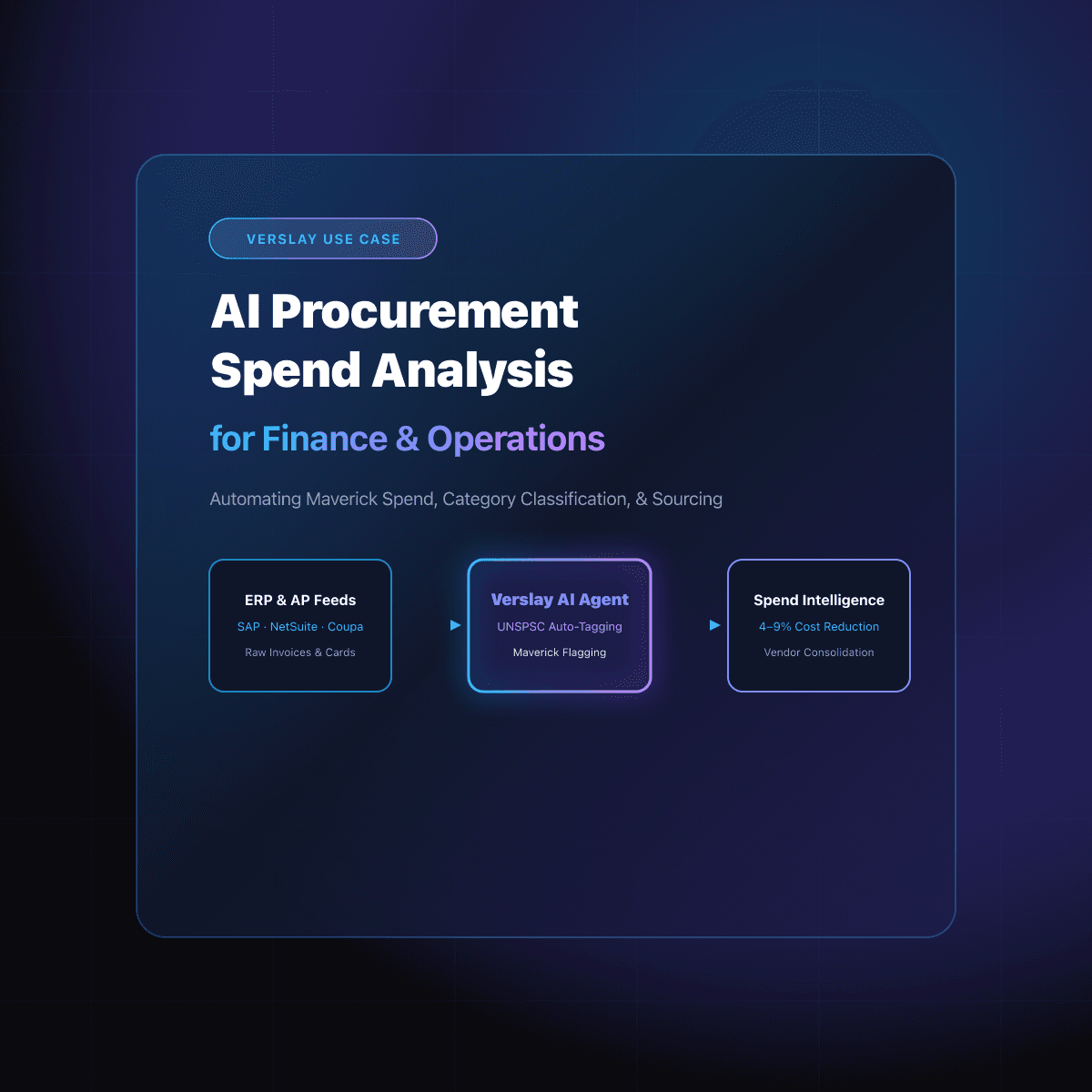
Enterprise cloud spend does not end with compute instances; it extends to third-party SaaS vendors, database providers (Snowflake, Databricks, MongoDB Atlas), and cloud marketplace purchases. Combining infrastructure FinOps with AI procurement spend analysis ensures that enterprise discounts, EDP commitments, and marketplace credits are fully recognized.
Frequently Asked Questions About Cloud Cost Optimization
What is cloud cost optimization?
Cloud cost optimization is the systematic engineering and financial discipline of eliminating idle resources, rightsizing overprovisioned compute and storage, and securing volume discounts to maximize the business value of cloud infrastructure spend. Rather than merely cutting costs indiscriminately, effective optimization ensures that every dollar invested in cloud services directly supports application performance, scalability, and business growth.
What is rightsizing in cloud cost optimization?
Rightsizing is the continuous process of analyzing real CPU, memory, IOPS, and network utilization metrics to reconfigure virtual instances, containers, and databases to the most cost-effective tier that safely meets performance requirements. In practice, rightsizing prevents overprovisioning while ensuring sufficient headroom during anticipated traffic spikes.
How do autonomous AI agents automate cloud cost optimization?
Autonomous AI agents continuously ingest billing telemetry, identify orphaned disks and oversized clusters, simulate rightsizing against peak traffic windows, and automatically open Infrastructure-as-Code pull requests for engineering verification. By bridging billing data directly to code changes in GitOps workflows, agents eliminate the manual friction that causes traditional FinOps recommendations to sit unimplemented.
How does cloud cost optimization affect application performance?
When executed using context-aware telemetry and algorithmic rightsizing, cloud cost optimization preserves or even improves application performance. AI agents analyze peak utilization windows and historical traffic spikes to establish safe resource baselines, while simultaneously recommending modern, higher-performing instance architectures (such as Arm-based Graviton chips or faster NVMe storage) that offer superior throughput at lower unit costs.