AI SLA tracking for internal IT teams automatically monitors service desk response times, predicts potential ticket breaches, and escalates high-risk incidents before service level commitments are missed. By connecting IT service management (ITSM) platforms like Jira Service Management or ServiceNow with team messaging channels like Slack and Microsoft Teams, AI agents evaluate ticket urgency, queue load, and technician capacity in real-time. This eliminates manual tracking spreadsheets and prevents missed SLAs across internal employee support tickets.
Internal IT help desks often handle hundreds of employee requests daily ranging from password resets to system outages. Without automated intelligence, critical incident tickets sit in unassigned queues while routine inquiries consume technician focus, leading to breached SLAs and frustrated employees.
Why Manual SLA Tracking Fails Internal IT Teams
Traditional IT service desks rely on static timer rules inside ticket management platforms to flag overdue tickets. However, reactive timers notify teams only after an SLA has already breached or when a deadline is seconds away from failing.
Key operational challenges of manual internal IT tracking include:
- Unbalanced Queue Distribution: High-priority tickets remain assigned to overwhelmed senior engineers while available technicians handle low-urgency tasks.
- Siloed Communication: Incident updates occur in disparate email threads or private messaging channels, obscuring true resolution progress from IT managers.
- Lack of Predictive Insights: Legacy ITSM tools track time elapsed but cannot predict breach risks based on ticket complexity or historical resolution patterns.
- Alert Fatigue: Noise from generic ticket notifications causes technicians to ignore impending SLA breach warnings until employees escalate issues to leadership.
How AI SLA Tracking Automates IT Service Delivery
Deploying an AI agent for internal IT SLA tracking transforms reactive queue management into proactive incident orchestration.
1. Intelligent Ticket Intake and Urgency Triage
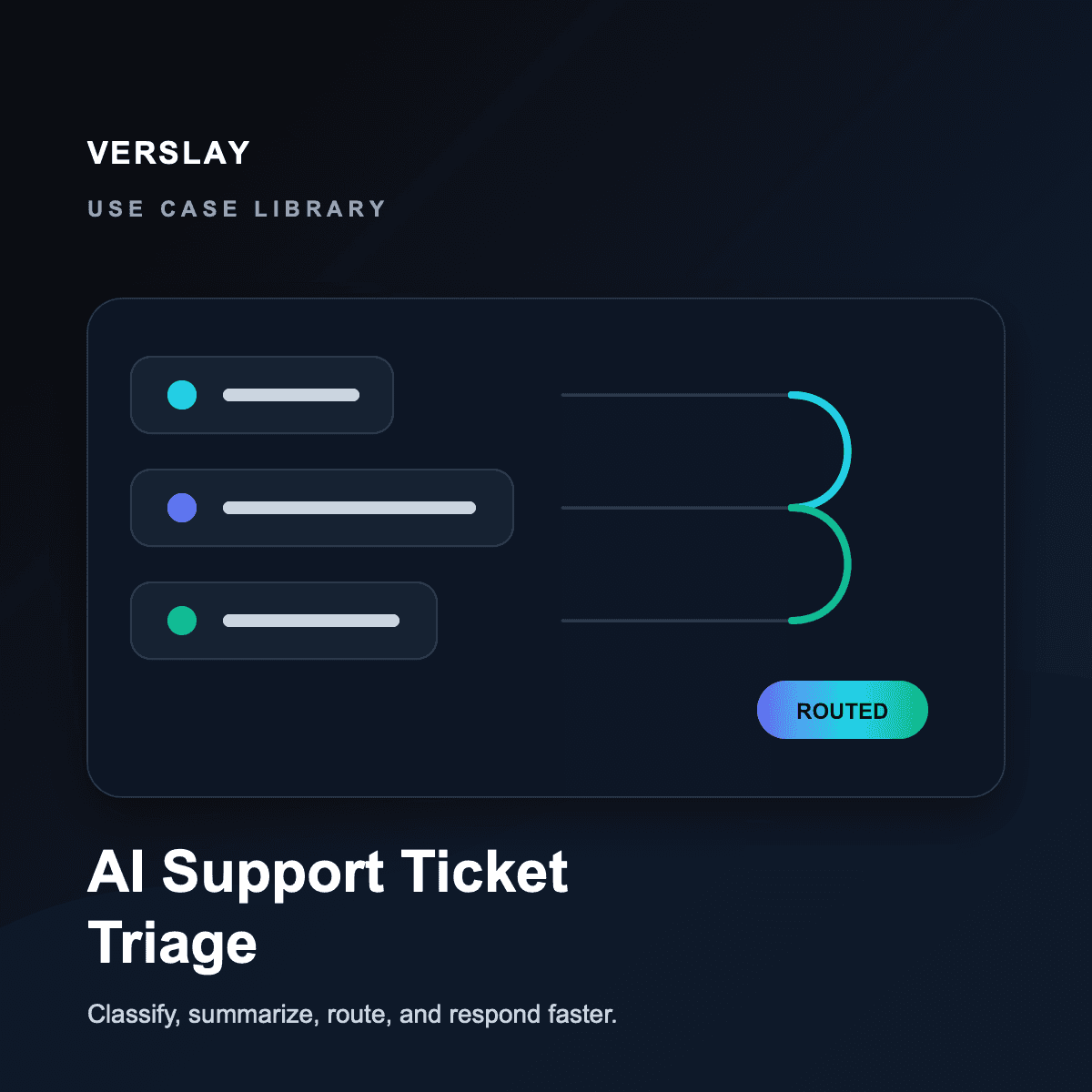
As soon as an employee submits a request via Slack, email, or a portal, the AI agent ingests the content, classifies the issue type, and determines business impact. High-impact outages receive immediate priority score adjustments that accelerate initial response expectations. Explore how AI support ticket triage streamlines inbound requests automatically.
2. Predictive Breach Detection
Instead of waiting for a static countdown timer to expire, AI algorithms analyze current queue depth, active technician assignments, and historical resolution time for similar hardware or software issues. If a ticket shows a 75% or higher probability of breaching its SLA window, the AI agent triggers pre-breach alerts.
3. Automated Routing and Escalate-to-Channel Workflows
When a breach risk is identified, the AI agent automatically reassigns the ticket to an available tier-2 or tier-3 engineer with relevant expertise. Concurrently, it posts a structured alert into designated internal IT incident channels on Slack or Microsoft Teams with full incident context, context summaries, and one-click action buttons.
4. Cross-Platform Context Sync
The AI agent synchronizes status updates, resolution notes, and SLA timestamps between front-end communication channels and back-end ITSM record stores. Discover more about AI agents for operations and how centralizing workflow state keeps internal teams aligned.
Step-by-Step Architecture for IT SLA Automation
Internal IT leaders can implement automated SLA tracking by establishing a connected workflow trigger and agent loop:
[Employee Request] ──> [AI Triage & Classification] ──> [Predictive SLA Risk Engine]
                                                                  │
                                                      ┌───────────┴───────────┐
                                                      ▼                       ▼
                                              [Normal Queue]         [High Risk Alert]
                                              (Standard SLA)        (Auto-Reassign + Slack)
- Connect ITSM & Messaging Integrations: Link ticketing systems (Jira, ServiceNow, Zendesk) with communication platforms.
- Define Category SLA Thresholds: Establish distinct target windows for P1 outages (e.g., 15-minute response), P2 software bugs (e.g., 2-hour response), and P3 hardware requests (e.g., 24-hour resolution).
- Configure Predictive Risk Triggers: Set automated intervention thresholds when 50% or 75% of allowable SLA time has elapsed without active technician commentary.
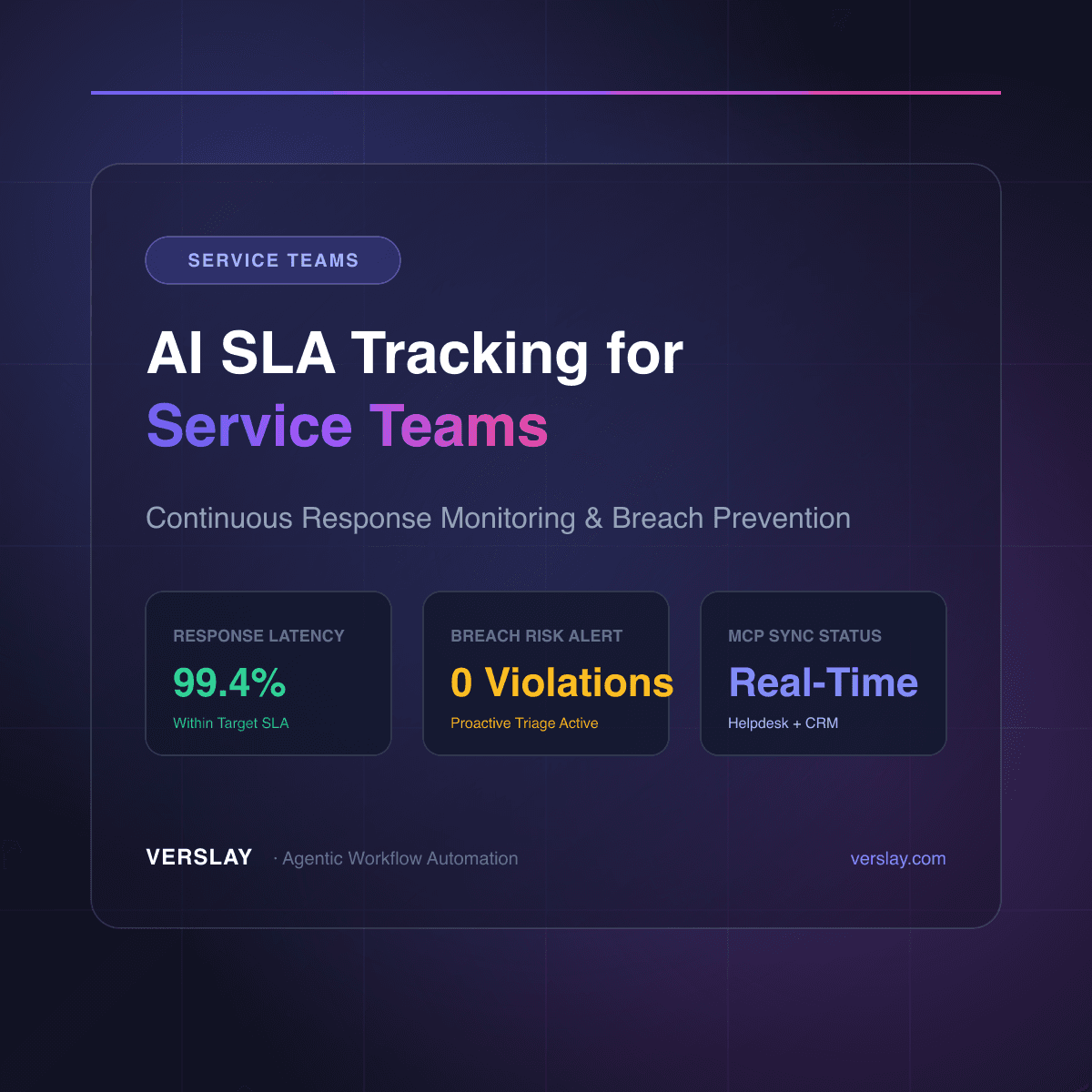
- Automate End-of-Day SLA Reporting: Generate automated daily summaries highlighting total tickets processed, SLA compliance percentages, and recurring breach bottlenecks. Learn how AI SLA tracking for service teams monitors operational performance across production environments.
Measurable Business Outcomes
Implementing AI-driven SLA tracking for internal IT teams delivers immediate operational improvements:
- 95%+ SLA Compliance: Proactive pre-breach warnings enable technicians to intervene before timers expire.
- 40% Reduction in Mean Time to Resolution (MTTR): Automated routing delivers tickets directly to the right technician without manual triaging delays.
- Zero Missed P1 Incidents: Emergency business-critical outages receive instant multi-channel escalation to on-call engineering leads.
- Improved Employee Satisfaction (CSAT): Internal team members experience faster support responses and transparent resolution updates.
Get Started with Verslay SLA Tracking
Managing internal IT service delivery shouldn't require manual queue auditing or frantic fire-drills. With Verslay, IT organizations deploy intelligent agents that integrate directly into existing ticketing tools and Slack workflows to protect SLAs automatically.
Learn more about how Verslay powers internal automation across IT and service desks, or explore our library of pre-built AI workflow use-cases today.