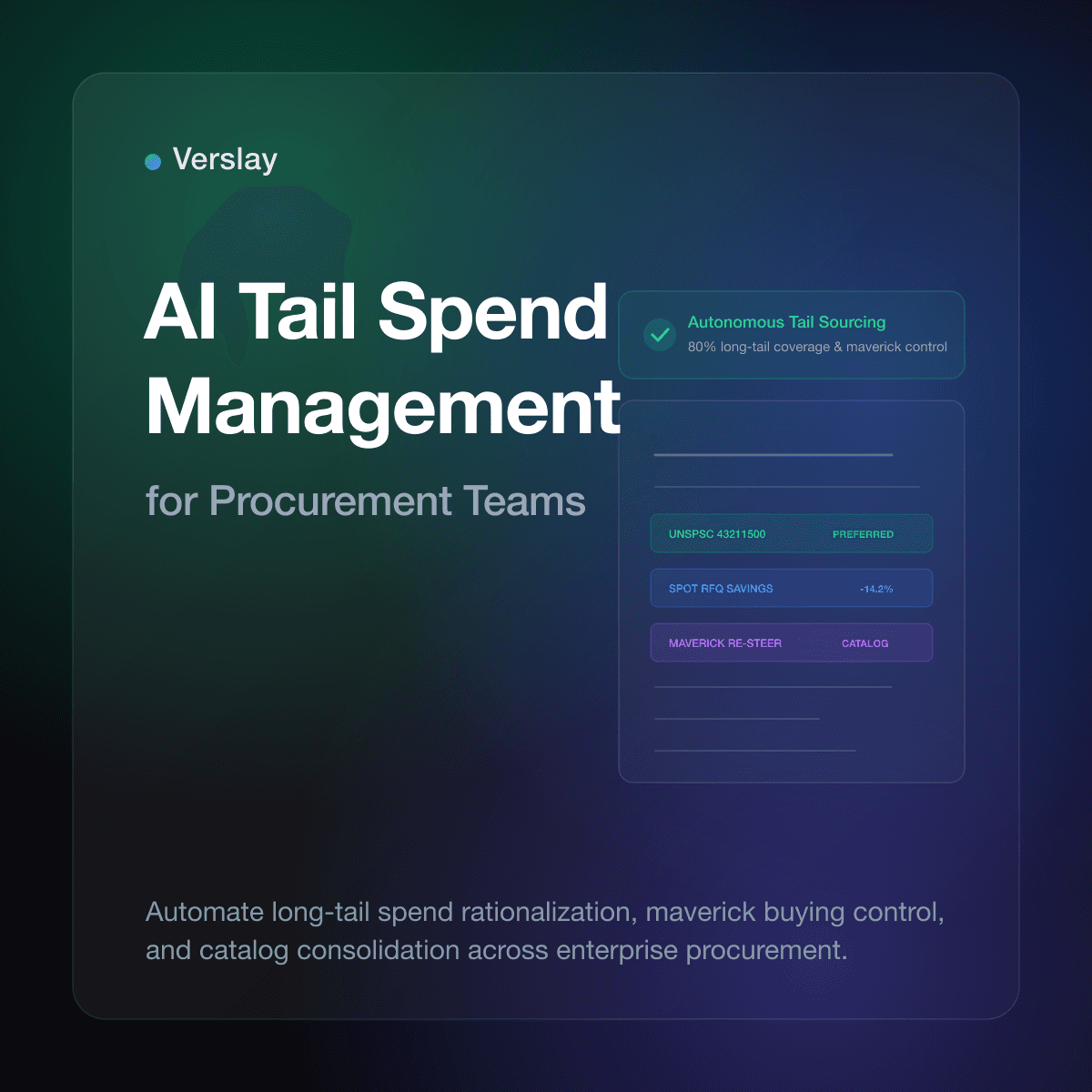
AI Tail Spend Management for Procurement Teams: Automating Long-Tail Spend Rationalization, Maverick Buying Control, and Catalog Consolidation
Tail spend management in procurement is the process of analyzing, controlling, and consolidating the thousands of low-value, high-frequency purchases that fall below the strategic sourcing threshold. In enterprise organizations, this "long tail" typically encompasses 80% of all supplier transactions and 80% of active vendors, yet accounts for only about 20% of total enterprise spend. Autonomous AI agents solve the historic challenge of tail spend by automatically classifying unformatted line items, curbing maverick buying, negotiating spot purchases, and consolidating redundant suppliers into pre-negotiated contracts. Connected directly to enterprise procurement and ERP software through Model Context Protocol (MCP), AI agents deliver strategic sourcing discipline to the unmanaged 80% of corporate transactions.
For decades, Chief Procurement Officers (CPOs) and sourcing directors have operated under an unavoidable trade-off. Sourcing teams prioritize Tier-1 direct materials and multi-million dollar vendor agreements because human procurement specialists cannot manually review thousands of $500, $2,000, or $10,000 requisitions. As a result, the bottom 20% of enterprise spend—frequently totaling tens or hundreds of millions of dollars annually—remains completely unmanaged.
This lack of visibility creates substantial organizational waste. Individual department heads purchase specialized SaaS subscriptions on corporate credit cards, branch managers order office supplies from unapproved third parties at retail markups, and operations leads source ad-hoc maintenance services without liability waivers or cybersecurity vetting. In addition to direct budget leakage of 10% to 15%, unmanaged tail spend burdens accounts payable teams with disproportionate invoice reconciliation overhead.
By deploying autonomous AI Agents to oversee long-tail procurement workflows, modern organizations eliminate this blind spot. Rather than forcing teams through bureaucratic manual requisition approvals or resigning to unmonitored rogue spend, AI agents categorize every transaction in real time, enforce compliance rules dynamically, and guide employees toward contracted buying channels.
The Operational Reality: Why Traditional Tail Spend Management Breaks Down
The traditional procurement operating model was designed for centralized, predictable manufacturing supply chains, not the decentralized, software-heavy modern enterprise. In high-growth organizations, long-tail spend fractures across five operational failure modes:
[Decentralized Employee Need] ──► [Maverick Buying / P-Card Swipe] ──► [Uncategorized Invoice]
                                                                                │
                                                                                ▼
[Inflated Processing Costs] ◄── [Compliance / Risk Exposure] ◄── [Fragmented Vendor Duplication]
1. The High Cost of Transaction Overhead
Processing a single purchase order (PO) and its corresponding invoice costs enterprises an average of $60 to $120 when factoring in human labor, approval routing, and 3-way reconciliation. When an employee places a $150 order with a non-contracted supplier, the administrative cost to approve, process, and reconcile the transaction can equal or exceed the value of the goods purchased.
2. Rampant Maverick Buying and P-Card Sprawl
When corporate procurement systems are perceived as slow or cumbersome, employees circumvent formal channels by purchasing goods and services via corporate purchasing cards (P-Cards) or submitting expense reimbursements. Without real-time intervention, procurement leadership only discovers rogue purchases weeks later during monthly financial closes, making post-facto price negotiation or policy enforcement impossible.
3. Supplier Proliferation and Redundancy
Without automated spend deduplication, organizations accumulate thousands of single-use or duplicate suppliers. It is common for a 5,000-person enterprise to maintain accounts with over 20 different office supply vendors, 15 digital marketing agencies, and 30 redundant software tools. This fragmentation dilutes corporate purchasing power and prevents procurement teams from negotiating tiered volume rebates.
4. Unvetted Third-Party Compliance and Cyber Risk
Long-tail suppliers frequently bypass mandatory vendor onboarding and security risk assessments. When an employee signs an unreviewed click-through terms of service for an AI transcription tool or hires an unvetted translation contractor, sensitive enterprise data may be exposed to non-compliant third parties, violating GDPR, HIPAA, or SOC 2 governance requirements.
5. Inaccurate or Absent Spend Classification
Because tail purchases often originate as free-text descriptions on credit card statements or one-off invoices, enterprise resource planning (ERP) systems frequently classify them under generic ledger categories such as "Miscellaneous Expense" or "Office Operations." Without granular, line-item-level data, finance and procurement teams lack the business intelligence required to identify cost-saving consolidation opportunities.
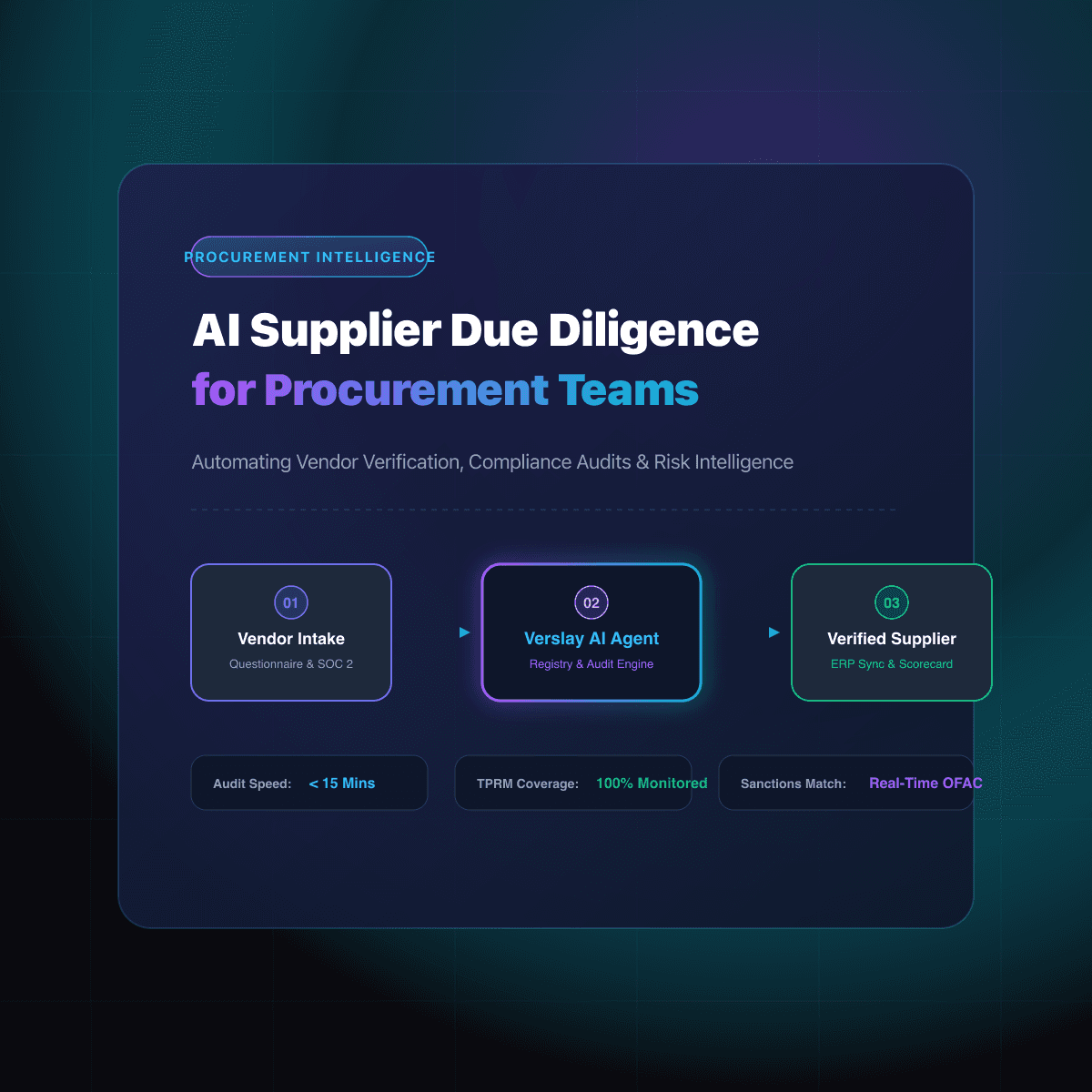
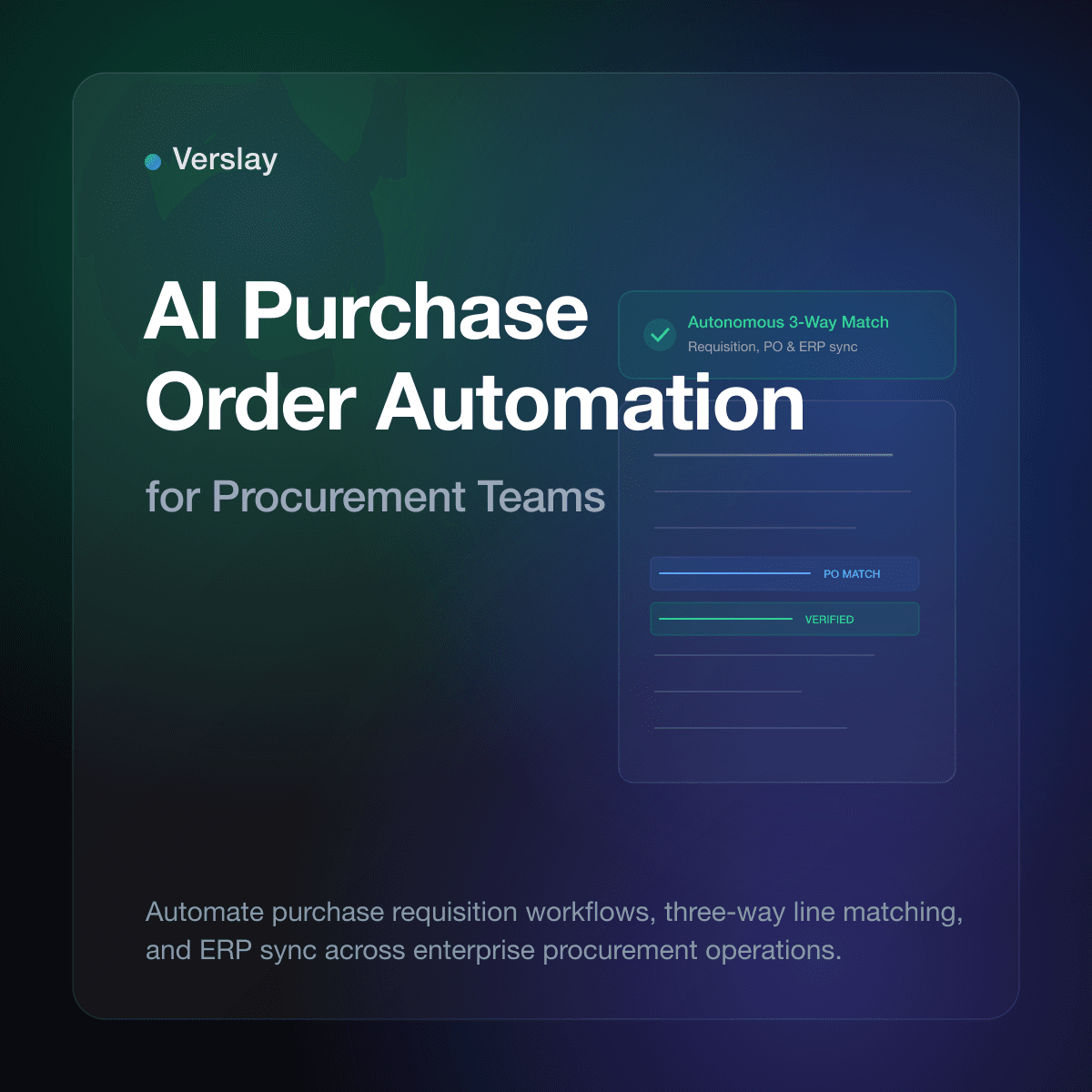
To learn how automated intelligence streamlines upstream supplier verification and purchase order generation, explore our guides on AI supplier due diligence for procurement teams and AI purchase order automation for procurement teams.
Architectural Blueprint: The Autonomous AI Tail Spend Engine
Autonomous AI tail spend management functions as an intelligent orchestration layer between employees, corporate suppliers, and enterprise systems:
┌────────────────────────────────────────────────────────────────────────────────────────┐
│                   VERSLAY AI TAIL SPEND MANAGEMENT PLATFORM                            │
└────────────────────────────────────────────────────────────────────────────────────────┘
          ▲                                    ▲                                    ▲
          │ (1) Ingest & Classify              │ (2) Rationalize & Steer            │ (3) Settle & Sync
          ▼                                    ▼                                    ▼
┌───────────────────┐               ┌───────────────────────┐            ┌───────────────────────┐
│ Inbound Requisition│              │ Autonomous AI Agents  │            │ Core Enterprise Stack │
├───────────────────┤               ├───────────────────────┤            ├───────────────────────┤
│ • Slack / Teams Bot│              │ • Spend Taxonomy ML   │            │ • Coupa / SAP Ariba   │
│ • Expense Receipts│ ────────────► │ • Catalog Steerer     │ ─────────► │ • NetSuite / Workday  │
│ • P-Card Feeds    │               │ • Duplicate Detector  │            │ • Brex / Ramp         │
│ • Free-Text POs   │               │ • Micro-Negotiator    │            │ • ServiceNow          │
└───────────────────┘               └───────────────────────┘            └───────────────────────┘
                                               │
                                               ▼
                                    ┌───────────────────────┐
                                    │ Human Approval Gate   │
                                    │ (Threshold Exceptions)│
                                    └───────────────────────┘
By connecting directly to communication platforms and procurement backends via Model Context Protocol (MCP), AI agents provide instant assistance at the exact moment a purchasing need arises. When an employee requests a new tool in Slack, an AI agent intercepts the request, verifies whether an approved contract already exists, and steers the user to the company's preferred catalog without administrative delay.
The 5 Core Pillars of AI Tail Spend Rationalization
An enterprise-ready tail spend automation architecture is built upon five foundational operational pillars:
Pillar 1: Automated Spend Taxonomy & Line-Item Classification ──► UNSPSC auto-tagging of unstructured receipts
Pillar 2: Real-Time Buying Guidance & Maverick Prevention    ──► Steering employees to preferred catalogs in chat
Pillar 3: Vendor Rationalization & Contract Consolidation    ──► Merging duplicate suppliers and volume pools
Pillar 4: Autonomous Micro-Negotiation & Spot Sourcing       ──► Instant RFQs and discount capture on low-value POs
Pillar 5: Continuous Vendor Risk & Compliance Governance     ──► Automated background checks on tail suppliers
Pillar 1: Automated Spend Taxonomy and Line-Item Classification
Traditional classification software struggles with vague invoice descriptions such as "Project Consulting - Sept" or "Hardware Bundle A." Vision-native reasoning models analyze unstructured receipts, line-item descriptions, and supplier websites to automatically map each expenditure into standardized taxonomies:
- UNSPSC and eCl@ss Tagging: Accurately assigns 8-digit commodity codes across millions of historical transactions with over 98% accuracy.
- Contract Cross-Referencing: Determines whether an item matches an active master services agreement (MSA) or represents uncontracted off-catalog buying.
- Spend Archetype Grouping: Segregates tail spend into actionable sub-categories—such as MRO (maintenance, repair, and operations), software licenses, marketing services, and facilities.
Pillar 2: Real-Time Buying Guidance and Maverick Prevention
The most effective way to manage tail spend is to influence the purchase decision before money is spent. AI agents embedded in corporate communication channels act as interactive purchasing concierges:
- Chat-Based Requisitioning: Employees describe what they need in plain English via Slack or Microsoft Teams. The AI agent checks preferred supplier catalogs, presents pre-negotiated options, and generates a pre-approved purchase order automatically.
- Subscription and License Optimization: When a user requests access to a design or development tool, the agent verifies whether the organization already has idle licenses available within existing enterprise agreements before authorizing a new purchase.
- Policy Enforcement: Dynamically checks corporate purchasing thresholds and flags non-compliant requests before orders are finalized.
Pillar 3: Vendor Rationalization and Contract Consolidation
AI agents continuously analyze aggregate purchasing trends across all departments to identify vendor consolidation opportunities:
- Duplicate Supplier Clustering: Detects when different regional offices are buying identical goods from dozens of regional distributors at disparate prices.
- Preferred Supplier Aggregation: Calculates potential volume discount savings if tail purchases were consolidated under a single preferred Tier-1 distributor.
- Catalog Migration: Generates recommendations to add frequently purchased one-off items into hosted PunchOut catalogs.
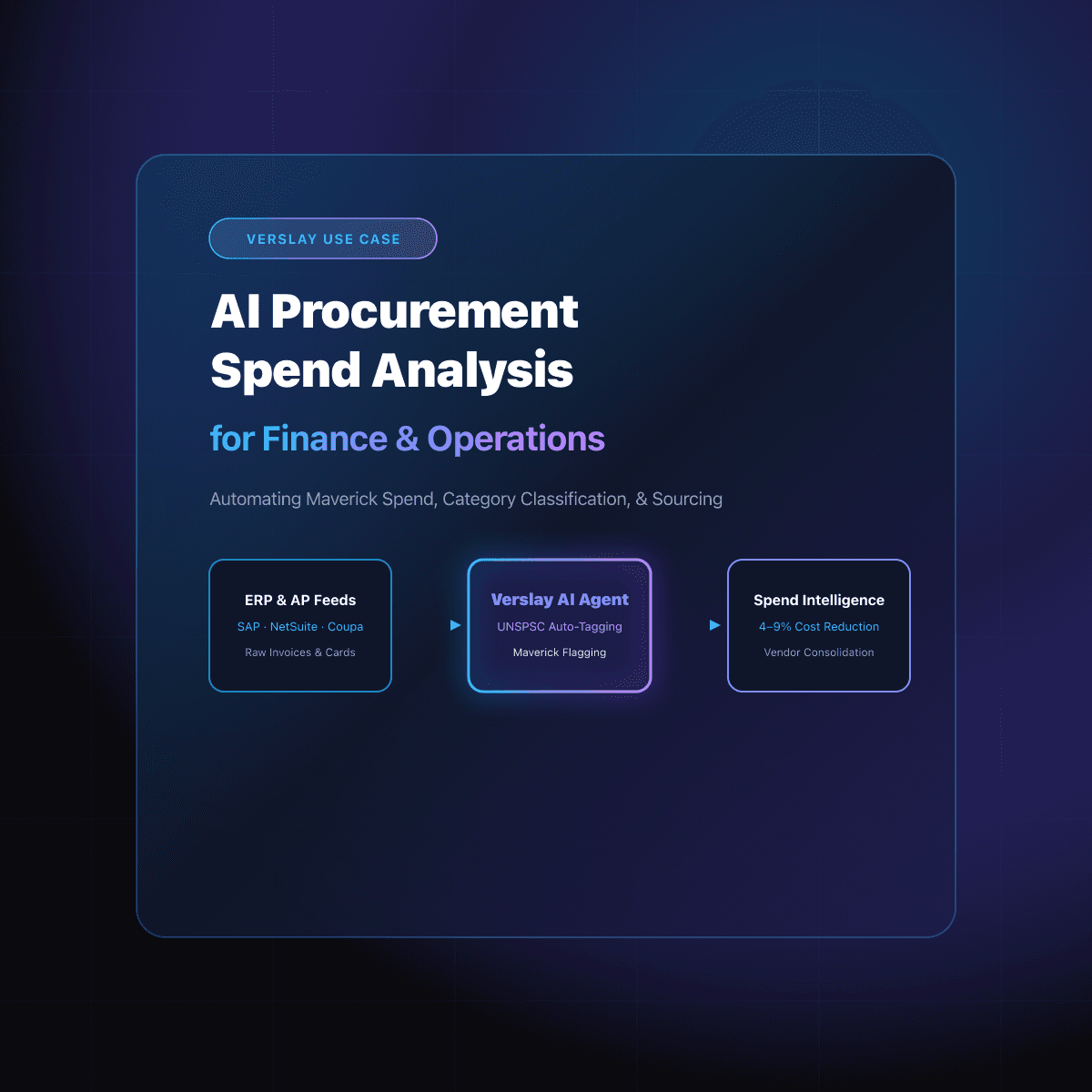
To see how macro-level spend intelligence informs category strategy, read our comprehensive overview on AI procurement spend analysis for finance and operations teams.
Pillar 4: Autonomous Micro-Negotiation and Spot Sourcing
For uncontracted purchases between $2,000 and $25,000, human negotiation is often economically unfeasible. AI agents automate spot sourcing through programmatic workflows:
- Automated 3-Bid Inquiries: Upon receiving an uncontracted requisition, the agent automatically dispatches structured RFQ requests to pre-approved suppliers in that category.
- Algorithmic Price Benchmarking: Compares incoming vendor quotes against historical market indices and recent internal transactions to identify overpriced bids.
- Dynamic Discount Prompts: Automates standard payment term negotiations (e.g., securing 2% early-payment discounts for 10-day settlement).
Pillar 5: Continuous Vendor Risk and Compliance Governance
Just because a vendor handles a small contract does not exempt them from legal, regulatory, or operational standards:
- Automated Sanctions and Watchlist Screening: Checks tax IDs, corporate registries, and OFAC watchlists before executing payments.
- Information Security Verification: Ensures third parties handling confidential data maintain current SOC 2 Type II or ISO 27001 certifications.
- Audit-Ready Evidence Capture: Logs every requisition rationale, price comparison, and approval decision in a tamper-evident audit record.
Operational Comparison: Legacy vs. AI Tail Spend Management
| Dimension | Traditional Tail Spend (Unmanaged) | Autonomous AI Tail Spend Management | | :--- | :--- | :--- | | Spend Visibility | Blind spot; categorized as generic "misc" | 100% line-item classification to UNSPSC standards | | Requisition Experience | Frustrating multi-screen procurement portals | Turnkey chat-based guidance in Slack and Teams | | Maverick Spend | Discovered weeks later on P-Card statements | Prevented proactively via automated catalog steering | | Vendor Count | Continually expanding; duplicate vendors | Systematically consolidated into preferred contracts | | Transaction Cost | $60–$120 per purchase order processed | Near-zero marginal cost per automated transaction | | Savings Realized | Zero; pricing accepted as-is at retail | 10%–15% direct cost reduction across tail volume | | Compliance & Risk | Unvetted suppliers introduce cyber & legal risks | Continuous automated vetting on every transaction |
Frequently Asked Questions
What is tail spend management in procurement?
Tail spend management is the systematic optimization and control of low-value, high-volume transactions that represent roughly 80% of total supplier orders but only 20% of corporate spend volume. Because these transactions fall below formal strategic sourcing thresholds, they often go unmanaged without intelligent automation.
How do AI agents automate tail spend rationalization?
AI agents ingest unclassified purchase records, categorize free-text expense line items into standardized taxonomies (such as UNSPSC), identify redundant suppliers, and steer buyers toward preferred enterprise catalogs. They also automate spot RFQs and verify vendor compliance without requiring human intervention.
What percentage of spend is typically considered tail spend?
In most enterprise organizations, tail spend accounts for approximately 20% of total expenditure but represents 80% of all supplier interactions and accounts payable transactions. In decentralized or service-heavy organizations, tail spend can exceed 25% of total procurement outflow.
How does tail spend automation reduce maverick buying?
AI agents make compliant purchasing faster and easier than rogue buying. By embedding purchasing assistance directly into Slack or Microsoft Teams, agents provide employees with instantaneous access to approved items and pre-negotiated corporate rates, eliminating the friction that drives employees toward unapproved personal credit card purchases.
Unlocking Hidden Margins with Verslay
Deploying AI tail spend management with Verslay enables enterprise procurement and finance teams to capture millions of dollars in previously unmanaged spend leakage while improving the internal employee buying experience.
- Zero-Friction System Connectivity: Connect your existing ERP (Coupa, SAP Ariba, NetSuite), corporate card platforms (Brex, Ramp), and communication tools through standardized Model Context Protocol (MCP) integrations.
- Context-Aware Agent Orchestration: Verslay specialized agents execute continuous classification, catalog consolidation, and spot sourcing autonomously in the background.
- Deterministic Governance and Control: Human-in-the-loop review gates ensure procurement managers maintain complete operational authority over high-threshold exceptions and category strategy.
- Comprehensive Audit Logs: Every spend classification, vendor recommendation, and price comparison is immutably logged for regulatory and financial audits.
Turn your organization's tail spend from an administrative drain into an engine for margin expansion. Deploy autonomous AI Agents with Verslay to take control of enterprise spend across your entire supplier base.