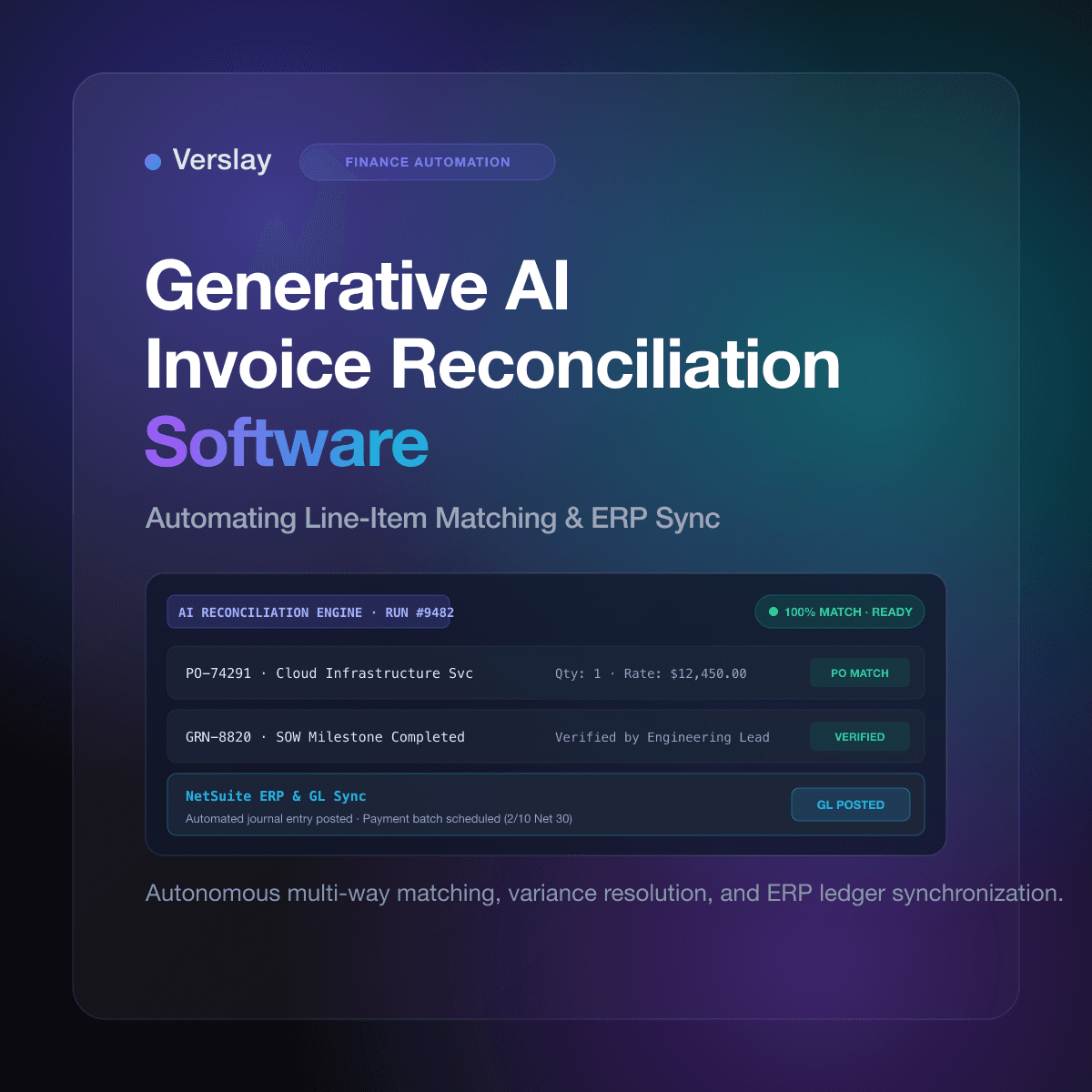
Generative AI invoice reconciliation software automates the extraction, semantic matching, and ledger synchronization of accounts payable documentation using large language models (LLMs) and autonomous agents. By replacing rigid OCR templates with contextual reasoning, generative AI resolves line-item variances, cross-references multi-page purchase orders and goods receipt notes, and posts validated transactions directly to ERP platforms like NetSuite, SAP, and QuickBooks in real time. This touchless architecture cuts month-end close latency by up to 90% while eliminating costly payment errors and fraudulent billing.
Closest Verslay page: Reconciliation Checker. Payment-invoice reconciliation. It is the nearest live match for this topic, not a one-to-one fit.
For finance and accounts payable (AP) departments, invoice reconciliation has historically been one of the most labor-intensive back-office operational burdens. Even organizations that invested in legacy optical character recognition (OCR) systems find their accounting staff spending hours manually re-keying data, researching price variances, and emailing vendors about missing details. Generative AI fundamentally shifts this paradigm from fragile template maintenance to autonomous cognitive verification.
Deploying AI agents for finance operations connected via modern API architectures allows organizations to achieve true straight-through processing (STP) across their entire accounts payable lifecycle.
Beyond Legacy OCR: Why Traditional Invoice Matching Fails Modern Finance Teams
For decades, accounts payable automation relied on first-generation OCR and zonal extraction engines. While these tools offered marginal improvements over purely manual paper filing, they introduced systemic operational vulnerabilities that persist in modern finance workflows:
- Template Brittleness & Maintenance Overhead: Traditional OCR software requires rigid coordinate templates for each vendor invoice format. When a supplier updates their branding, moves their tax ID to a footer, or introduces multi-column line-item tables, the OCR parser breaks, forcing accounting teams to reconfigure templates or fall back to manual data entry.
- Semantic Blindness: Legacy software cannot comprehend meaning or context. If a vendor invoice lists "10x Heavy Duty Server Racks" while the internal purchase order specifies "Server Enclosure 42U", rule-based systems flag an exception. Human intervention is required simply to confirm that both line items describe the identical product.
- Discrepancy Resolution Paralysis: Minor rounding differences, freight additions, split tax rates, or discounted early-pay calculations instantly halt automated processing. Traditional systems cannot calculate acceptable tolerance boundaries or draft context-rich inquiries to vendors.
- Decentralized Multi-Channel Ingestion: Modern vendor billing arrives across disparate channels—direct PDF attachments in shared email inboxes, scanned paper slips, customer supplier portals, and EDI feeds. Rule-based tools struggle to consolidate and deduplicate these unstructured inputs.
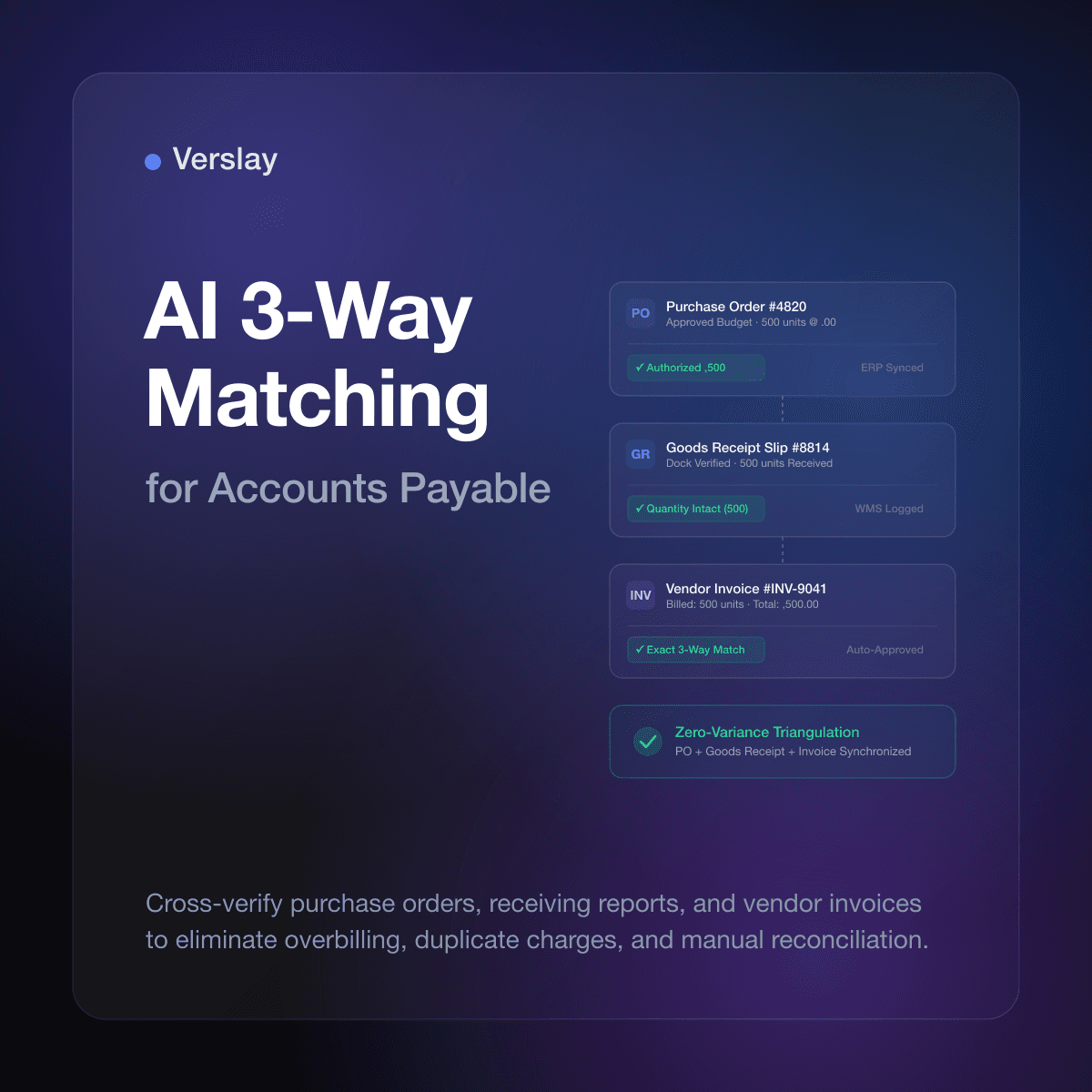
To explore how automated reconciliation solves adjacent operational challenges, read our guides on AI invoice reconciliation for finance teams and AI 3-way matching for accounts payable teams.
Core Capabilities of Generative AI Invoice Reconciliation Software
Generative AI invoice management software utilizes multimodal foundation models, agentic workflows, and semantic embedding vectors to automate end-to-end reconciliation. Key capabilities include:
1. Zero-Shot Multimodal Document Ingestion
Generative AI agents process invoices regardless of layout, font, language, or document quality:
- Layout-Agnostic Parsing: Reads complex, nested tables, rotated pages, multi-page PDFs, and mobile camera photos without pre-configured templates.
- Unstructured Field Comprehension: Accurately extracts vendor metadata, remittance bank details, invoice numbers, tax breakdowns, line-item quantities, and unit prices.
- Handwritten Annotation Detection: Identifies and interprets warehouse receiving stamps, physical signatures, and handwritten notes on packing slips.
2. Autonomous Multi-Way Semantic Triangulation
Rather than relying solely on exact character string matches, generative AI agents perform semantic matching across core accounting artifacts:
- Purchase Order (PO) Matching: Evaluates line items against approved purchase orders in ERP databases, dynamically mapping vendor product descriptions and units of measure (e.g., cases to units) to internal catalog SKUs.
- Goods Receipt Verification: Cross-references warehouse receipt logs, bills of lading, and freight documentation to confirm physical delivery and accepted counts before approving billing.
- Contract & Rate Card Validation: Verifies volume-tiered pricing, negotiated payment terms (Net 30, Net 60), and milestone fee structures against master service agreements.
3. Intelligent Tolerance Governance & Fraud Detection
Autonomous financial controls ensure security and regulatory compliance:
- Dynamic Tolerance Checking: Automatically approves acceptable minor variances (e.g., standard sales tax fluctuations or freight adjustments within pre-configured thresholds) without human intervention.
- Duplicate & Fraud Prevention: Detects duplicate invoice numbers, manipulated line items, and suspicious remittance bank account changes, insulating finance departments from business email compromise (BEC) attacks.
4. Generative Exception Remediation
When legitimate discrepancies arise (such as unexpected price increases or missing receiving slips), the AI agent resolves them proactively:
- Context-Rich Vendor Communication: Automatically drafts clarification emails to vendors explaining the exact line-item variance, referencing the contracted PO rate and attached invoice page.
- Internal Stakeholder Routing: Escalates genuine policy exceptions to designated procurement managers via Slack, Microsoft Teams, or email with one-click approval buttons and comprehensive audit summaries.
5. Touchless ERP Ledger Posting
Once verified, the agent securely executes backend transactions:
- ERP Integration: Posts validated bills and line-item distributions directly into NetSuite, SAP S/4HANA, Microsoft Dynamics 365, or QuickBooks Online.
- Cash Flow Optimization: Schedules payment releases to maximize working capital while automatically capturing vendor early-payment discounts (e.g., 2/10 Net 30).
Architecture: How Generative AI Orchestrates Touchless Reconciliation
The diagram below outlines how an autonomous generative AI reconciliation engine receives inbound vendor bills, coordinates verification across backend databases, and automates ledger synchronization:
[Inbound Invoices] (Email Attachments, Vendor Portals, Scanned PDFs)
                           │
                           ▼
          [Multimodal LLM Extraction Engine]
       (Zero-Shot Table Parsing, Entity Extraction)
                           │
                           ▼
           [Semantic Reconciliation Agent]
        ┌──────────────────┴──────────────────┐
        ▼                                     ▼
 [ERP Purchase Orders]               [WMS Goods Receipts]
(NetSuite / SAP Master Records)     (Verified Delivered Stock)
        └──────────────────┬──────────────────┘
                           │
                           ▼
               [Tolerance & Policy Gate]
                /                     \
      [Within Tolerance]       [Discrepancy Detected]
              │                           │
              ▼                           ▼
[Touchless ERP Ledger Posting]   [Generative Remediation]
[Schedule Optimal Payment Batch] (Vendor Inquiry / Stakeholder Alert)
- Ingest & Extract: Multimodal models ingest documents from email feeds or cloud storage, extracting structured JSON line items without requiring zonal templates.
- Semantic Querying: The agent queries ERP and inventory systems to retrieve matching purchase orders and receiving confirmations.
- Cognitive Triangulation: The agent matches items, checks mathematical consistency, and validates contract pricing and tax rules.
- Post or Remediate: Verified invoices are automatically posted to the general ledger, while exceptions are immediately routed with pre-drafted explanations.
Comparing Traditional OCR vs. Generative AI Invoice Reconciliation Software
| Evaluation Criteria | Legacy OCR Software | Generative AI Reconciliation Software | | :--- | :--- | :--- | | Setup & Template Configuration | Weeks of manual coordinate mapping per vendor | Zero-shot; immediate comprehension of any invoice layout | | Handling Layout Changes | Fails completely; requires template redesign | Adapts automatically without manual reconfiguration | | Line-Item SKU Matching | Strict string matching; fails on synonyms or abbreviations | Semantic vector mapping; understands product equivalencies | | Unit of Measure (UOM) Shifts | Generates exceptions on case/unit differences | Automatically translates and normalizes conversion ratios | | Discrepancy Remediation | Silent rejection or static error queue | Drafts contextual vendor inquiries and Slack escalations | | Straight-Through Processing (STP) | Typically 30%–45% touchless rate | Consistently achieves 85%–95% touchless processing | | ERP System Integration | Batch CSV exports or brittle point-to-point scripts | Native bidirectional API & MCP integration with ERPs |
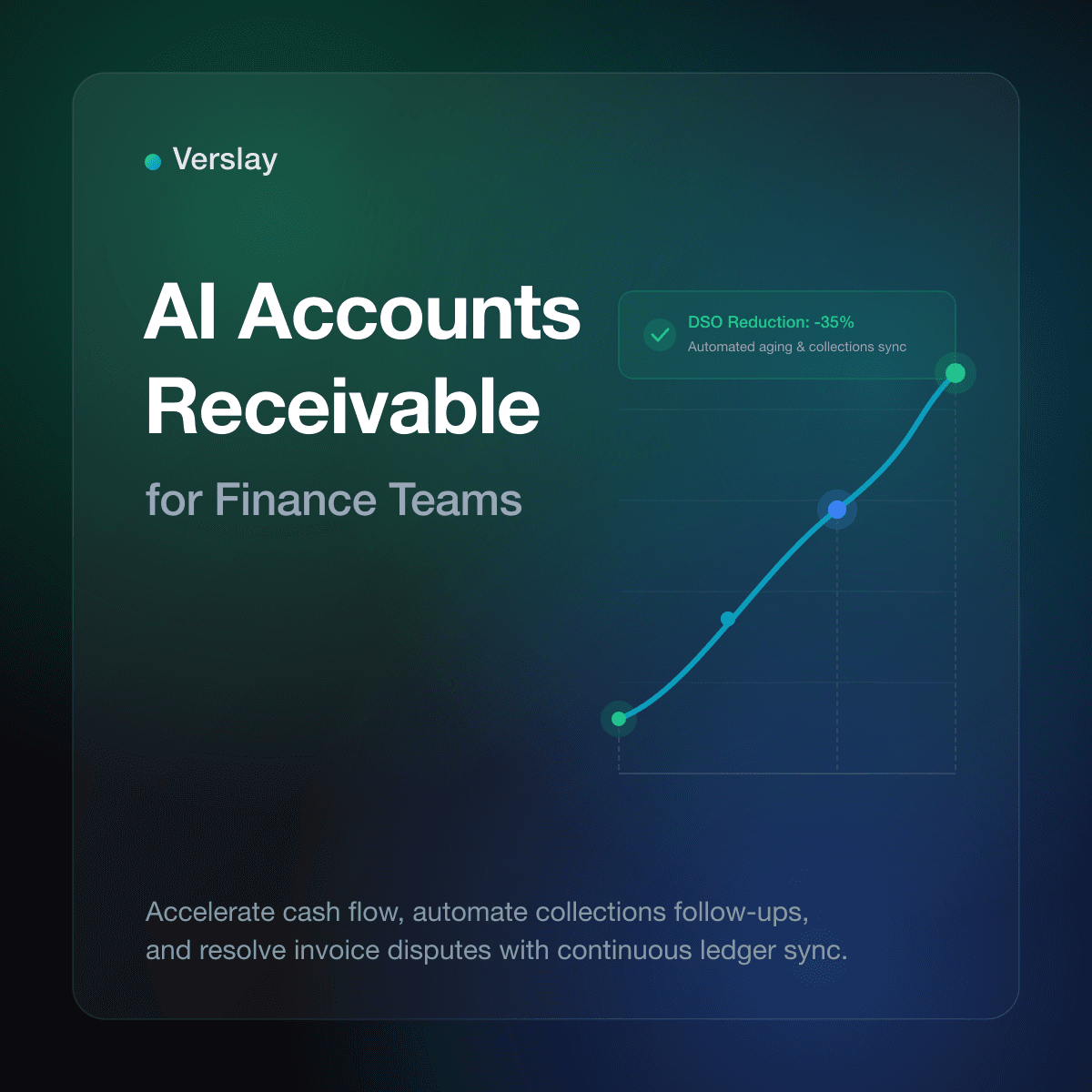
For the receivables counterpart to automated AP, discover how AI accounts receivable automation for finance teams automates customer payment matching and dispute handling.
Measurable Operational & Financial ROI for Finance Teams
Deploying modern generative AI invoice management software delivers immediate, quantifiable business outcomes:
- 90% Faster Invoice Processing Times: Reduces invoice cycle duration from an industry average of 11 days down to under 2 hours.
- 85%+ Touchless Straight-Through Processing: Minimizes manual data entry and repetitive line-by-line verification, freeing accounting professionals for high-value financial planning and analysis (FP&A).
- 100% Capture of Early-Payment Discounts: Accelerated approval workflows allow businesses to consistently secure early-pay discounts, generating thousands of dollars in annual treasury savings.
- Complete Audit Trail & SOX Compliance: Every extraction, match validation, tolerance check, and approval decision is documented in an immutable digital ledger for effortless audit compliance.
- Elimination of Duplicate Disbursements: Machine-speed cross-referencing across historical records prevents duplicate payments, vendor over-billing, and fraudulent disbursements.
See it in Verslay
Verslay agents work through the tools you already connect and prepare drafts and staged actions for a person to approve. The Reconciliation Checker page shows the real workflow. You can also browse all use cases or book a 30-minute walkthrough.
Frequently Asked Questions
What is generative AI invoice reconciliation software?
Generative AI invoice reconciliation software uses large language models and autonomous agents to parse complex vendor invoices, match line items against purchase orders and receiving logs, and automatically reconcile general ledgers.
How does generative AI differ from traditional OCR invoice matching?
Traditional OCR relies on rigid geometric templates and keyword rules that break when invoice layouts vary, whereas generative AI understands document semantics, resolves ambiguous descriptions, and handles edge cases without template maintenance.
Can generative AI invoice reconciliation software integrate with ERP systems?
Yes, generative AI invoice reconciliation software integrates directly with ERP platforms such as NetSuite, SAP, QuickBooks, and Microsoft Dynamics to extract purchase orders, verify goods receipts, and post approved transactions automatically.
Automate Your Accounts Payable with Verslay
Empower your finance organization with autonomous AI agents that handle invoice ingestion, multi-way matching, discrepancy resolution, and ERP ledger synchronization with meticulous precision.
Explore Verslay's AI Agents to transform your financial operations today.