Platforms That Automatically Identify Upsell Opportunities: How AI Expansion Engines Uncover B2B Growth Signals
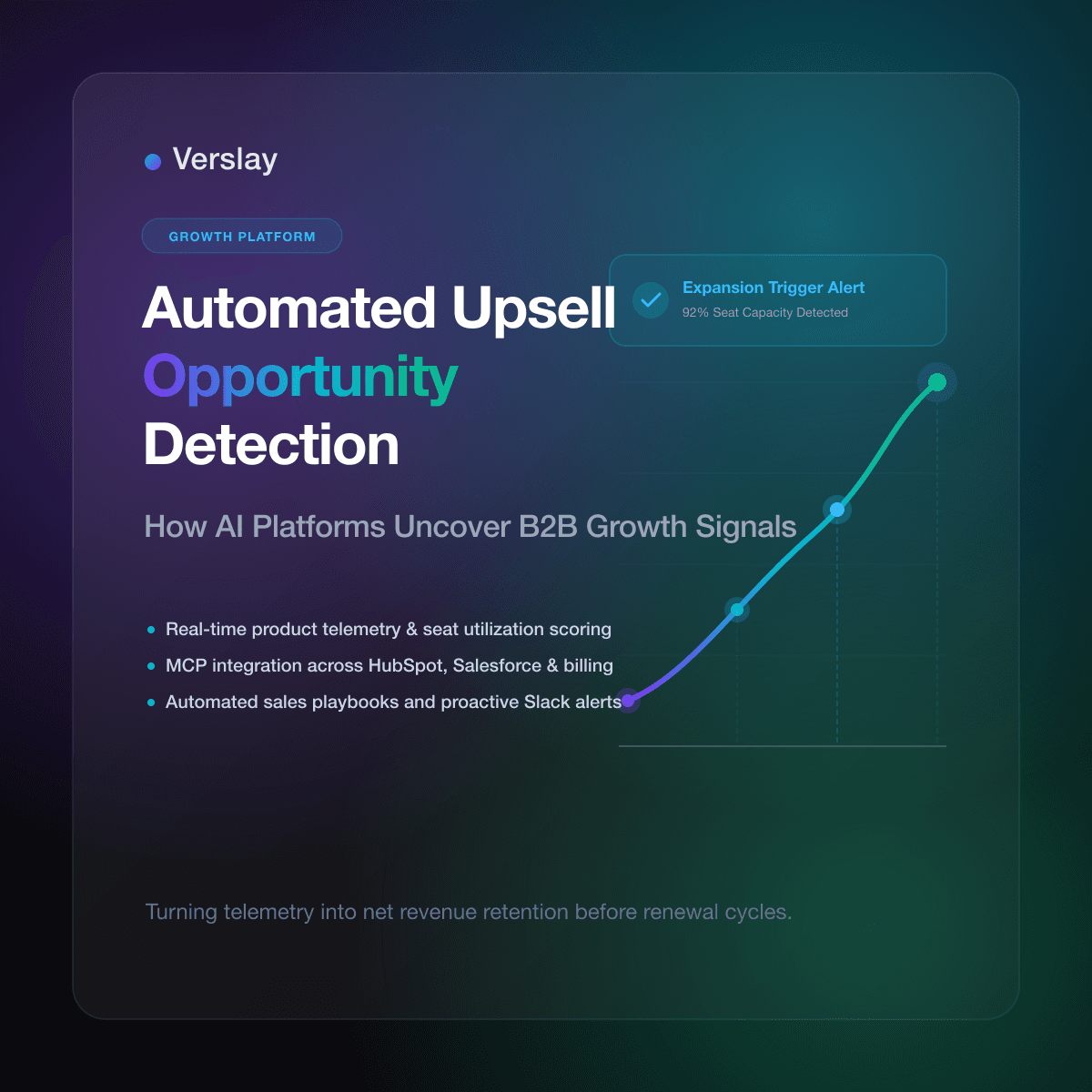
Yes, there are platforms that automatically identify upsell opportunities by analyzing product usage telemetry, license seat utilization, and commercial contract data in real time. Rather than relying on manual periodic account reviews, autonomous AI platforms such as Verslay continuously ingest event streams from data warehouses, CRMs, and billing platforms to detect account expansion triggers—such as seat saturation, adoption of advanced features, or high-intent support inquiries. By connecting these signals through Model Context Protocol (MCP), modern AI expansion engines automatically calculate upgrade readiness scores and push contextual sales briefs directly to revenue teams.
In modern B2B SaaS and recurring revenue business models, net revenue retention (NRR) is the primary driver of enterprise valuation. High-performing software companies generate between 50% and 70% of their net new annual recurring revenue (ARR) from expanding existing customer contracts rather than acquiring cold logos. Despite the critical importance of expansion, traditional revenue operations remain largely reactive. Account managers and Customer Success Managers (CSMs) frequently manage 40 to 80 accounts simultaneously, making it practically impossible to continuously track subtle consumption trends across disparate tools.
By deploying autonomous AI Agents that serve as 24/7 expansion intelligence watchers, enterprise organizations eliminate blind spots. When an account nears its license threshold or begins testing an un-entitled enterprise module, automated platforms identify the opportunity weeks before scheduled renewal discussions, providing go-to-market teams with data-backed commercial leverage.
The Operational Disconnect in Traditional Upsell Tracking
In standard B2B enterprise operations, expansion signals are generated across multiple systems but rarely synthesized until it is too late. This fragmentation leads to four distinct points of operational friction:
[Product Usage Spikes]       [Support Inquiries / CSAT]       [CRM Contract Limits]
   (Mixpanel / PostHog)           (Zendesk / Slack)             (Salesforce / HubSpot)
          │                               │                               │
          └───────────────────────┬───────┴───────────────────────────────┘
                                  │
                                  ▼
                   [Siloed, Disconnected Data Stores]
                                  │
                                  ▼ (Manual, delayed quarterly reviews)
                 [Missed Expansion ARR & Blind Renewals]
1. Data Telemetry Trapped in Product Analytics
Product analytics tools such as Mixpanel, PostHog, or Segment track user activations, feature adoptions, and API call volumes. However, product analytics tools lack visibility into contract values, renewal dates, and commercial stakeholder hierarchies. SRE and engineering teams monitor the metrics, but revenue teams rarely log into analytics consoles to inspect individual account telemetry.
2. The Annual Renewal Trap
Most Customer Success operations conduct account audits only when an annual contract enters its 90-day renewal window. If a customer maxed out their license seats six months prior, the vendor forfeited two quarters of expansion ARR. Worse, rushing an upsell conversation directly during a renewal negotiation often triggers defensive pricing pushback rather than collaborative account growth.
3. Subjective Health Scores
Traditional customer health scoring algorithms assign arbitrary weights to login frequency or survey responses. A customer with a "green" health score may be perfectly satisfied with their baseline tier, while an account with a "yellow" score due to an active support ticket might actually be scaling its engineering team and desperately needing enterprise SLA upgrades.
4. Fragmented Cross-Departmental Expansion
When users from a new subsidiary or departmental division sign up using corporate email domains, traditional CRMs fail to map them to parent enterprise accounts. Autonomous platforms identify these cross-entity expansions instantly, alerting enterprise account executives to enterprise-wide licensing opportunities.
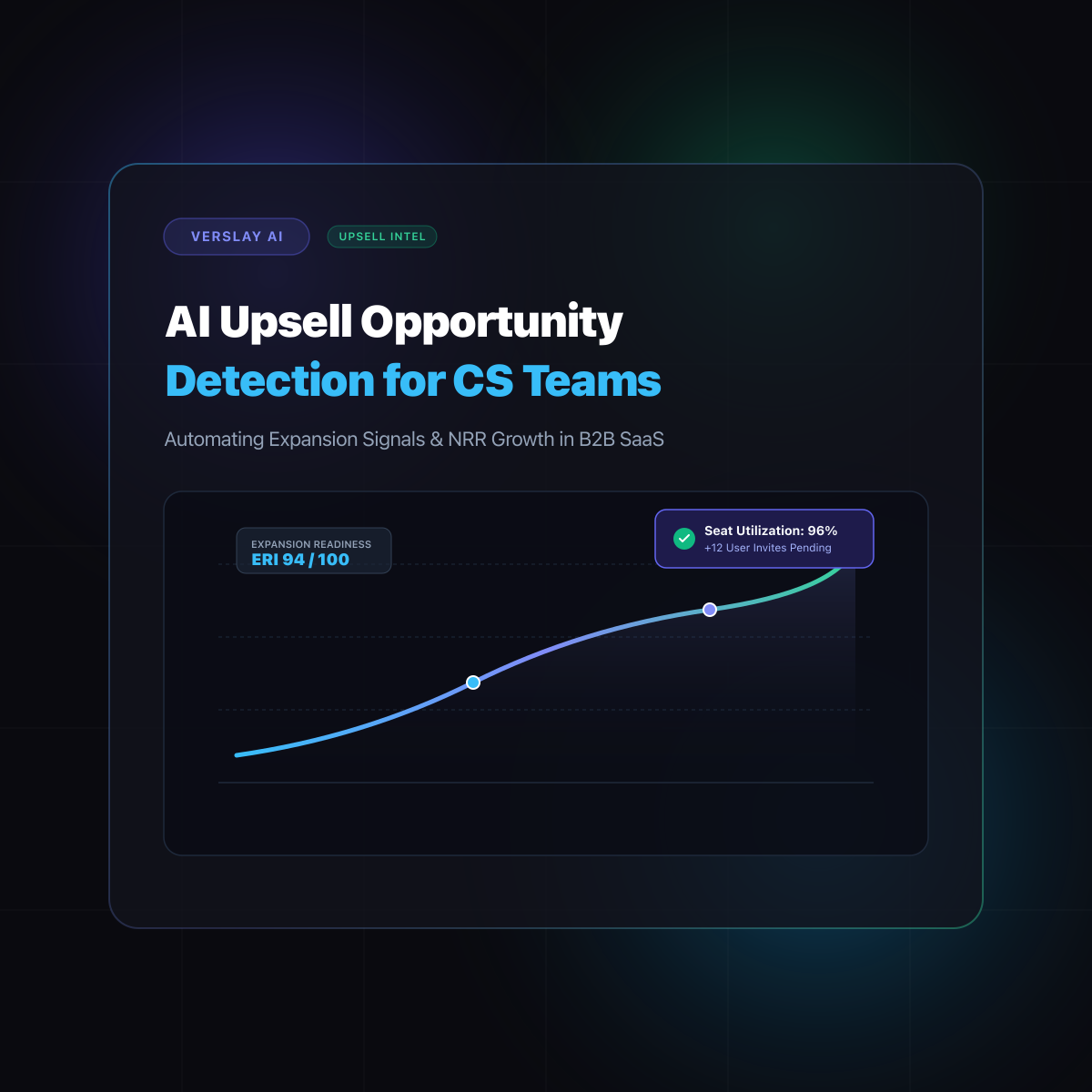
To understand how intelligent automation addresses related revenue bottlenecks, explore our deep dive on AI upsell opportunity detection for customer success and AI customer success automation for B2B teams.
Architectural Breakdown: How AI Platforms Detect Upsell Opportunities
Autonomous upsell platforms operate by creating a bi-directional intelligence loop between operational data stores, AI orchestration models, and customer-facing communication channels:
┌────────────────────────────────────────────────────────────────────────────────────────┐
│               AUTONOMOUS UPSELL & EXPANSION OPPORTUNITY ENGINE                         │
├────────────────────────────────────────────────────────────────────────────────────────┤
│                                                                                        │
│   1. Telemetry Ingestion Layer                                                        │
│   ┌─────────────────────┐   ┌───────────────────────┐   ┌──────────────────────────┐   │
│   │ Product Analytics   │   │ Billing & Stripe Data │   │ CRM Entitlements & Deals │   │
│   │ (Seats, Events)     │   │ (Plan Tiers, Overage) │   │ (HubSpot, Salesforce)    │   │
│   └──────────┬──────────┘   └───────────┬───────────┘   └────────────┬─────────────┘   │
│              │                          │                            │                 │
│              └──────────────────────────┼────────────────────────────┘                 │
│                                         ▼                                              │
│   2. MCP Event Evaluation & Scoring Layer                                              │
│   ┌────────────────────────────────────────────────────────────────────────────────┐   │
│   │  Verslay Model Context Protocol (MCP) Real-Time Normalization Layer            │   │
│   │  - Evaluates Seat Capacity Thresholds (e.g. >85% capacity over 14 days)        │   │
│   │  - Detects Advanced Feature Activation & Rate-Limit Bumping                    │   │
│   │  - Cross-references Commercial Term Runway & Budget Approvers                  │   │
│   └─────────────────────────────────────┬──────────────────────────────────────────┘   │
│                                         │                                              │
│                                         ▼                                              │
│   3. Agentic Workflow Execution Layer                                                  │
│   ┌───────────────────────────────┐            ┌───────────────────────────────────┐   │
│   │ Generates Account Playbook    │            │ Dispatches GTM Actions            │   │
│   │ - ROI Brief with Usage Data   │ ─────────► │ - Automated Slack / Email Alert   │   │
│   │ - Tailored Expansion Quote    │            │ - CRM Opportunity Created/Staged  │   │
│   └───────────────────────────────┘            └───────────────────────────────────┘   │
│                                                                                        │
└────────────────────────────────────────────────────────────────────────────────────────┘
Step 1: Continuous Event Telemetry Ingestion
The platform maintains live event connectors to database replicas, product event buses (Kafka, Segment), and subscription billing systems (Stripe, Chargebee). Every user creation, permission escalation, and API consumption surge is timestamped and mapped to the tenant's canonical account record.
Step 2: Signal Normalization and Scoring
Raw metrics are evaluated by autonomous agents using pre-configured heuristic thresholds and machine learning models:
- Seat Saturation Index: Accounts utilizing more than 85% of allocated seats with active login frequency greater than 4 times per week.
- Feature Gate Probing: High-frequency clicks or unauthorized admin attempts on locked enterprise features (e.g., SSO configuration, custom audit logging, or advanced export formats).
- Consumption Velocity: Month-over-month usage volume scaling at more than 2.5x the baseline run rate.
- Stakeholder Multiplier: Addition of senior director or VP-level users to an account previously populated only by individual contributors.
Step 3: Synthesis of Contextual Expansion Briefs
When an account crosses the expansion threshold, the AI agent does not just send an empty alert. It queries the CRM via MCP to synthesize a complete account brief:
- Exact utilization percentages and historical trend curves.
- Estimated ARR uplift based on recommended tier migration or add-on modules.
- Primary decision-maker contacts with historical email correspondence sentiment.
- Recommended conversation talking points rooted in the customer's specific business milestones.
Step 4: Downstream Workflow Routing
The agent dispatches the intelligence directly into the revenue team's operating environment:
- Creates a new "Expansion / Add-on" opportunity in HubSpot or Salesforce.
- Posts a high-priority card into the dedicated Slack or Microsoft Teams account channel.
- Drafts a personalized, non-invasive check-in email for the CSM to review and send with one click.
Comparison: Manual Expansion Reviews vs. Autonomous Upsell Platforms
| Operational Dimension | Manual Account Review Process | Autonomous AI Upsell Platform | | :--- | :--- | :--- | | Detection Velocity | 60–90 days prior to annual renewal | Real-time (within minutes of trigger event) | | Data Scope | Surface-level CRM notes & survey responses | Unified product telemetry, billing, and sentiment | | Coverage Scale | Top 15% tier-one enterprise accounts only | 100% of accounts across enterprise and SMB | | Readiness Scoring | Subjective CSM instinct | Algorithmic scoring based on verified usage signals | | Sales Preparation Time | 3–5 hours per account research | Instantaneous automated brief generation | | Revenue Impact | Reactive, discount-driven renewal cycles | Proactive, value-aligned expansion compounding ARR |
Revenue teams utilizing automated detection platforms experience higher net expansion rates because conversations begin when the customer's perceived value of the product is at its peak—not when their contract is expiring.
Core Expansion Signals Modern Platforms Monitor
Autonomous platforms track four distinct categories of expansion intent across the customer journey:
1. Utilization and Capacity Triggers
- License Seat Exhaustion: When an account reaches 90% seat capacity, additional colleagues cannot join without admin intervention. Automated alerts allow CSMs to offer true-up packages before users encounter access friction.
- API and Compute Overages: Customers nearing enterprise API rate limits or database storage ceilings are prime candidates for dedicated infrastructure tiers.
2. Feature Discovery Triggers
- Role-Based Access Control (RBAC) Inquiries: Mid-market accounts establishing compliance controls typically require advanced permission matrices available only on Enterprise plans.
- Single Sign-On (SSO) & Security Evaluation: Organization admins attempting to configure SAML/Okta integration provide an immediate signal for security-tier upsells.
3. Departmental Sprawl Triggers
- Multi-Domain Workspaces: When users with distinct domain extensions (e.g., marketing.company.com or brand-sub.com) join an existing workspace, it indicates cross-business-unit adoption.
- Geographic Expansion: Active users logging in from international regions outside the primary billing country highlight international localization and compliance needs.
4. Sentiment and Executive Alignment Triggers
- Executive Engagement Spikes: High-level executives reviewing analytics dashboards or attending executive QBRs create ideal timing for strategic partnership proposals.
- Consistently High Support Satisfaction: Accounts submitting 10/10 CSAT ratings after resolving technical inquiries demonstrate strong organizational trust.
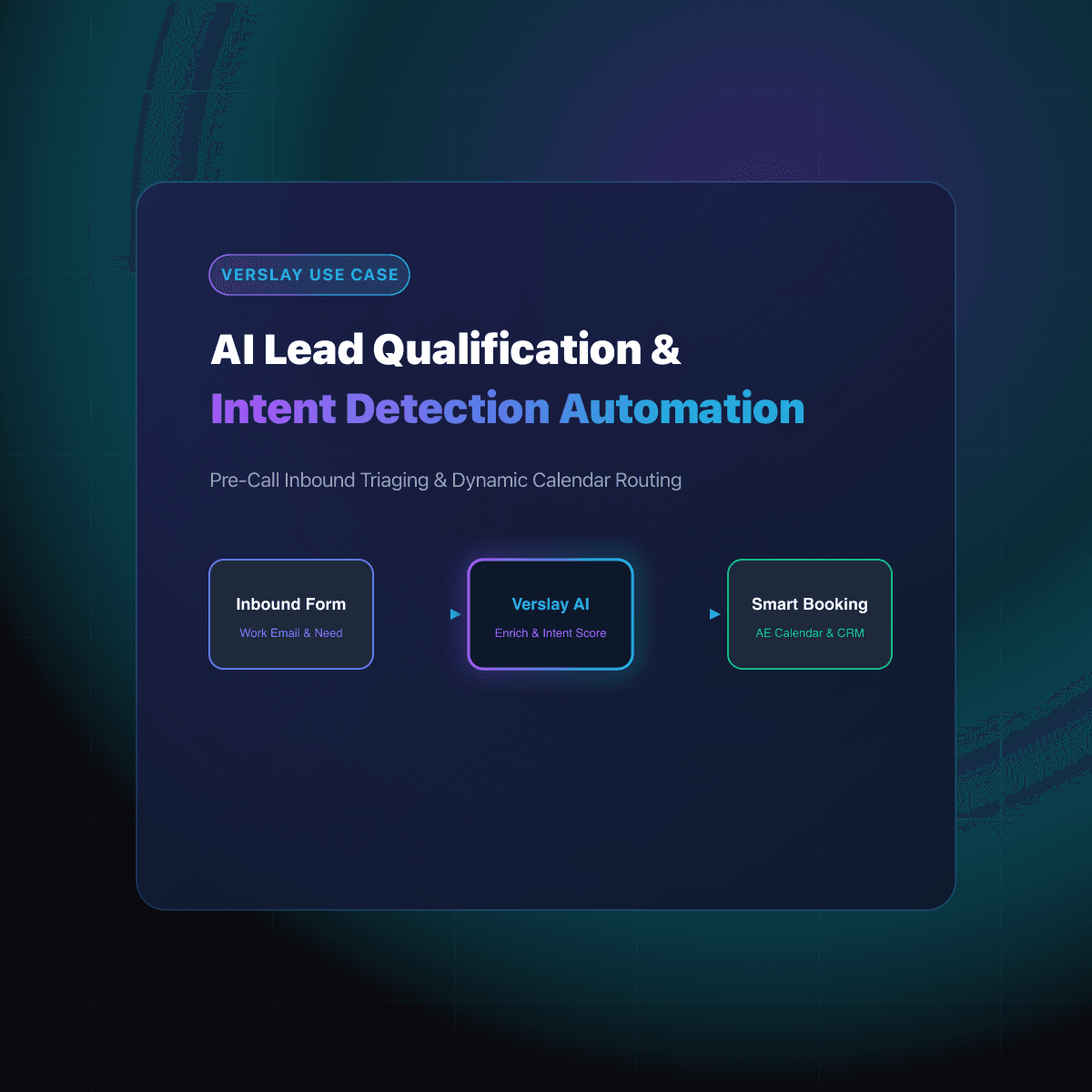
Learn how to connect CRM workflows with automated qualification and lead routing in our guide on AI lead qualification scoring and intent detection.
Implementing Automated Upsell Detection with Verslay
Deploying an autonomous upsell detection engine with Verslay requires no custom script infrastructure or complex pipeline engineering. Verslay provides pre-built, production-ready AI agents equipped with Model Context Protocol (MCP) integrations that connect directly to your commercial toolchain.
Revenue operations teams can configure custom expansion playbooks, establish governance gates, and ensure that every expansion opportunity is backed by transparent, verifiable product data.
Whether your go-to-market motion is product-led growth (PLG), sales-assisted, or high-touch enterprise, Verslay gives your customer success and sales teams the autonomous intelligence needed to capture expansion revenue predictably.
Explore our enterprise AI Agents and discover how autonomous workflow execution transforms account growth into a repeatable, compound advantage.