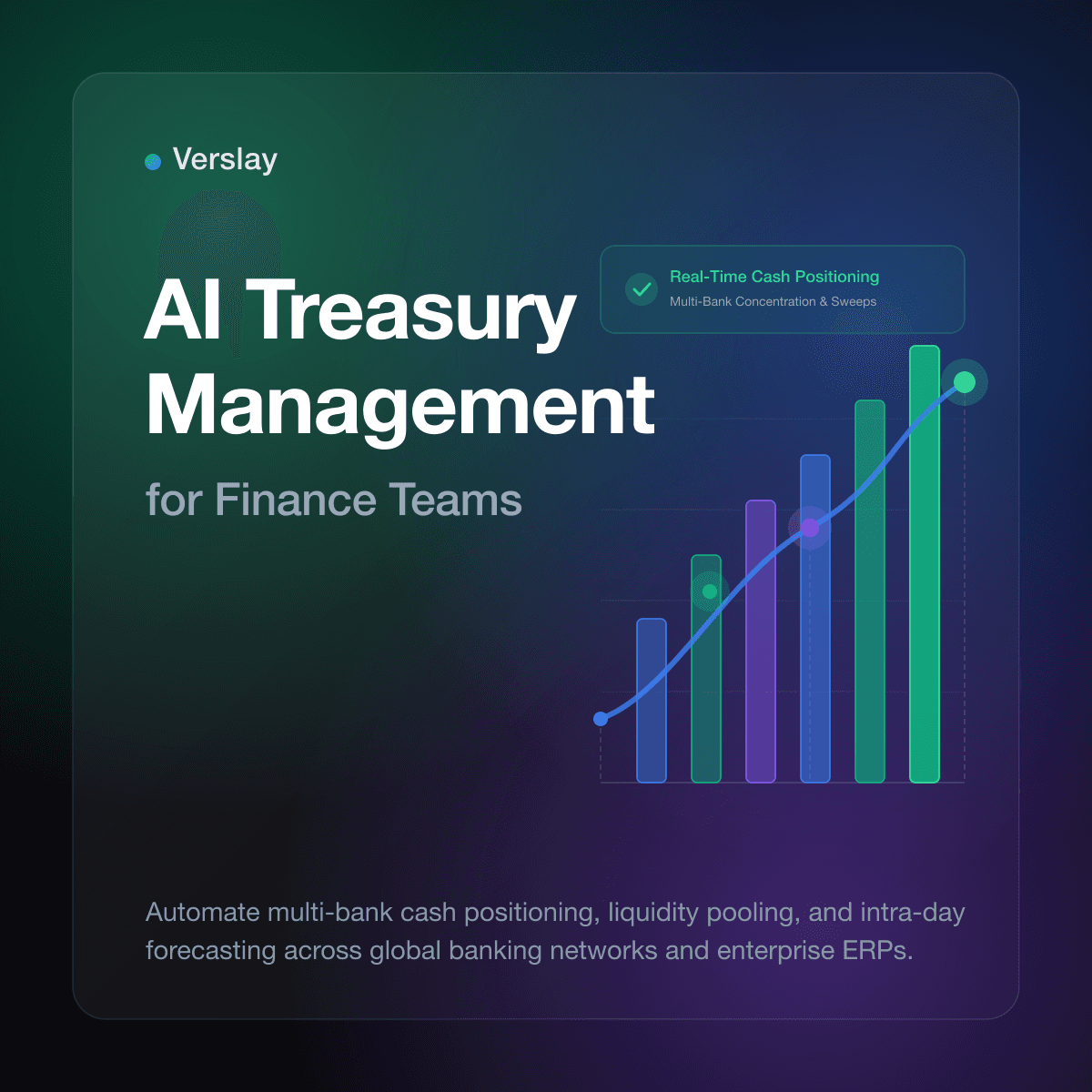
AI treasury management transforms corporate financial operations by deploying autonomous AI agents to continuously aggregate multi-bank statement feeds, calculate global cash positioning in real time, execute rule-based liquidity sweep pooling, and generate short-term intra-day cash forecasts. By eliminating manual banking portal logins, fragmented spreadsheet consolidation, and disconnected wire preparation across disparate banking partners and enterprise ERPs, intelligent treasury automation allows finance leaders to eliminate idle cash drag and maximize yield while protecting working capital against foreign exchange volatility and payment fraud. Rather than spending every morning manually assembling prior-day balance workpapers, corporate treasurers, controllers, and CFOs gain immediate, continuous visibility into their worldwide liquidity positions.
For multi-entity corporations, international enterprises, and rapidly scaling tech businesses, managing liquidity across dozens of banking institutions, hundreds of operating accounts, and volatile global currencies has become an increasingly fragile operational hurdle. Corporate treasury analysts frequently spend the first three hours of every business day logging into fragmented banking portals, manually downloading SWIFT MT940 or ISO 20022 CAMT.053 files, converting disparate currency formats into static spreadsheets, and attempting to calculate a consolidated opening cash position. By the time this manual positioning worksheet is finalized, market conditions have shifted, intra-day disbursements have cleared, and the window for executing optimized sweep transactions or high-yield overnight money market investments has narrowed.
Compounding this friction is the structural complexity of decentralized banking architectures. Operating entities often hold idle cash buffers in low-interest regional operating accounts to cover unforeseen local disbursements, resulting in substantial "trapped liquidity" and lost yield opportunities across the enterprise. Furthermore, manual intercompany lending tracking, complex bilateral netting schedules, and spreadsheet-driven hedging calculations create significant compliance exposure under international tax standards and transfer pricing regulations.
By connecting autonomous AI Agents directly to banking networks and enterprise general ledgers via standardized Model Context Protocol (MCP) bridges, finance teams shift from reactive, retrospective cash reporting to proactive, continuous treasury orchestration. AI agents monitor account balances around the clock, verify upcoming payables and receivables against ERP ledgers, and draft precision liquidity balancing actions within established corporate governance controls.
The Treasury Bottleneck: Why Manual Cash Positioning Drains Corporate Finance
Traditional treasury operations relied on end-of-day batch processing and rigid, centralized banking relationships. In today\x27s digital, 24/7 operating environment, enterprise finance teams face significant operational friction when relying on legacy manual workflows:
- Fragmented Multi-Bank Portal Fatigue: Enterprises maintain relationships with dozens of regional and international banking institutions. Treasury teams must manage cumbersome hardware tokens, multi-factor authentication procedures, and disparate file formats across each banking portal just to retrieve basic daily balances.
- Delayed Cash Visibility and Idle Cash Drag: Because manual reconciliation takes hours, treasury teams operate with stale information. To avoid overdraft penalties, regional subsidiary controllers hoard precautionary cash buffers, leaving millions in corporate capital uninvested and unoptimized.
- Intra-Day Settlement and Variance Blind Spots: Customer receipts, merchant processor settlements, and automated direct debits hit accounts throughout the business day. Manual spreadsheets cannot capture intra-day settlement activity in real time, exposing organizations to unexpected liquidity shortfalls or missed funding deadlines.
- Error-Prone Intercompany Netting and Pooling: Cross-border physical cash concentration and notional pooling require intricate intercompany loan tracking, interest calculation, and regulatory tax compliance. Manual tracking in spreadsheets frequently leads to balance discrepancies and audit friction during statutory reviews.
- Payment Execution Vulnerability and Wire Fraud Risks: When treasury staff manually rekey wire instructions between ERP payment batches and banking portals, the risk of typographical error or business email compromise (BEC) escalates dramatically. Without cryptographic verification and multi-agent cross-referencing, organizations face severe payment diversion risks.
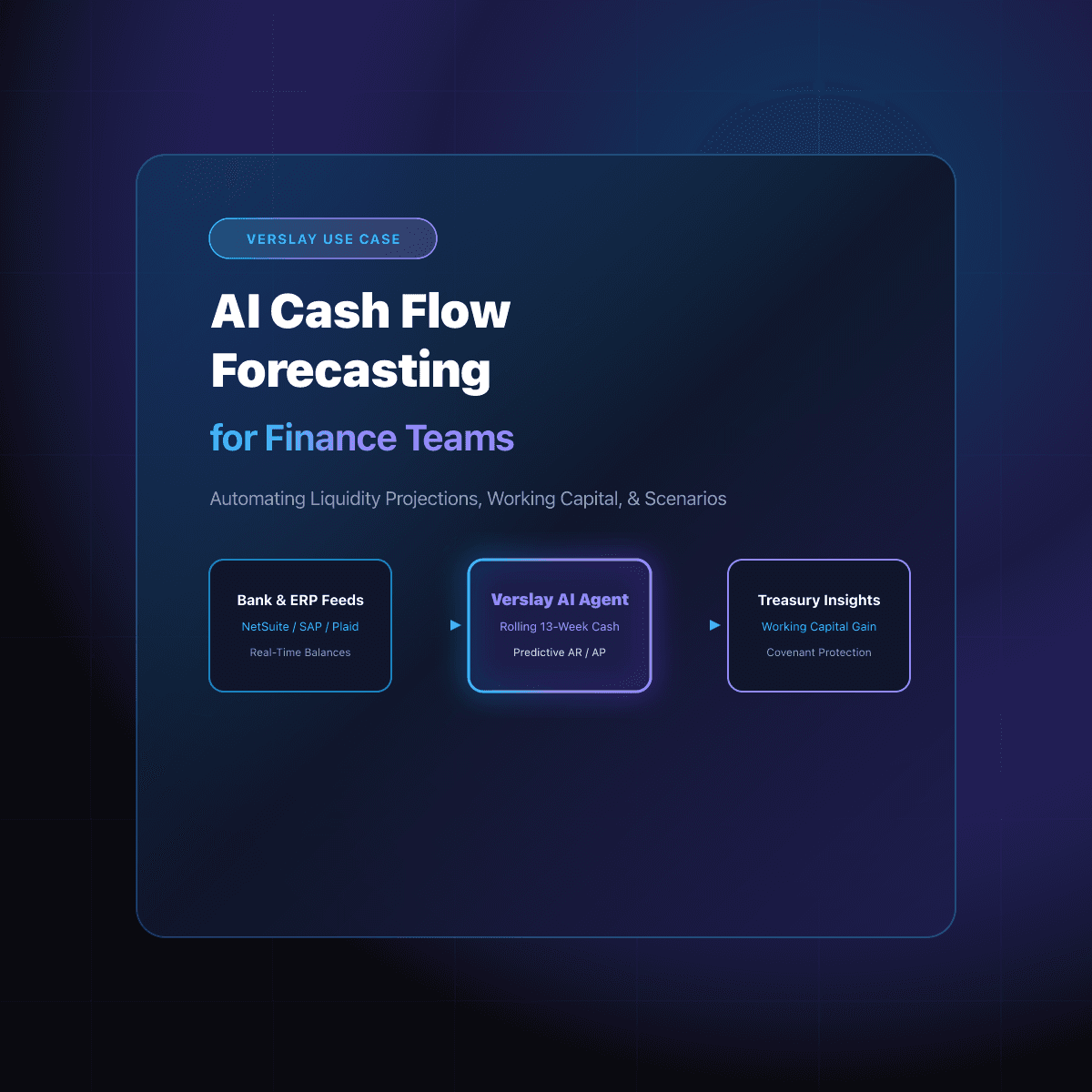
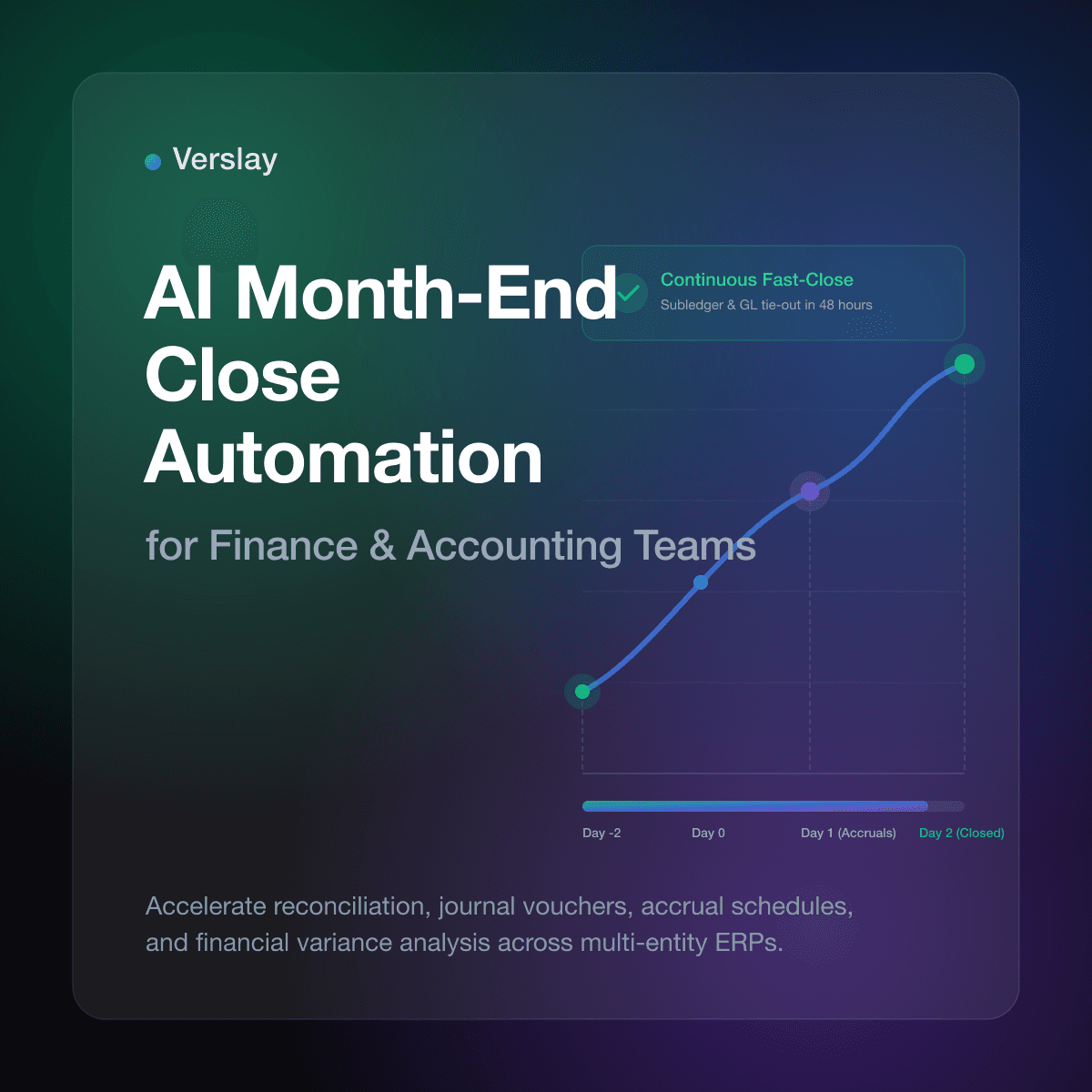
To see how autonomous agents streamline related financial workflows, explore our guides on AI cash flow forecasting for finance teams and AI month-end close automation for finance teams.
Core Capabilities of Autonomous AI Treasury Management Agents
Modern AI treasury management software provides an intelligent automation layer that coordinates banking networks, ERP databases, and human approval rails into a unified liquidity engine:
1. Real-Time Multi-Bank Ingestion & Global Cash Positioning
Eliminating morning portal logins and providing an always-current snapshot of enterprise liquidity:
- Universal Multi-Bank Data Connectivity: Directly connects to global banking partners via direct open banking APIs, SWIFT Alliance Lite2, host-to-host SFTP, and ISO 20022 messaging (CAMT.052 intra-day and CAMT.053 end-of-day statements).
- Instant Currency Normalization & FX Translation: Automatically translates balances across dozens of operating currencies into functional corporate reporting currencies using live central bank and interbank exchange rates.
- Categorized Opening Position Generation: Synthesizes global ledger balances, pending authorizations, and uncleared checks into a structured executive dashboard before financial markets open each morning.
2. Autonomous Liquidity Pooling, Sweeping & Target Balancing
Optimizing enterprise capital allocation without manual intercompany wire initiation:
- Intelligent Target Balance Enforcement: Continuously compares operating account balances against target liquidity buffers, calculating the precise surplus or deficit across every subsidiary account.
- Automated Sweep Calculation & Staging: Automatically calculates two-way sweep amounts, physical concentration transfers, and zero-balance account (ZBA) replenishment, generating staged payment instructions for treasurer sign-off.
- Intercompany Loan & Interest Ledger Maintenance: Automatically logs all cross-entity transfer movements into intercompany loan subledgers, tracking accrued interest, transfer pricing rates, and repayment schedules in compliance with statutory requirements.
3. Intra-Day Forecasting & Working Capital Synchronization
Bridging the gap between long-term financial plans and daily operational cash needs:
- Real-Time ERP Subledger Integration: Ingests approved accounts payable (AP) payment runs, expected accounts receivable (AR) collections, payroll disbursements, and tax calendar liabilities from ERP systems such as NetSuite, SAP, and Workday.
- Pattern-Aware Inflow Prediction: Machine learning algorithms evaluate historical customer payment behaviors, seasonal merchant settlement lags, and dispute trends to adjust expected cash receipts on an intra-day basis.
- Rolling Intra-Day & 13-Week Cash Forecasting: Generates dynamic, rolling 13-week cash projections, highlighting projected cash crunches or excess liquidity events weeks before they materialize.
4. FX Exposure Tracking & Hedging Recommendation Engine
Protecting operating margins from volatile foreign exchange fluctuations:
- Balance Sheet & Transactional Exposure Identification: Scans open foreign currency purchase orders, invoices, and unhedged balance sheet assets to map net currency exposure across operational entities.
- Natural Hedging & Bilateral Netting: Identifies offsetting currency positions across global operating subsidiaries, minimizing the volume of external currency trades required.
- Policy-Aware Derivative Hedging Proposals: Drafts structured forward contract and FX swap recommendations aligned with the company\x27s approved risk tolerance limits and investment policy guidelines.
5. Bank Account Administration (eBAM) & Wire Fraud Shielding
Enforcing strict institutional controls, signatory governance, and audit trails:
- Electronic Bank Account Management (eBAM): Maintains an accurate, centralized registry of all global corporate bank accounts, authorized signatories, signing authority limits, and power-of-attorney documents.
- Cryptographic Wire & Payment Verification: Intercepts outgoing payment batches, cross-referencing beneficiary bank details against verified vendor records, historical payment habits, and dual-authorization policies to prevent unauthorized fund diversions.
- Bank Fee Analysis & Tariff Auditing: Parses monthly electronic account analysis (EDI 822 or BSB) statements, benchmarking assessed banking fees and transaction charges against contracted pricing schedules to identify billing discrepancies.
Technical Architecture: How AI Treasury Agents Operate via MCP
Enterprise treasury management requires absolute security, non-repudiation, and transparent auditability. AI treasury agents operate within strict deterministic guardrails using Model Context Protocol (MCP) connections:
+---------------------------------------------------------------------------------+
|                       Global Banking & Financial Networks                       |
|   (SWIFT Alliance / Open Banking APIs / ISO 20022 CAMT / Host-to-Host SFTP)     |
+---------------------------------------+-----------------------------------------+
                                        |
                                        v
+---------------------------------------------------------------------------------+
|                         Model Context Protocol (MCP) Gateway                    |
|       - Encrypted Token & API Vault        - Deterministic Schema Validation    |
|       - Role-Based Access Controls         - Immutable Audit Ledger             |
+---------------------------------------+-----------------------------------------+
                                        |
                                        v
+---------------------------------------------------------------------------------+
|                      Autonomous AI Treasury Agent Suite                         |
|                                                                                 |
|   +-----------------------+ +-----------------------+ +-----------------------+ |
|   |   Cash Positioning    | |   Liquidity Sweeps    | |  13-Week Forecasting  | |
|   |      & Multi-Bank     | |     & Target Balances | |    & Working Capital  | |
|   +-----------------------+ +-----------------------+ +-----------------------+ |
|   +-----------------------+ +-----------------------+ +-----------------------+ |
|   |     FX Exposure       | |   eBAM & Account      | |   Payment Anomaly     | |
|   |    & Netting Engine   | |    Administration     | |      Detection        | |
|   +-----------------------+ +-----------------------+ +-----------------------+ |
+---------------------------------------+-----------------------------------------+
                                        |
                    +-------------------+-------------------+
                    |                                       |
                    v                                       v
+---------------------------------------+   +-------------------------------------+
|        Enterprise ERP & Subledgers    |   |     Human-in-the-Loop Governance    |
|   (NetSuite, SAP, Workday, Kyriba)    |   | (Treasury Director / CFO Approval)  |
|  - AP Disbursement Batches            |   |  - Dual Authorization Sign-Off      |
|  - AR Customer Invoices               |   |  - Wire Release Confirmation        |
|  - Intercompany Loan Accounting       |   |  - Policy Override Management       |
+---------------------------------------+   +-------------------------------------+
Through this architecture, sensitive financial credentials remain securely isolated within the enterprise security perimeter. AI agents never have autonomous authority to disburse funds unilaterally; instead, they analyze statement telemetry, identify cash imbalances, generate optimized sweep schedules, and route execution recommendations to authorized treasury signatories with verifiable cryptographic proofs.
For high-growth organizations operating in specialized sectors like SaaS and professional services, this framework delivers institutional-grade capital governance without requiring an army of manual treasury analysts.
Step-by-Step Implementation Framework for AI Treasury Automation
Deploying AI treasury automation follows a disciplined, phased roadmap designed to protect corporate liquidity while systematically automating routine workflows:
+-------------------+      +-------------------+      +-------------------+      +-------------------+
|      Phase 1      |      |      Phase 2      |      |      Phase 3      |      |      Phase 4      |
| Multi-Bank Ingest | ---> | Cash Positioning  | ---> | Liquidity Sweeps  | ---> | Continuous Audit  |
|   & Connectivity  |      |   & Forecasting   |      |   & Concentration |      |  & Fee Governance |
+-------------------+      +-------------------+      +-------------------+      +-------------------+
Phase 1: Multi-Bank Ingestion & API Connectivity
- Establish secure API and host-to-host SFTP connections across all primary and secondary banking partners.
- Configure automated scheduling for end-of-day ISO 20022 CAMT.053 and intra-day CAMT.052 message ingestion.
- Implement strict encryption in transit and at rest for all financial statement data and account metadata.
Phase 2: Autonomous Cash Positioning & Subledger Synchronization
- Integrate ERP chart of accounts (COA), open vendor payables, and pending customer receivables into the central treasury data repository.
- Activate the Cash Positioning Agent to automatically generate opening cash positions across entities, currencies, and accounts by 07:00 local time.
- Benchmark automated balances against manual bank statements during a two-week calibration phase to confirm 100% numerical accuracy.
Phase 3: Automated Liquidity Sweeps & Working Capital Optimization
- Codify corporate liquidity policies, establishing minimum operating buffers and target balances for each regional subsidiary account.
- Enable automated sweep calculation and intercompany loan recording, producing pre-configured payment instruction batches for multi-currency liquidity pooling.
- Deploy the 13-week rolling cash forecast engine, incorporating real-time AP/AR aging reports to predict liquidity peaks and troughs.
Phase 4: Continuous Payment Anomaly Detection & Fee Auditing
- Activate real-time wire verification models to detect unusual payment amounts, beneficiary account changes, or off-hours release attempts.
- Configure automated monthly analysis of electronic bank fee statements (EDI 822) to flag tariff overcharges and unnegotiated service fees.
- Integrate audit log feeds into the enterprise SIEM and compliance systems to maintain complete Sarbanes-Oxley (SOX) control compliance.
Enterprise Impact: Measurable Operational Transformation
Transitioning from manual, spreadsheet-bound treasury processes to autonomous AI treasury management delivers immediate, quantifiable improvements across financial operations:
| Metric / Operational Area | Legacy Manual Treasury | Autonomous AI Treasury Management | | :--- | :--- | :--- | | Morning Cash Positioning Time | 2.5–4.0 hours across multiple portals | Under 5 minutes (fully automated prior-day tie-out) | | Global Cash Visibility | Partial, delayed 24–48 hours for overseas subsidiaries | Real-time global view updated continuously | | Idle Precautionary Cash Buffers | High (15–25% trapped in decentralized accounts) | Reduced by 40–60% via automated target sweeps | | Short-Term Forecasting Accuracy | 65–75% (static monthly spreadsheet formulas) | 90–95% (dynamically updated with live ERP payment data) | | Bank Fee Auditing Coverage | Sporadic annual sample reviews | 100% monthly line-item audit across all accounts | | Payment Diversion / Fraud Exposure | Vulnerable to manual rekeying errors and spoofing | Cryptographically cross-verified against ERP vendor masters |
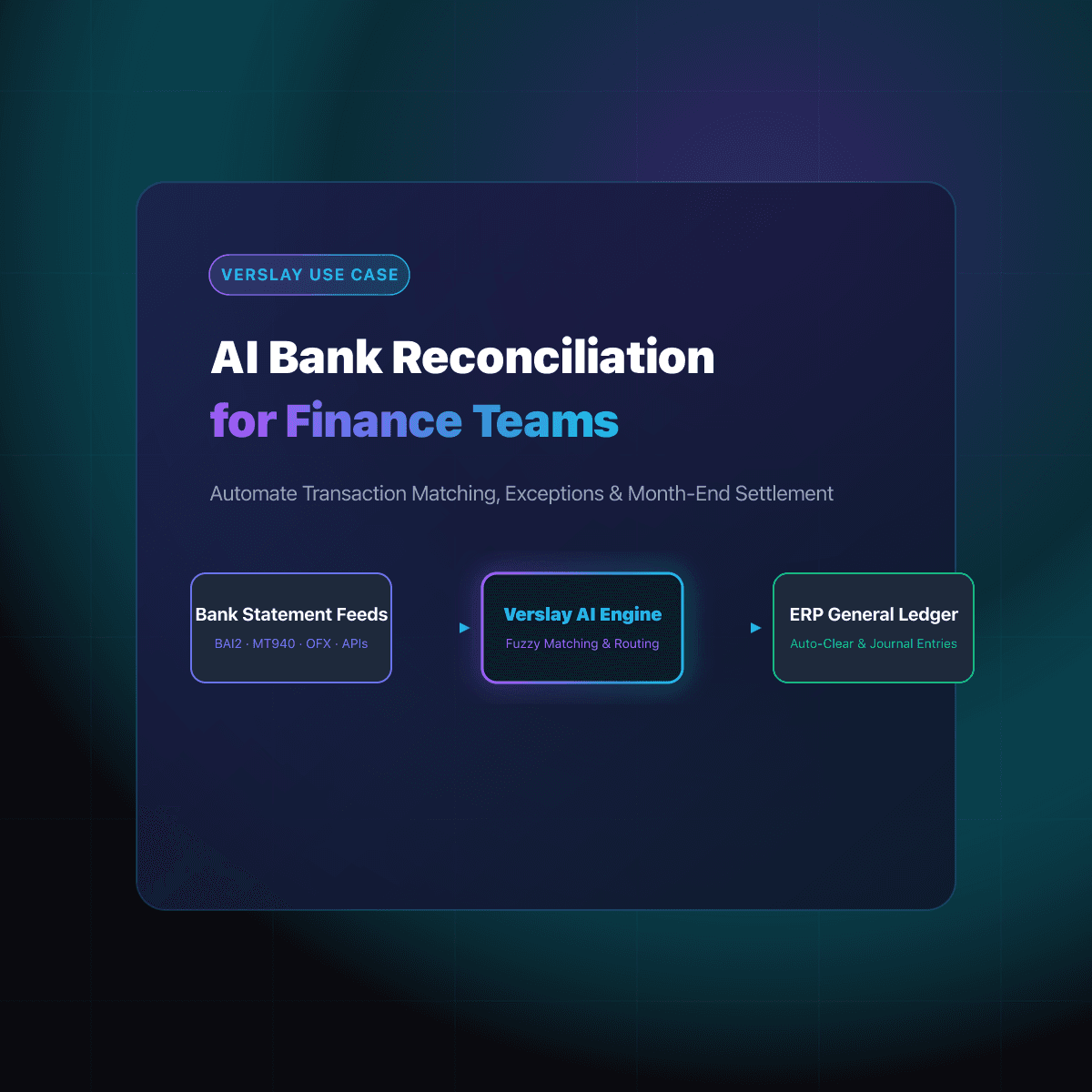
To explore how these automated controls integrate with general accounting and reconciliation workflows, read our detailed breakdown on AI bank reconciliation for finance teams.
Frequently Asked Questions
What is AI treasury management?
AI treasury management uses autonomous agents to aggregate multi-bank account balances, calculate real-time cash positioning, automate liquidity sweep pooling, and forecast daily cash inflows and outflows across global entities. By replacing manual portal navigation and spreadsheet consolidation with intelligent API workflows, treasury teams maintain continuous liquidity visibility and eliminate idle cash drag.
How does AI improve cash positioning and liquidity forecasting?
AI models ingest real-time MT940 and CAMT.053 banking feeds alongside ERP AP/AR schedules, identifying intra-day settlement trends, FX exposure risks, and cash concentration opportunities without manual spreadsheet aggregation. The algorithms dynamically update 13-week rolling forecasts as invoices are approved and payments clear, providing accurate forward-looking visibility.
What is an AI treasury management system (TMS)?
An AI treasury management system combines open banking APIs, Model Context Protocol (MCP) integrations, and intelligent automation agents to govern bank account administration, debt and investment tracking, and wire release verification. Unlike legacy TMS platforms that require rigid manual rules and manual data entry, an AI-native system proactively surfaces liquidity recommendations and automates repetitive accounting entries.
Can AI treasury management execute wire transfers automatically?
In enterprise environments, AI treasury agents do not execute wire releases unilaterally. Agents analyze liquidity requirements, calculate optimal sweep amounts, and prepare staged payment batches within the treasury management system or ERP. The final release of funds always requires authorized human cryptographic sign-off under dual-control governance policies.
How does AI treasury software handle multi-currency accounts and foreign exchange?
AI treasury platforms continuously ingest live foreign exchange spot and forward rates, normalizing multi-currency balances into consolidated corporate reporting currencies. Agents monitor cross-border cash flows to identify natural hedging opportunities across subsidiaries, proposing forward contracts or FX swaps when net open currency exposure exceeds configured risk thresholds.