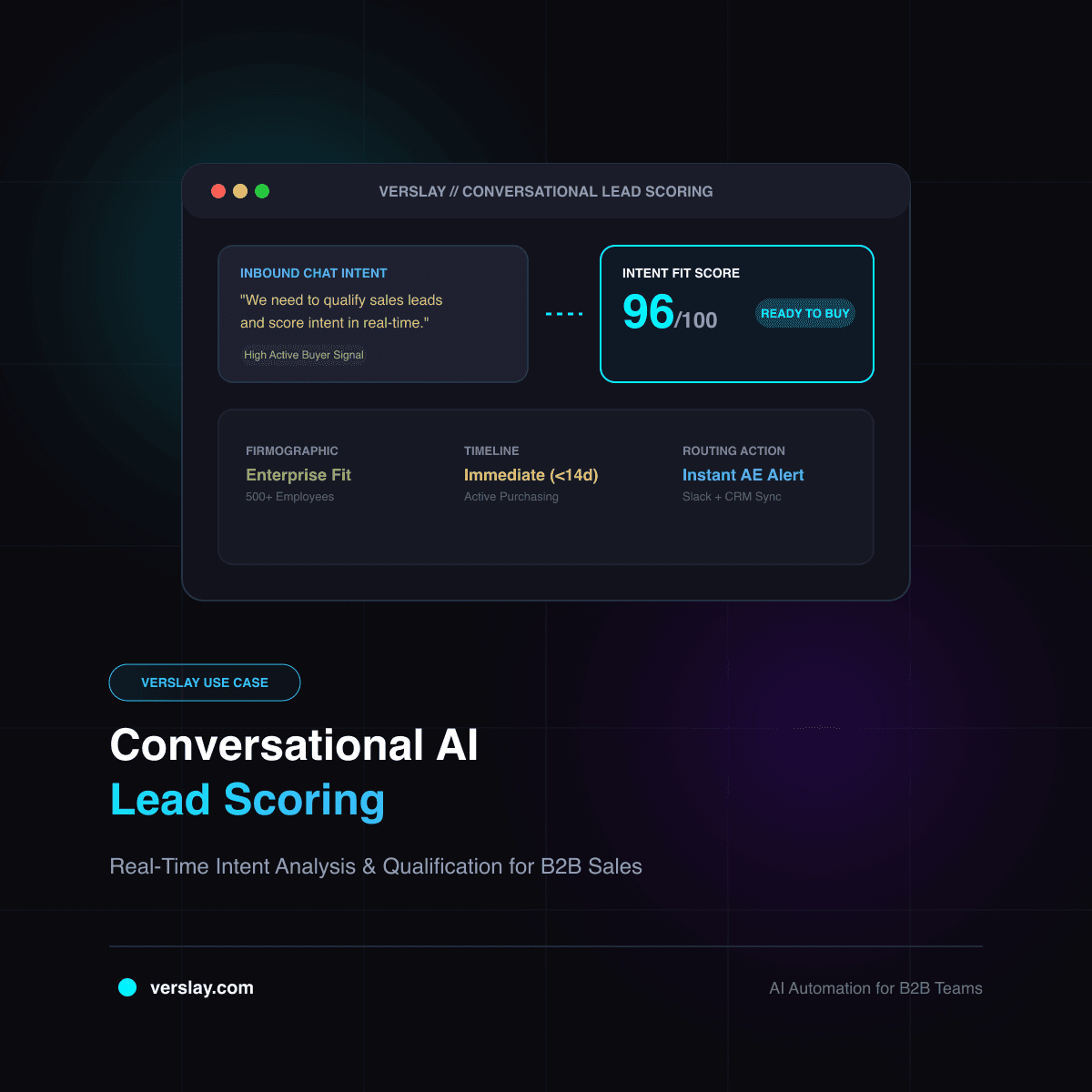
Conversational AI lead scoring is a real-time qualification method that analyzes natural language interactions, buyer questions, and explicit need indicators to continuously compute a prospect's purchasing intent. Unlike legacy scoring models that rely on delayed web analytics or static form fields, conversational scoring evaluates exact terminology, urgency signals, budget mentions, and decision-maker roles as the conversation occurs. This allows revenue teams to instantly surface high-intent buyers, trigger immediate sales outreach, and eliminate manual qualification delays.
B2B sales organizations frequently suffer from pipeline decay caused by slow lead response times and inaccurate lead scoring. Traditional lead scoring rules often assign static point values to actions like PDF downloads or pricing page visits—signals that frequently correlate with student research or competitive benchmarking rather than active buyer intent.
By introducing conversational AI into the lead intake process, sales operations can establish a dynamic feedback loop that scores leads contextually during active dialogue.
Why Legacy Lead Scoring Fails B2B Pipeline Growth
Conventional lead scoring models were built for an era of passive content consumption. Modern buyers expect instant, interactive responses and rarely complete long multi-field lead forms.
Primary failure modes of legacy lead scoring include:
- Static Point Arbitrage: A prospect opening five marketing emails accumulates arbitrary points without ever expressing active commercial intent.
- Delayed Response Windows: Sales reps receive MQL notifications hours or days after a high-intent prospect leaves the website, missing the critical window of buyer interest.
- Lack of Qualitative Context: Form fields capture basic firmographics (company size, job title) but fail to capture urgency, current tech stack pain points, or buying stage.
- High SDR Overhead: Sales development reps spend significant hours manually reviewing CRM contact records to decipher whether a lead warrants a live discovery call.
Conversational AI lead scoring eliminates these friction points by evaluating real-time dialogue against objective qualification criteria.
How Conversational AI Lead Scoring Works
An autonomous conversational scoring system operates continuously across website chat widgets, inbound messaging channels, and calendar booking flows. When a visitor engages, the AI agent conducts a structured yet natural conversation, asking targeted qualification questions while processing the buyer's answers.
Inbound Prospect Chat ──> Natural Language NLP ──> Intent & Need Extraction
                                                         │
                                                         ▼
HubSpot / Salesforce ◄── Dynamic Score Calculation (0-100) ──> Real-Time AE Alert
The underlying scoring mechanism relies on four primary intelligence vectors:
1. Explicit Intent & Urgency Signals
The system detects direct buying statements, such as inquiries about implementation timelines, custom contract terms, migration support, or pricing models. Mentioning active project deadlines or existing contract expiration dates heavily weighs the score toward immediate sales routing.
2. Pain Point Alignment & Technical Fit
As prospects describe their current operational bottlenecks, the AI maps mentioned keywords against your core value proposition and feature set. If a buyer describes precise challenges that your product solves natively, their intent fit score increases automatically.
3. Firmographic & Authority Verification
Through conversational prompts or integrated background lookup tools, the agent verifies company size, tech stack compatibility, and buyer seniority. A decision-maker from a target account receives priority weighting compared to individual contributors.
4. Behavioral Engagement Velocity
The depth, speed, and specificity of prospect responses during live chat provide strong behavioral indicators. High engagement velocity—answering technical questions quickly and requesting specific product demonstrations—signals a hot prospect ready for sales representative handoff.
Key Capabilities of Conversational Lead Scoring Agents
Deploying dedicated AI agents for conversational scoring delivers measurable structural improvements to pipeline velocity:
- Instant CRM Synchronization: Every conversation transcript, extracted field (budget, authority, need, timeline), and computed score is updated directly in your CRM system (HubSpot, Salesforce).
- Automated Rep Routing: Leads exceeding your high-intent score threshold (e.g., 80/100) are routed directly to account executives with calendar booking links presented in-chat.
- Smart Disqualification: Low-fit or non-commercial inquiries are gracefully directed to self-serve documentation or educational nurture sequences, freeing sales reps to focus exclusively on qualified opportunities.
- Continuous Score Calibration: Scoring criteria can be dynamically refined based on closed-won data, ensuring the model continuously adapts to shifting ideal customer profiles (ICPs).
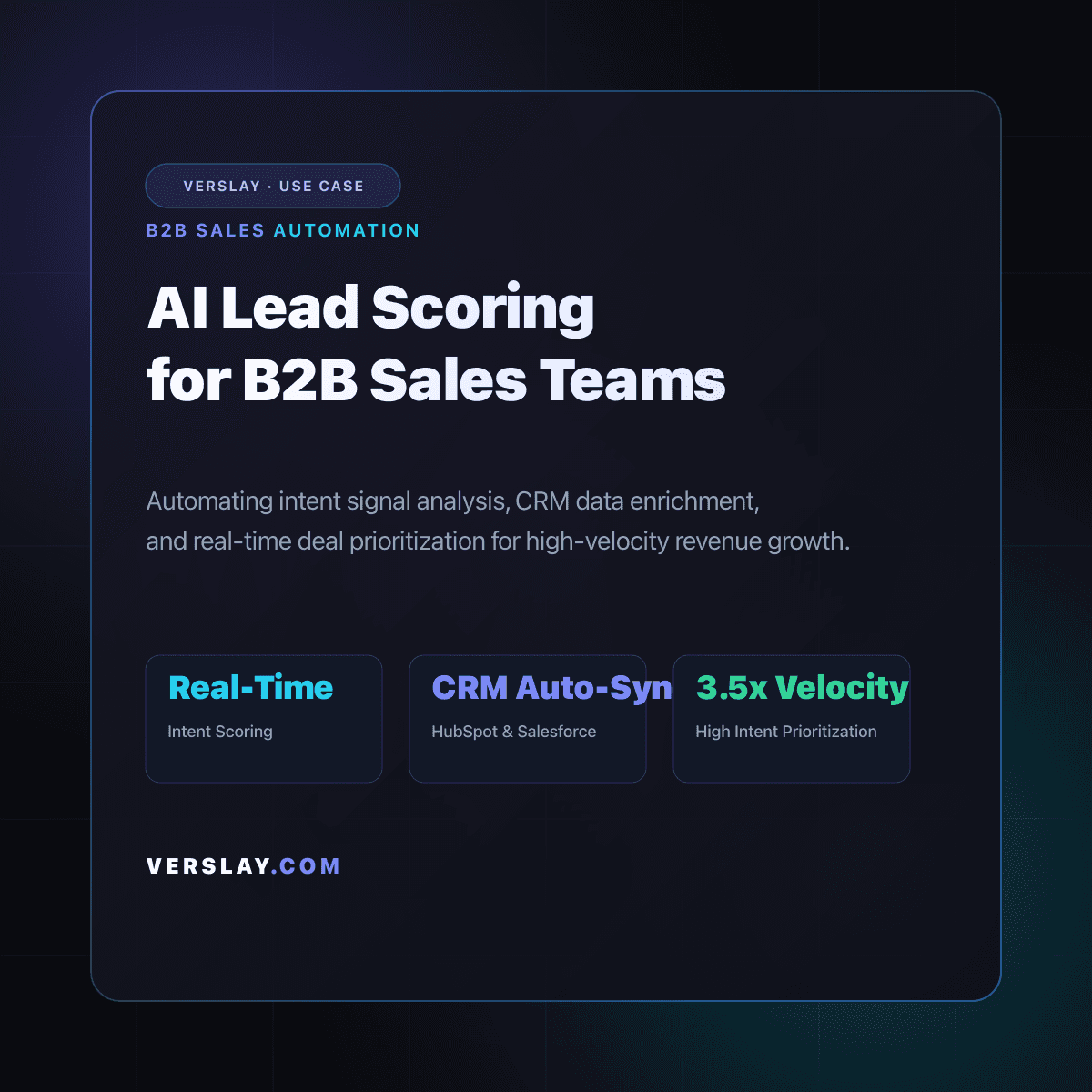
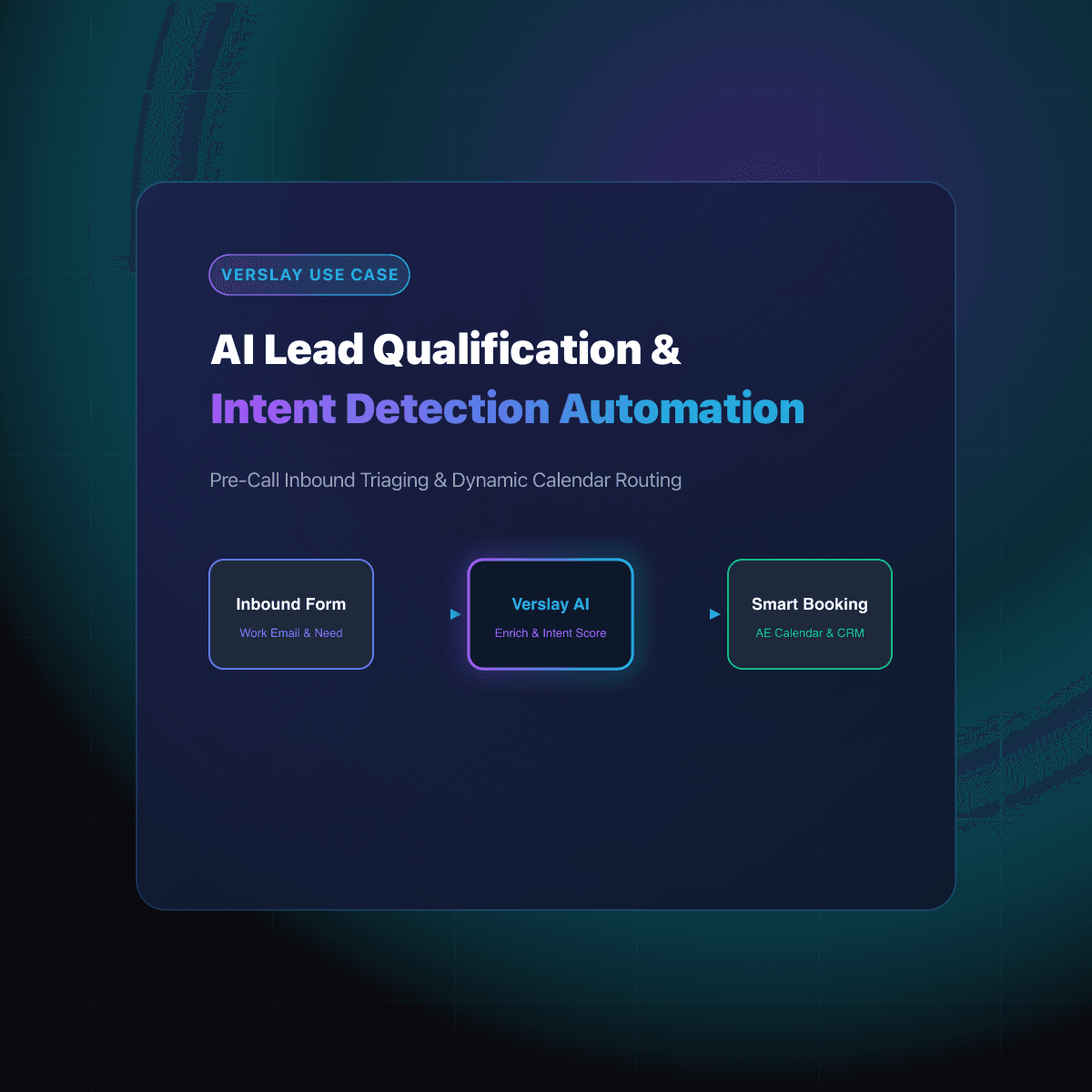
To learn how specialized sales automation agents integrate with modern CRM architectures, explore our detailed guides on AI Lead Scoring for B2B Sales Teams and AI Lead Qualification for B2B Service Teams.
Operational Workflow: From Chat Signal to Qualified Opportunity
Implementing conversational AI lead scoring follows a clean four-step workflow:
- Engagement & Greeting: The AI chat assistant initiates contact on key marketing pages or responds to inbound visitor queries with personalized context.
- Dynamic Discovery: The assistant asks concise, high-impact questions to assess buying authority, operational needs, and deployment timing.
- Real-Time Score Calculation: The NLP engine evaluates conversational responses against your pre-configured scoring framework and updates the contact record instantly.
- Actionable Handoff: High-scoring leads trigger instant Slack/Teams notifications to assigned sales representatives alongside live calendar scheduling options for the prospect.
Implementing Conversational AI Lead Scoring in Your Stack
To achieve peak accuracy, revenue teams should structure their scoring rules around clear BANT (Budget, Authority, Need, Timing) or MEDDPICC parameters. Integrating your chat scoring agent with central CRM and email sequences ensures no qualified opportunity falls through the cracks.
By shifting from passive form-based tracking to active conversational intelligence, B2B sales teams drastically increase conversion rates, reduce qualification cycles, and maximize sales pipeline efficiency.