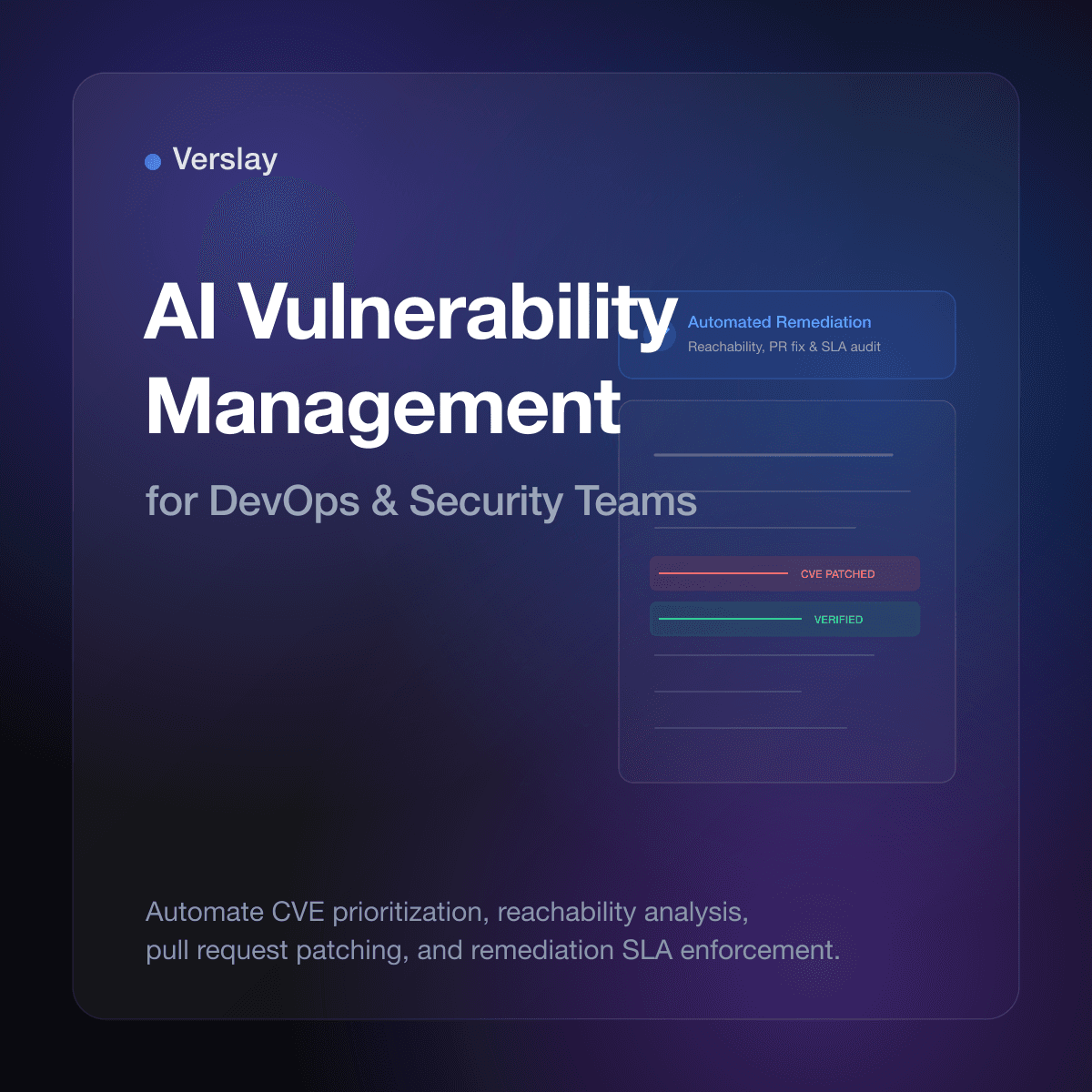
AI vulnerability management for DevOps and security teams eliminates alert fatigue and vulnerability backlogs by using autonomous AI agents to continuously ingest scanner findings, determine runtime code reachability, generate validated patch pull requests, and enforce strict remediation SLAs. By correlating common vulnerabilities and exposures (CVEs) directly against active network paths, exploit prediction scoring (EPSS), and container runtime environments, AI vulnerability agents reduce remediation cycle times by up to 80% while eliminating noisy false positives. Rather than dumping thousands of uncontextualized scanner alerts onto engineering backlogs, SecOps and platform teams maintain an automated, verified, and audit-ready vulnerability remediation pipeline.
Modern enterprise engineering environments operate at unprecedented velocity, shipping hundreds of microservices, third-party libraries, and infrastructure-as-code modules every week. However, this deployment velocity has caused an exponential surge in vulnerability alerts. Security teams using traditional scanners (such as Snyk, Wiz, Trivy, GitHub Dependabot, and AWS Inspector) find themselves inundated with tens of thousands of reported vulnerabilities. The vast majority of these alerts represent theoretical risks: uncalled code functions in third-party packages, development dependencies excluded from production containers, or vulnerabilities in isolated internal microservices with no ingress path.
When security engineers manually triage these alerts using static Common Vulnerability Scoring System (CVSS) metrics alone, developers become buried in low-priority patching tickets. As a result, critical zero-day vulnerabilities and actively exploited bugs remain unpatched for weeks, directly exposing organizations to breach risks and audit failures under SOC 2, ISO 27001, and FedRAMP frameworks.
By deploying autonomous AI Agents integrated via standard APIs and Model Context Protocol (MCP), DevOps and security organizations transform passive vulnerability scanning into closed-loop, automated remediation that secures production infrastructure on autopilot.
The Vulnerability Triage Crisis: Why Scanner Alerts Overwhelm Engineering Teams
Traditional vulnerability management processes rely on fragmented scanners, spreadsheet tracking, and manual Jira ticket creation. This legacy workflow introduces critical operational bottlenecks:
- CVSS Inflation & Lack of Exploit Context: Standard CVSS scores measure theoretical severity in a vacuum rather than actual exploitability in a live environment. A "Critical" CVSS 9.8 score in an unused test utility can divert engineering focus away from an actively exploited CVSS 7.2 vulnerability in an internet-facing API gateway.
- The Code Reachability Blindspot: Over 75% of reported open-source software vulnerabilities reside in functions, classes, or packages that the host application never actually invokes or executes at runtime. Manual review of call graphs across hundreds of repositories is physically impossible for human AppSec teams.
- Developer Friction & Alert Fatigue: Dumping raw vulnerability reports into development sprints causes adversarial relationships between security and engineering. Developers spend hours researching breaking changes, updating dependency manifests, and resolving version conflicts rather than building core product features.
- SLA Drift & Compliance Exposure: Regulatory frameworks and enterprise security policies mandate strict mean-time-to-remediate (MTTR) windows—typically 7 days for critical vulnerabilities and 30 days for high-severity issues. Without automated tracking and reminders, tickets linger unnoticed until quarterly compliance audits expose the breach.
- Regression Fear in Patch Deployment: Merging security patches often introduces breaking API changes or unintended side effects. Without automated sandbox testing and regression verification, engineering teams delay patching critical libraries out of fear of production downtime.
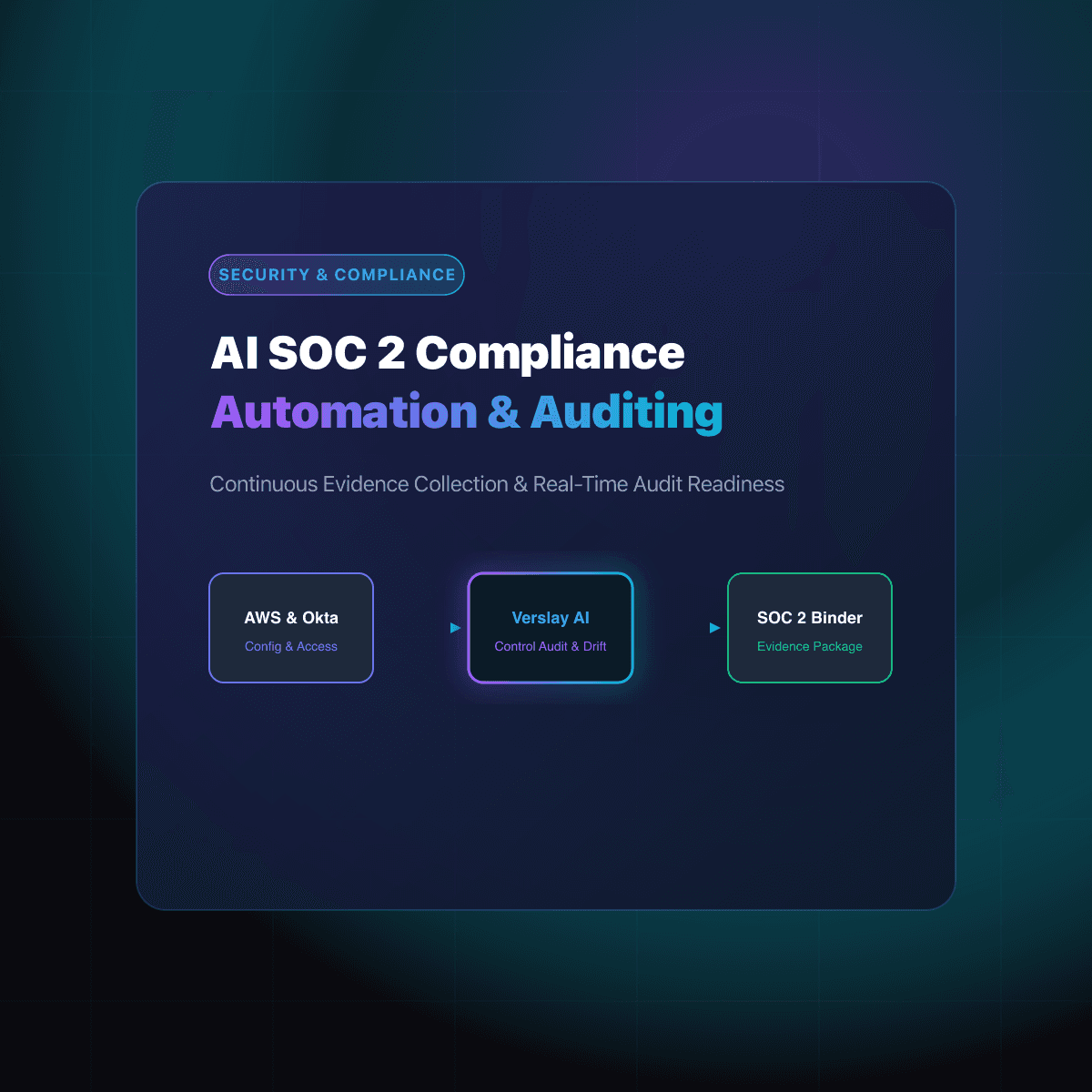
To understand how automated governance eliminates related security and infrastructure bottlenecks, explore our guides on AI incident response automation for DevOps and SRE teams and AI SOC 2 compliance automation for security teams.
Core Capabilities of Autonomous AI Vulnerability Management Agents
Autonomous vulnerability management agents act as dedicated DevSecOps copilots, continuously correlating vulnerabilities across code repositories, container registries, and cloud infrastructure:
1. Multi-Scanner Ingestion & Contextual Deduplication
Eliminating fragmented security alerts and duplicate notifications across tools:
- Unified Alert Normalization: Ingests and normalizes vulnerability findings across static application security testing (SAST), software composition analysis (SCA), container scanners, and cloud security posture management (CSPM) tools (including GitHub Dependabot, Snyk, SonarQube, Wiz, Prisma Cloud, and AWS Inspector).
- Intelligent Deduplication: Groups identical CVEs reported across different microservices, container layers, and base images into single actionable vulnerability clusters, preventing engineering ticket duplication.
- Asset Criticality Mapping: Enriches each vulnerability with metadata from internal asset catalogs, categorizing affected workloads by business impact, data sensitivity (e.g., PCI, PII, HIPAA), and production status.
2. Runtime Reachability & Threat Intelligence Prioritization
Focusing engineering attention strictly on exploitable attack vectors:
- Call-Graph & Reachability Analysis: Traces application abstract syntax trees (ASTs) and execution call graphs to verify whether vulnerable functions are actually invoked in production code.
- Exploit Prediction & CISA KEV Correlation: Cross-references findings against real-time threat intelligence feeds, including the CISA Known Exploited Vulnerabilities (KEV) catalog, Exploit Prediction Scoring System (EPSS), and dark-web exploit chatter.
- Attack Path Modeling: Evaluates network ingress controls, VPC isolation, IAM role permissions, and public IP accessibility to determine if an attacker can traverse from the internet to the vulnerable workload.
3. Autonomous Pull Request Generation & Patch Validation
Accelerating the remediation loop from weeks to minutes:
- Automated Dependency Bumping: Generates pull requests across GitHub or GitLab containing exact version upgrades, lockfile adjustments (npm, pnpm, pip, Maven, Go modules), and Dockerfile base image updates.
- Ephemeral Sandbox Regression Testing: Automatically triggers CI pipelines in isolated staging environments, running full integration and unit test suites to guarantee that dependency updates introduce zero breaking API changes.
- Breaking-Change Code Refactoring: When a security patch involves minor breaking API changes, the AI agent suggests precise code edits to adapt the application to the new library syntax, including comprehensive diff documentation.
4. Continuous SLA Tracking & Intelligent Escalations
Ensuring every critical vulnerability meets organizational remediation deadlines:
- Dynamic SLA Countdown Timers: Automatically tracks MTTR against established security policies (e.g., 7-day SLA for Critical, 30-day SLA for High), updating ticket priorities dynamically as deadlines approach.
- Conversational Slack & Teams Routing: Pings repository maintainers and team leads directly in Slack or Microsoft Teams with one-click PR review links and reachability summaries.
- Executive Escalation Workflows: Proactively alerts SecOps leadership and VP of Engineering if high-risk vulnerabilities are at risk of breaching compliance thresholds, preventing audit non-conformities before they occur.
5. Cryptographic Verification & Compliance Audit Trails
Providing comprehensive evidence for auditors and executive oversight:
- Post-Remediation Verification Scans: Automatically triggers a targeted re-scan following PR deployment to confirm the vulnerability signature is completely resolved in the production artifact.
- Immutable Audit Logging: Generates timestamped compliance records detailing vulnerability discovery, reachability determination, PR creation, CI test results, and final production verification.
- Exception & Compensating Control Management: If a patch cannot be immediately deployed, the agent documents compensating controls (e.g., WAF rules, network ACLs), assigns time-bound exception approvals, and tracks renewal dates.
Learn how AI SLA tracking for internal IT teams and AI IT asset management for enterprise IT teams establish end-to-end visibility and governance across technical fleets.
Technical Architecture: Autonomous AI Vulnerability Remediation Pipeline
The diagram below illustrates how an autonomous AI vulnerability management agent ingests scanner telemetry, conducts reachability filtering, generates validated patch PRs, and verifies production remediation:
[Security Scanners & CSPM] (Snyk, Wiz, Dependabot, AWS Inspector, Trivy)
                                    │
                                    ▼
       [Verslay DevSecOps Vulnerability Orchestration Engine]
┌─────────────────────────────────────────────────────────────────┐
│  • Scanner Ingestion & Multi-Tool Normalization                 │
│  • AST Code Call-Graph & Runtime Reachability Verification      │
│  • Threat Intel Enrichment (CISA KEV, EPSS Scores, Dark Web)    │
│  • Attack Path Analysis & Workload Exposure Mapping             │
└─────────────────────────────────┬───────────────────────────────┘
                                  │
                                  ▼
        Exploitable Attack Vector Verified & Prioritized
                                  │
          ┌───────────────────────┴───────────────────────┐
          │                                               │
          ▼                                               ▼
[Automated Patch Engine]                         [SecOps Notifications]
  • Dependency & Lockfile Bumping                  • Dynamic SLA Countdown
  • Ephemeral Sandbox CI Testing                   • Slack / Teams PR Ping
  • Automated Pull Request Created                 • Escalation for Approaching Breaches
          │                                               │
          └───────────────────────┬───────────────────────┘
                                  │
                                  ▼
        [Developer Review & One-Click Merge to Production]
                                  │
                                  ▼
[Targeted Post-Deploy Rescan] ──► [Audit Log & SOC 2 Evidence Generated]
Comparative Analysis: Traditional Scanners vs. Autonomous AI Remediation
| Dimension | Legacy Vulnerability Management | Autonomous AI Vulnerability Agents | Measurable Operational Impact | | :--- | :--- | :--- | :--- | | Alert Triage | Manual review of raw CVSS severity scores; thousands of tickets created blindly. | Contextual reachability analysis cross-referenced with CISA KEV and EPSS exploit data. | 80% reduction in false-positive vulnerability backlog. | | Exploit Context | Isolated package scanning without awareness of runtime execution paths. | Deep AST call-graph tracing to verify if vulnerable methods are actually executed. | Prevents wasted developer hours on unreachable test dependencies. | | Remediation Process | Developers manually search release notes, bump versions, and resolve dependency trees. | Autonomous generation of complete pull requests with updated lockfiles and Dockerfiles. | Mean Time to Remediate (MTTR) drops from 34 days to under 48 hours. | | Testing & Verification | Manual staging deployment or blind merging that risks production regression. | Automated execution of full test suites in ephemeral CI containers prior to PR creation. | Zero downtime from security patch regressions. | | SLA Tracking | Static Jira dashboards monitored once a week in SecOps standups. | Dynamic countdown timers with real-time Slack escalations to engineering leads. | 99.4% SLA compliance on Critical and High CVEs. | | Compliance Evidence | Manual screenshot gathering and ticket scraping during annual SOC 2 audits. | Cryptographically signed, automated audit receipts linking scanner discovery to merged patch. | Audit preparation overhead reduced from 40 hours to zero. |
Step-by-Step: Implementing AI Vulnerability Management in DevSecOps
Deploying autonomous vulnerability remediation requires establishing clear boundaries between automated analysis, test validation, and human authorization:
Step 1: Ingest & Normalize Scanners
   │    Connect GitHub Dependabot, Snyk, Wiz, and AWS Inspector via API/MCP
   ▼
Step 2: Map Infrastructure & Reachability
   │    Trace code execution paths, container ingress, and public VPC exposure
   ▼
Step 3: Enrich with Live Threat Intelligence
   │    Filter via CISA KEV exploit lists, EPSS probabilities, and asset tiers
   ▼
Step 4: Execute Autonomous Patching & Sandbox Testing
   │    Generate dependency upgrade branch, run integration suites in CI
   ▼
Step 5: Deliver Contextual PR & Notify Maintainers
   │    Send Slack ping to repo owner with one-click approval and test results
   ▼
Step 6: Post-Merge Verification & Compliance Archival
        Trigger targeted re-scan and commit verified audit receipt to compliance ledger
Phase 1: Connect Security Scanners and Code Repositories
Integrate your existing security scanning toolchain into the central orchestration engine. Using standardized MCP connections and API webhooks, configure the agent to listen for vulnerability alerts across:
- Source code repositories (GitHub, GitLab, Bitbucket)
- Container registries (Amazon ECR, Google Artifact Registry, Docker Hub)
- Cloud infrastructure posture tools (Wiz, Orca Security, AWS Security Hub)
Phase 2: Configure Contextual Reachability and Exploit Thresholds
Define the vulnerability prioritization matrix based on active exposure rather than raw CVSS alone:
- Tier 1 (Immediate SLA: 48h): Publicly reachable workload, active CISA KEV exploit detected, EPSS > 0.40, direct code invocation verified.
- Tier 2 (Standard SLA: 14d): Internal VPC workload with sensitive database credentials, unauthenticated vulnerability present, indirect call path detected.
- Tier 3 (Scheduled Sprint SLA: 30d): Non-reachable internal service, no active exploit detected, high CVSS base score.
- Tier 4 (Deprioritized): Development-only dependency, test harness utility, or uninvoked third-party module.
Phase 3: Automate Branch Creation and Ephemeral CI Validation
Equip the AI agent with repository write access to initiate automated remediation branches:
- When an eligible vulnerability is prioritized, the agent inspects the dependency manifest (
package.json,requirements.txt,pom.xml,go.mod). - The agent computes the minimal version increment necessary to clear the CVE without triggering major version incompatibilities.
- The agent commits the change to a dedicated
secops/fix-cve-<id>branch and triggers your standard GitHub Actions or GitLab CI pipeline.
Phase 4: Streamline Approvals with Conversational Workflows
Rather than requiring developers to log into specialized security dashboards:
- Deliver an automated notification into the dedicated team Slack channel or Jira sprint board.
- The notification highlights the specific CVE, summarizes why reachability was confirmed, links the passing CI build, and provides a direct "Review Pull Request" button.
- Engineering leads review the automated diff and merge the pull request with a single click.
Phase 5: Continuous Post-Deploy Verification and Audit Logging
Once the pull request is merged and deployed via your CD pipeline:
- The AI agent initiates an on-demand container and static scan against the newly deployed artifact to verify that the vulnerability signature is eliminated.
- The agent updates the tracking ticket, marks the SLA as fulfilled, and archives the entire event log into your compliance evidence repository for SOC 2 and ISO 27001 auditors.
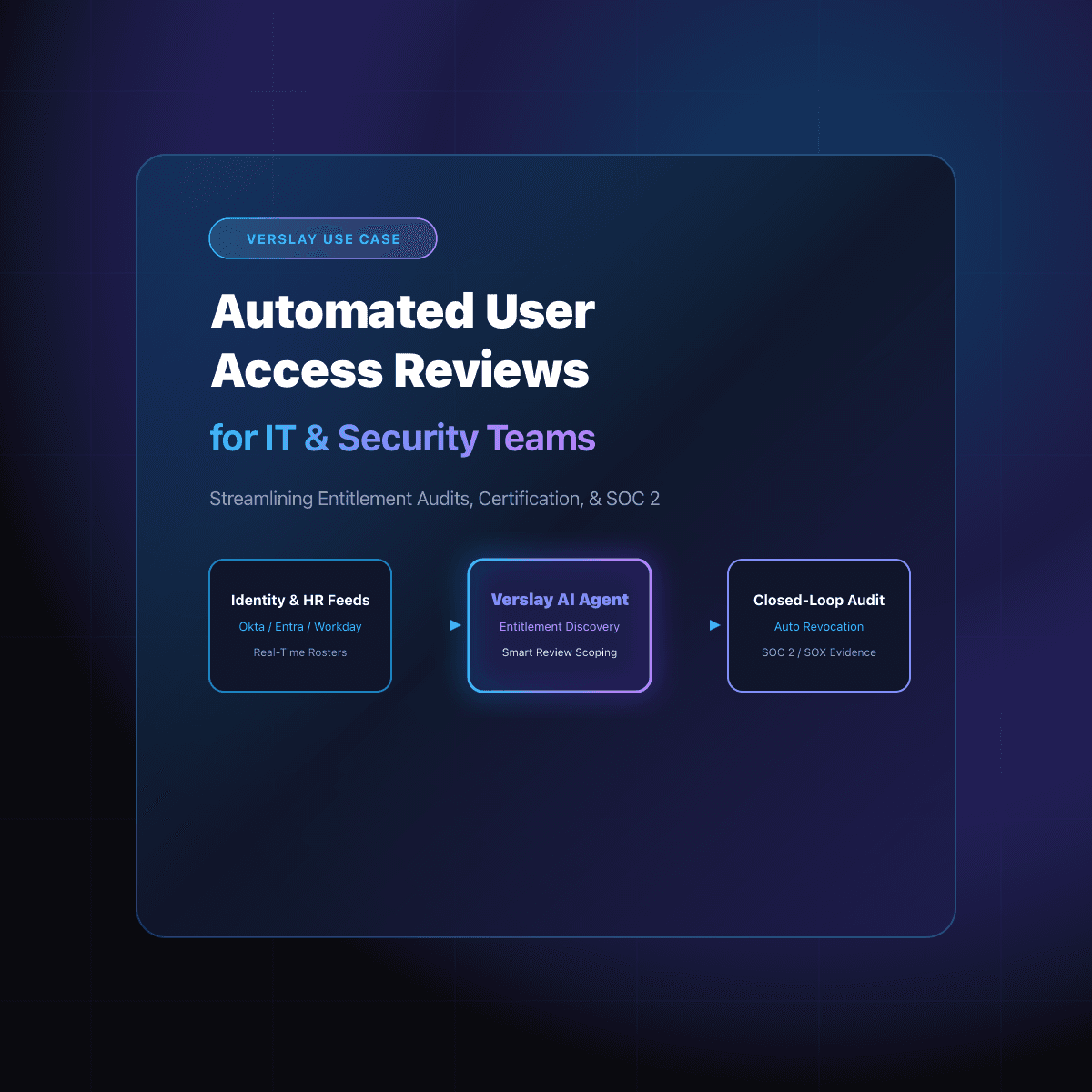
Explore how automated user access reviews for IT and security teams complement vulnerability management by securing identity perimeters and access privileges across engineering infrastructure.
Transforming Vulnerability Management into a Continuous Advantage
Vulnerability management does not have to be a contentious tug-of-war between security teams enforcing rigid deadlines and engineering teams struggling to maintain product velocity. By offloading scanner deduplication, runtime reachability filtering, patch PR generation, and regression verification to autonomous AI agents, organizations transform vulnerability remediation into a seamless background capability.
Security teams eliminate 80% of alert noise and focus on proactive architecture hardening. Engineering teams receive pre-tested, verified pull requests rather than ambiguous complaint tickets. And executive leadership gains continuous, verifiable assurance that production infrastructure remains resilient against evolving cyber threats.